Download App
Better Online and Trade Show Sourcing Experiences.Scan the QR code to download.
Learn More
Hot Topics

The global brake pad market is anticipated to expand at a CAGR of about 4 percent until 2030, owing to robust expansion witnessed by the automotive industry across the globe, according to business analysts Transparency Market Research. While vehicle ownership is expected to decline due to the growth of shared mobility and mobility-as-a-service solutions, a global rise in disposable income has driven vehicle sales, boosting the brake pad market in turn.
Increased safety awareness among consumers and governments authorities has led to technologies such as ABS and EBD becoming a standard feature in most new vehicles. These technologies accelerate wear on brake pads, driving more sales.
However, some challenges remain. The rising popularity of electric vehicles equipped with regenerative braking systems “reduce the usage of friction brakes, thus decreasing the wear of brake pads and subsequently lowering demand in the aftermarket,” according to Transparency.
Materials
The organic materials segment is anticipated to gain high market share, per Transparency. “Brake pad manufacturers have developed non-asbestos organic brake pads that contain [a] high amount of reinforcement fibers as compared to that in fully organic brake pads, which increases the strength of brake pads. These developments in organic brake pad materials are expected to propel its share in global brake pad market.”
Current brake performance requirements in Europe are strict, demanding low-steel (LS) brake pads that incorporate steel fibers. These are needed to pass, amongst others, the extreme AMS (Auto Motor and Sport) braking test that simulates extreme braking conditions, according to materials manufacturer Lapinus. Stresses are particularly high on the front brakes, the Dutch supplier notes, which absorb most of the braking energy.
These low-steel pads can suffer from issues with corrosion and their relatively higher abrasive generates higher disc wear. These brakes can also make unpleasant grinding or squealing noises when they are worn down – a largely cosmetic issue, but significant for some end-users.
In the United States and East Asia, the market is dominated by Non-Asbestos Organic (NAO) friction materials. These are less abrasive than low-steel materials, have better noise vibration harshness (NVH) profiles and cause lower disc wear. NAO friction materials usually have high-aspect ratio mineral fibers as reinforcement, giving dimensional stability and good stability under high friction forces and heat.
Regional markets
The Asia-Pacific region is expected to capture over 40 percent of global market share by 2028, GM Insights report, “fueled by rising vehicle sales and growing disposable incomes in emerging economies.”
Transparency sees both Asia-Pacific and European markets as key, citing the presence of major automakers in Europe as “contributing toward the notable share held by the region in the global brake pad market.”
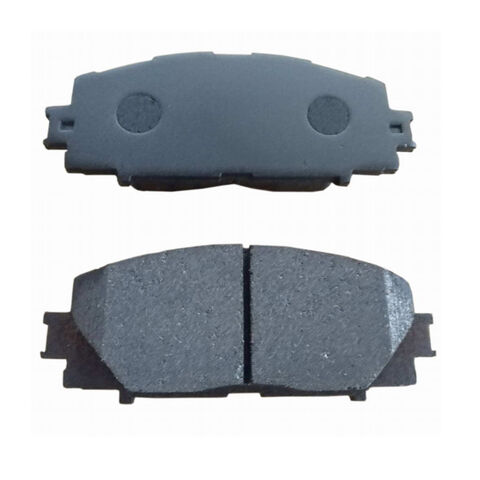
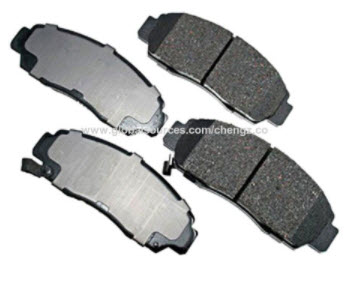
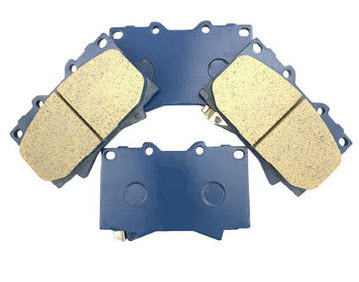
Guangzhou Chengz Industrial Co. Ltd’s rear brake pad set for the Toyota Avanza, Camry or Hilux is made with ceramic material and comes with a one-year warranty. Lead time is 5 to 7 days. MOQ is 10 pairs.
More Sourcing News
Read Also

关注 “环球资源外贸” 官方微信,获取实时外贸资讯
iOS & Android
iOS & Android(Mainland China)
Copyright © 2026 Publishers Representatives Limited. All rights reserved.