Batteries ensure energy harvested from renewable sources is stored as usable power, making them a key component in the realization of a green future. As such, they continue to be the subject of research to find chemistries with optimum performance and safety levels.
In new energy applications, such as electric vehicles and solar and wind power systems, there has been a developing shift to lithium iron phosphate (LiFePO4 or LFP) from nickel manganese oxide (NCM) batteries. Both belonging to the Li-ion family, they are currently the top choices in this field.
As of 2022, NCM batteries still led with a 60 percent share, according to the International Energy Agency (IEA). LFP units followed with less than 30 percent and nickel carbon aluminum (NCA) batteries, another Li-ion type, with about 8 percent. For the LFP category, the IEA said that this is the highest achieved in the past 10 years thanks to electric cars manufactured in China and those made elsewhere but with cells sourced from China.
Based on the IEA’s breakdown for 2022, about 95 percent of LFP batteries were used in electric light-duty vehicles made in China, with BYD accounting for half and Tesla, with a factory there, for 15 percent.
In solar and wind power systems, whether in farms or in homes, there are four contending chemistries—lead-acid, lithium-ion, nickel-cadmium (NiCd) and flow.
Lead-acid batteries are still the widely adopted storage option, with a 50 percent global market share, according to Battery Council International, a trade association representing the North American battery industry.
In residential applications, however, LFP batteries are recommended for their safety and convenience, according to an article by Leonardo David for MarketWatch, as they don’t require separate charge controllers like lead-acid units. For large-scale applications, tried and tested battery technologies, such as lead-acid and NiCd, are still the go-to solutions.
LFP switch
More carmakers are adopting LFP batteries in their electric vehicles, joining BYD, Tesla and Nio, a Chinese EV startup company. Ford announced that its 2023 Mustang Mach-E would have them, while these batteries will be offered as an option in the company’s F-150 pickup truck scheduled for rollout in 2024. Kia, meanwhile, will introduce the redesigned Ray EV with such a battery, but this subcompact will only be available in South Korea. Volkswagen has also joined the fray, with four new EVs for release beginning 2025 from its two plants in Spain.
With such a lineup, battery manufacturers are revisiting their lithium-ion plans, especially because of the environmental and other issues associated with the extraction of cobalt and nickel. Both metals are used in NCM and NCA batteries. Iron, on the other hand, is abundant and cheap, making LFP batteries the cost-effective choice.
And while LFP batteries have lower energy level than NCM and NCA units, that feature makes them a safer alternative. “Nickel- and cobalt-based cathodes are more expensive, and their higher energy levels make them unstable and more likely to catch fire if they are abused or over or undercharged,” according to an article by Kevin Clemens for EEPower.
It is why Chinese automakers have decided to stick with LFP batteries and maximized their advantages in short-range vehicles.
Race to the next EV battery
There are six companies that are investing a total of more than $11 billion on LFP battery manufacturing in the US, according to Reuters. They are Ford and Our Next Energy (ONE) of the US, LG Energy Solution of South Korea, Gotion of China, Freyr of Norway and ICL of Israel. This is in addition to the plans of Tesla and Rivian.
To maintain their lead in this market, Chinese battery suppliers continue to push R&D on these iron-based batteries.
CATL, the world’s largest manufacturer of Li-ion batteries, has focused on cell-to-pack (CTP) technology.
BYD, meanwhile, has the Blade Battery with an improved energy density of up to 320Wh/L from 251 Wh/L and a life span exceeding 3,000 cycles compared to NCM’s 2,000 cycles. The company conducted a nail penetration test that showed that its batteries did not emit smoke or caught fire and maintained surface temperature of 30 to 60 C. The same test caused an NCM unit to burn and its surface temperature to reach more than 500 C.
Gotion is working on doubling its LFP batteries’ energy density to 300Wh/kg by 2030 to prolong the distance per charge in EVs.
There is also capacity buildup in China, with ventures overseas included.
Ganfeng Lithium, a key LFP battery manufacturer, has announced that it is investing $690 million to build a 217,108sqm factory in Dongguan. When operational, the facility is planned to turn out 10GWh LiFeP04 battery cells, power batteries and energy storage batteries, to realize a total production value of $1.52 billion every year.
CATL will set up an LFP battery factory in the US in cooperation with Ford. The project, with a total investment of $3.5 billion, will begin mass production in 2026.
China’s LFP battery market
The LiFePO4 battery market in China has been on the upturn in recent years. It reached $2.91 billion in 2020, rising 7.5 percent year on year despite the pandemic, and went up further to $3.6 billion in 2021, according to Sohu News, which predicts this growth will stay in the double digits through 2024, driven by demand in EVs, energy storage, 5G communications, medical equipment, and the military and space fields. The same source claims that this category will have a global market of $14.622 billion by 2028.
There are hundreds of manufacturers of LFP batteries in China, including foreign companies, but it is the top Chinese players that own more than 90 percent of the country’s market. In the first half of 2022, CATL, BYD and Gotion had respective shares of 46, 35.9 and 7.5 percent in the LFP category, according to Zhiyan Consulting. The CALB Group and EVE are also part of this elite circle.
Some Chinese enterprises also offer NCM batteries, but they will continue to allocate more capacity for LFP types in the coming years.
Many factories are found in Shenzhen, Dongguan, Zhongshan, Guangzhou, Suzhou, Nanjing, Changzhou and Ningbo. Others are in the provinces of Sichuan and Henan.
Mainstream LFP batteries
Chinese suppliers produce square, cylindrical and soft-pack LiFePO4 batteries, with typical features of 3.2V rated voltage, 160Wh/kg energy density and over 2,000-cycle life span. Most ensure their products, including those based on custom specifications, meet key industry safety standards such as UL, CE and RoHS.
All anode and cathode materials and shells come from the domestic supply, with manufacturers capitalizing on China’s abundant natural resources. According to Chinese website Battery Industry Network, the country’s total capacity exceeded two million tons in 2022, a 200 percent increase from the previous year. The top suppliers in this category include Hunan Yuneng, Shenzhen Dynanonic, Changzhou Liyuan and Wanrun New Energy.
LFP materials account for more than 70 percent of production costs. Outlay for these inputs decreased in recent years due to capacity expansion and technological upgrades and is expected to stabilize in 2024.
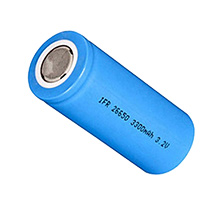
LiFePO4 battery, 3,300mAh nominal capacity
Company: Fello Tech Co. Ltd
Fello offers the 3.2V Battery IFR26650-4009, a LiFePO4 battery with 3,300mAh capacity suitable for use in communications equipment, electric tools, e-bikes and solar energy storage systems.
MOQ: Negotiable
Lead time: 15 days
Inquire now
LiFePO4 battery, 100Ah rated capacity
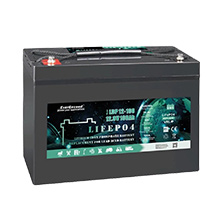
Company: Shenzhen Everexceed Industrial Co. Ltd
Shenzhen Everexceed’s LDP12-100 LiFePO4 battery has 12.8V nominal voltage, 100Ah rated capacity, 1,280Wh typical energy, and 100A maximum charge and continuous discharge current rating. It measures 328x172x220mm, weighs 11.1kg and has M8 terminals. This unit has UL 1642 and 2054 certifications.
MOQ: Negotiable
Lead time: 15 days
Inquire now
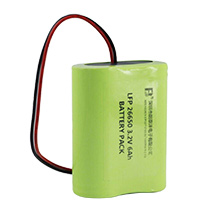
3.2V, 6Ah LiFePO4 battery
Company: Shenzhen FBTech Electronics Ltd
Designed for solar energy storage systems, Shenzhen FBTech’s FB-LiFePO4-26650-12Ah1-2671 battery has 3.2V and 6Ah voltage and capacity, up to 6,000-cycle life span, and 0.5 to 1C charge and discharge rates.
MOQ: 5,000 units
Lead time: 10 days
Inquire now
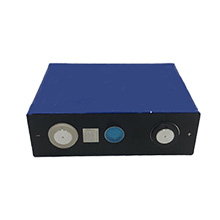
3.2V, 100Ah LiFePO4 battery
Company: Shenzhen Vcell Power Technology Co. Ltd
Shenzhen Vcell’s LF-3.2V-100AH LiFePO4 battery has 320Wh rated energy, 1C charge and 3C maximum continuous discharge rates, and 0 to 45 C charge and -20 to 80 C discharge temperatures. This unit exceeds 2,000 cycles at 100 percent DoD and meets UL, REACH, UN 38.3 and RoHS requirements. It can be used in solar lamps, Bluetooth earphones, wearable devices, UPS, EVs and off-grid energy storage systems.
MOQ: 1,000 units
Lead time: 25 days
Inquire now