Download App
Better Online and Trade Show Sourcing Experiences.Scan the QR code to download.
Learn More
Hot Topics
The trend toward vehicle electrification has increased demand for various electronic components, one in particular being the multilayer ceramic capacitor (MLCC) that attracted attention in recent years due to a supply shortage. Also widely used in smartphones and other mobile electronic devices, this passive was a much-coveted component, for which tech and automotive companies wrangled over. The shortfall began toward the end of 2016, according to Atsuhiko Furukawa in a 2021 article for EE Power. This continued in 2017 and reached a high level in 2018, eventually leveling off in 2019 before resurging in the months following the pandemic. This supply issue is expected to continue across industries.
In the automotive sector, addition of driver assistance systems to a conventional vehicle already requires several thousand capacitors and the number is significantly higher in an electric vehicle (EV), ranging from 6,000 to 18,000. These capacitors are mainly used in ADAS, in-vehicle infotainment, the body and chassis, and the powertrain. In comparison, smartphones have several hundred, which in high-end units can reach more than a thousand.
In addition to the component count, automotive MLCCs have steeper performance requirements compared to those used in mobile electronics. They must be able to operate normally in temperatures of -55 to 150 C and humidity of 85 percent, and exhibit shock resistance, or all the reliability parameters under the AEC-Q200 standard.
With the fast development of EVs, the trend will be for MLCCs with greater capacitance and reliability.
Samsung Electric has recently introduced 250V-33nF MLCCs, said to have the highest capacitance among similar products on the market. Currently used in EVs are 250V-22nF units. Samsung Electric’s components feature a high withstand voltage rating and are designed to eliminate high-frequency noise in battery modules, improving battery stability. The company also has 100V-10uF MLCCs for headlights, with twice the capacitance of conventional variants in this application.
In China, major manufacturers are focusing on high-capacitance MLCC development and production. Three-Circle, a key player in the country’s MLCC sector, has invested $532 million in its Nanchong and Deyang subsidiaries in Sichuan province. Its objective is to turn out 300 billion high-capacitance MLCCs annually for the 5G communications, Internet of Things and EV markets.
Based on volume, 393.6 billion automotive MLCCs were shipped worldwide in 2021 and 430 billion units in 2022, according to Sohu News. This may increase further to 600 billion units by 2025, with EVs expected to surpass conventional vehicles in terms of share for the first time.
China, the largest EV and automotive market, will continue to leverage this advantage and boost its shipment of automotive MLCCs. It is looking to reach 280 billion units by 2025 from 150 billion in 2021. As early as 2022, EV MLCCs already exceeded versions for gasoline and diesel vehicles based on volume shipped. The forecast for EVs is 170 billion MLCCs by 2025 from 53 billion in 2021, or a CAGR of 34.74 percent compared to 17.3 percent for traditional vehicles.
In the meantime, demand for MLCCs in consumer electronics has been sluggish in the past 12 months and this trend may persist in the next one or two years. So, Chinese manufacturers will shift focus to EVs and will continue to expand their production for this automotive segment. Guangdong Fenghua Advanced has invested $1.07 billion in its high-end MLCC project in Guangdong Xianghe Industrial Park. The facility will increase the company’s annual capacity by 540 billion units in 2024.
Viiyong, which specializes in MLCCs for various applications, is undertaking trial production of AEC-Q200-compliant units and will manufacture all types on a mass scale in 2024, with a goal to bring its annual capacity to 300 billion units by 2028.
The global market for MLCCs remains dominated by suppliers from Japan, South Korea and the Taiwan region. These industry giants include Murata, TDK, Taiyo Yuden, Samsung Electric, Yageo and Walsin.
Taiyo Yuden built a new factory in Changzhou, Jiangsu province, in late 2021 and completed the construction in June 2023, spending $1.5 billion on this three-phase project. After mass production commences, the facility will turn out 500 billion MLCCs annually, with a total production value exceeding $10 billion.
Many MLCC companies in China, both domestically and foreign-owned, are also found in the cities of Shenzhen, Zhaoqing and Suzhou.
Common automotive-grade MLCCs from Chinese manufacturers, are usually in sizes of 0201 to 1210 and have 20kV ESD voltage range, and can withstand 1,500G mechanical shock and 2,000Hz vibration. They have 18N terminal strength and 95 percent solderability. All are compliant with AEC-Q2000 and RoHS requirements.
For EVs, Three-Circle has focused on high-capacitance MLCCs in small sizes, offering 0402 to 1206 options that meet AEC-Q2000 and ISO/TS 16949 standards. Its high-voltage COG MLCCs are available in rated voltages of 100, 200, 250, 500, 630, 1,000 and 2,000V, capacitance range of 0.2pF to 15nF with tolerance of ±5 and ±10 percent, temperature coefficient of 0±30ppm/C and operating temperature of -55 to 125 C.
Chinese suppliers usually obtain ceramic materials from Japanese companies, such as Sakai Chemical. They also turn to major domestic providers, including Shandong Sinocera and Three-Circle.
All other manufacturing inputs, including electrodes and terminals, come from domestic or foreign sources, depending on buyers’ preferences.
Material costs were comparatively stable in the past 12 months, but MLCC prices have started going up again. In early 2023, major players such as Guangdong Fenghua Advanced and Three-Circles announced their plan to raise their quotes. Indeed, in the first half of 2023, prices of high-capacitance variants rose by 20 to as much as 40 percent.
Suppliers interviewed by Global Sources said that more companies will likely follow suit and increase their rates.
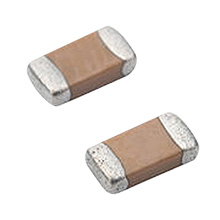
Company: C.C. Ohm Enterprise Co. Ltd
Available in 0201 to 1812 sizes, C.C. Ohm’s RoHS-compliant MLCC-03 has an XP0, X7R, X6S, X5R or Y5V dielectric and is rated at 10 to 100V.
MOQ: 1,000 units
Lead time: 12 days
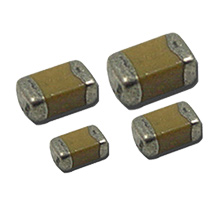
Company: Shenzhen Topmay Electronic Co. Ltd
Rated at 25, 50, 63 or 100VDC, Shenzhen Topmay’s TMCC05-0603 MLCC has 0R5 to 104 capacitance range, ±0.1, ±0.25 or ±0.5pF tolerance and 0.15 percent maximum dissipation factor. This 0603 unit withstands up to 2.5 times its working voltage.
MOQ: 20,000 units
Lead time: 12 days
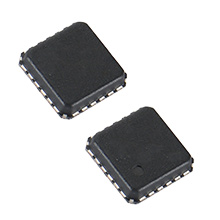
Company: Topfast (Guangdong) Technology Co. Ltd
Topfast’s CL31A106KBHNNNE 1206 MLCC has 50V rated voltage, 10µF capacitance, ±10 percent accuracy and -55 to 85 C operating temperature.
MOQ: 3 units
Lead time: 7 days
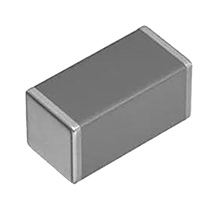
Company: Yongyergroup
This RoHS-compliant MLCC from Yongyergroup, the CGA5L2C0G1H104JT0Y0N, has 100nF capacitance and ±5 percent tolerance. Its size is 1205.
MOQ: 2,000 units
Lead time: 5 days
More Sourcing News
Read Also

关注 “环球资源外贸” 官方微信,获取实时外贸资讯
iOS & Android
iOS & Android(Mainland China)
Copyright © 2026 Publishers Representatives Limited. All rights reserved.




