




China will continue to dominate the rare earth magnet market in the near future, capitalizing on its key position in the rare earth elements (REE) industry. The country is responsible for 69 percent of the world’s REE mining as of 2025, according to IDTechEx’s report, “Rare Earth Magnets 2026–2036: Technologies, Supply, Markets, Forecasts.” More importantly, it accounts for 90 percent of separation and processing, and 93 percent of magnet manufacturing, said Gracelin Baskaran, director of the Critical Minerals Security Program at the Center for Strategic and International Studies.
NdFeB is one of two rare earth magnet technologies, with SmCo being the other. IDTechEx said that both “offer the best strength and power to weight performance for integrated product applications compared to competing Alnico and ferrite materials.” NdFeB magnets “can store over ten times the magnetic energy compared to ferrite magnets and boast superior magnetic strength of up to 1.4 T.” For such features, they are the top choice, representing 96 percent of demand in 2025.
China’s output of high-performance NdFeB magnets will reach 132,000 tons in 2025, significantly increasing from less than 30,000 tons in 2014, according to MacroPolo research associates AJ Cortese and Amy Ouyang. US information platform Rare Earth Exchanges said that Chinese manufacturers generate about 90 percent of global production in this category. They will continue to command this lead over rivals in Japan and Germany with sustained capacity expansion undertakings.
Green pursuit
To ensure its industry domination, China has implemented measures on the use of these resources, according to the International Energy Agency. Beginning with the Rare Earth Management Regulations which took effect on October 1, 2024, and followed by an ongoing ramping-up of regulatory measures, these controls encompass mining, smelting, separation, metal smelting, comprehensive utilization, product circulation and import-export of rare earth elements and products.
Encouraged to leverage advanced technologies to achieve secondary resource utilization, research institutions and magnet manufacturers are working to reduce the proportion of materials used while ensuring no impact on performance. Specifically, they are focusing on heavy rare earth elements, a subgroup with a higher atomic weight. HREEs are critical materials for applications, such as electric vehicles (EVs) and wind turbines, requiring high performance at elevated temperatures. However, they are less abundant than REEs and are more challenging to extract.
One breakthrough in this endeavor comes from the Ningbo Institute of Materials Technology & Engineering, which has developed a technology that can lower HREE content by 60 percent. Similar research efforts by Beijing Zhong Ke San Huan, JL Mag and other suppliers have also yielded results. ATM, meanwhile, has been improving grain boundary diffusion technology for sintered NdFeB magnet types.
On other fronts, a number of companies have been doing R&D to boost magnet performance while lowering costs. Ningbo Konit, acquired by Beijing Zhong Ke San Huan in 2012, has come up with a laser-cutting technique to help achieve both quality and cost goals. It currently has a patent application underway for this technology.
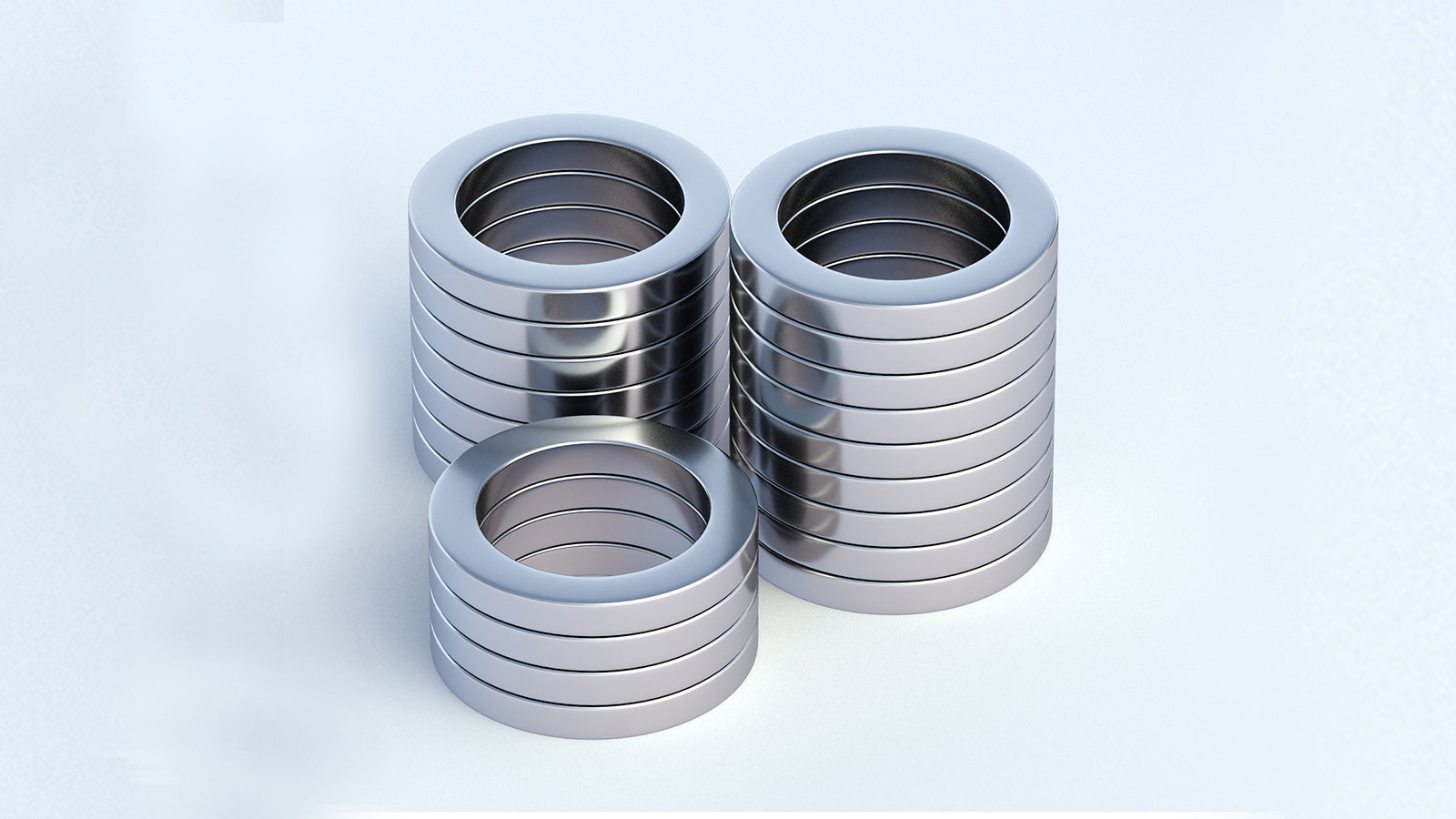
Image from iStock
REE trove
Almost half of known REE deposits worldwide are found in China. The country has about 44 million metric tons of rare earth oxide equivalent, roughly 48 percent of total global reserves, according to the US Geological Survey (USGS). The Guangzhou Institute of Geochemistry put the number at closer to 50 million in a recent China Briefing report.
The advantage of proximity will ensure sustained growth of China’s NdFeB magnet production in the coming years.
The next largest reserve is in Brazil, which the USGS estimates at 21 million metric tons or about 23.3 percent of the total worldwide.
Top applications
Huajing Intelligence Network lists wind turbines, EVs, energy-saving elevators, inverter-type air conditioners and industrial robotics as the top five applications of China-made NdFeB magnets, with wind turbines accounting for a share of nearly 20 percent.
By the end of 2024, the total wind turbines installed in China reached 510 million kW, increasing about 20 percent annually from 2013 according to a Xinhuanet report.
As for EVs, up to 12.866 million units were sold in 2024, a rise of 35.5 percent over the previous year, while 19.5 million units were shipped overseas, 15.86 percent higher volume, according to the China Association of Electronics Equipment for Technology Development.
The same upward trend is expected through 2026 and will continue benefiting the NdFeB magnet market. For this reason, Chinese makers will continue to increase their production. DMEGC announced in early 2025 a new sintered NdFeB magnet project and its total investment of $58.88 million. Scheduled to start operating on a mass scale in late 2026, the facility will add 5,000 tons to the company’s annual capacity of such magnets.
Wind turbines, EVs and consumer electronics will continue to drive high demand for NdFeB magnets worldwide. Adroit Market Research projects that the market will exceed $18 billion by 2028, from $12.65 billion in 2023.
China-made NdFeB magnets
Widely available neodymium magnets in China are sintered, bonded and hot-pressed types with nickel, zinc, tin, silver, gold, phosphor or epoxy resin surface treatment.
Sintered units form the bulk of shipments and come in the N, M, H, SH, UH, EH and TH series with various coercivity levels and operating temperature ranges for different applications. In this subcategory, the typical specifications are 15 to 35MGOe magnetic energy product, 1 to 3kOe coercive force and 250 to 350 C maximum operating temperature.
Most bonded NdFeB magnets, meanwhile, have 4.8 to 11.5MGOe, 1.5 to 6.5kOe and up to 120 to 170 C.
Chinese manufacturers accommodate requests for custom specifications, shapes and sizes.
The prices of NdFeB magnets have increased slightly in the past 12 months. The upward trend is expected to persist in the high-grade category as suppliers will likely raise their quotes amid rising demand for such products in the next two years. For general types, it is possible that prices will stay stable.
Production hubs
NdFeB magnet manufacturing in China is found mainly in the north and east, specifically in Baotou, Beijing, Ningbo and Doyang, while there are several manufacturers in southern areas as well. Key player Ningbo Yunsheng has factories in Ningbo, Baotou and Yingkou.
First-tier Chinese producers also lead in the world market. Beijing Zhong Ke San Huan is the largest NdFeB magnet supplier, accounting for 9 percent of global shipments in 2024 and 20 percent of China’s. Other major Chinese manufacturers include JL Mag, Ningbo Yunsheng, ZHMag and Innuovo. Their foreign counterparts include Noveon Magnetics, TDK, Shin-Etsu Chemical and Samsung.
Most Chinese suppliers export between 40 and 80 percent of their production. It remains to be seen how trade tensions will affect this ratio, especially as more than 80 percent of NdFeB magnets currently imported to the US come from China and as other countries are building supply chains outside China.
The products in this gallery have been handpicked by our Shanghai-based market analyst for representing current trends in NdFeB magnets from Chinese suppliers.
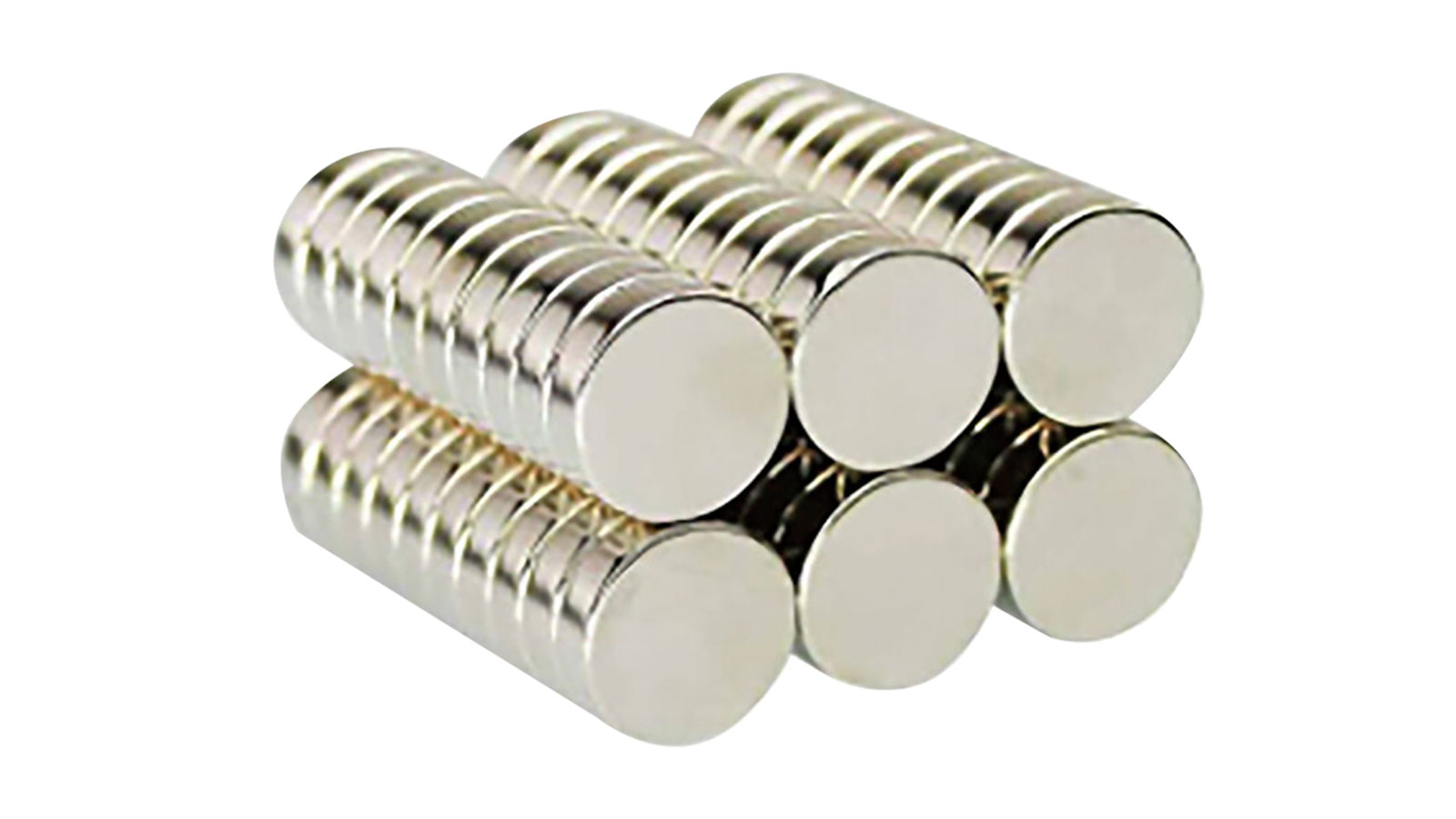
NdFeB magnet, N35 to N52 grades
Company: Dongguan Yuyue Permanent Magnet Technology Co. Ltd
The NdFeB Magnet-1 from Dongguan Yuyue comes in N35 to N52 grades with NiCuNi, zinc or epoxy coating. Custom sizes are available.
MOQ: 100 units
Lead time: 7 days
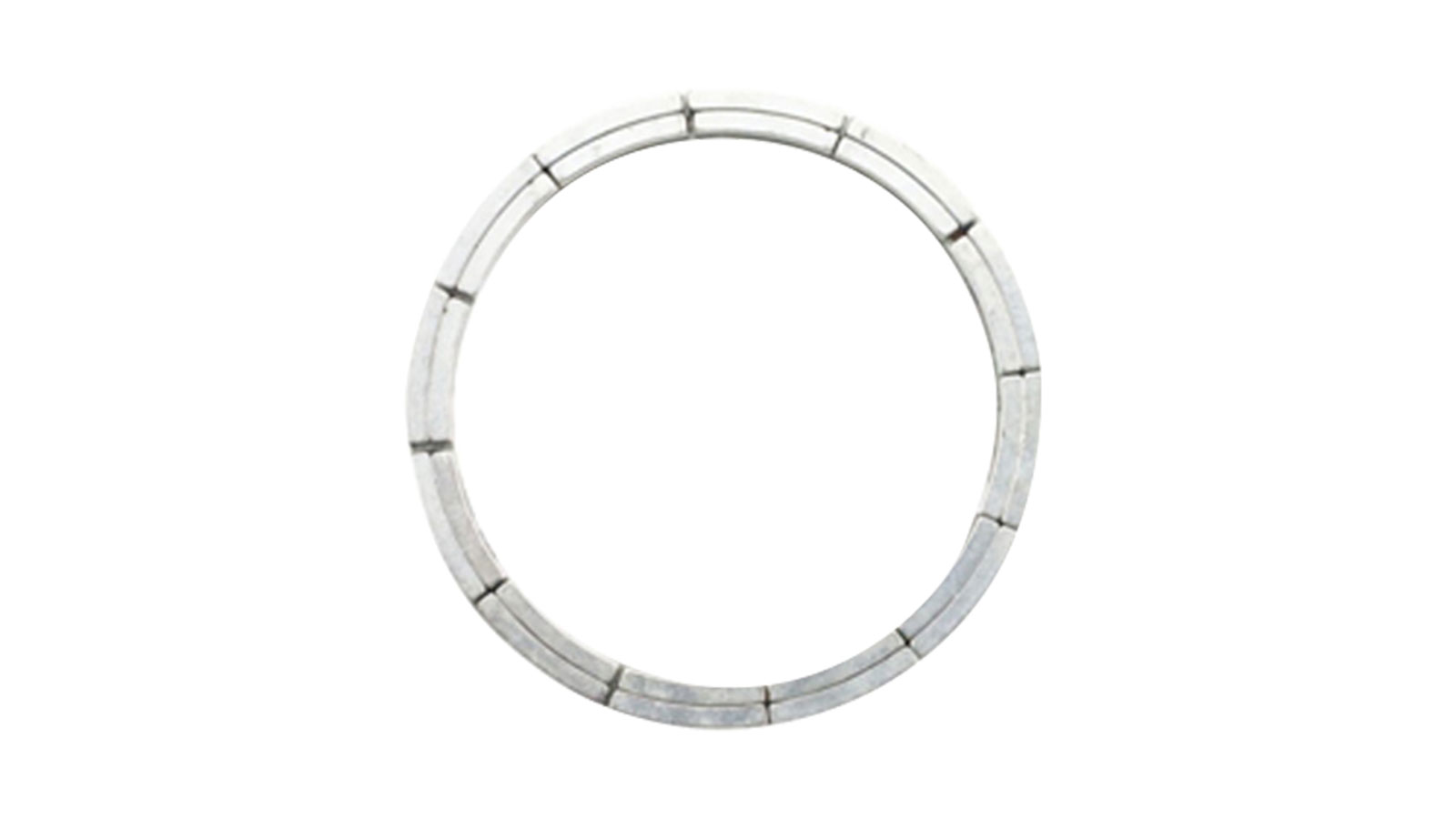
NdFeB magnet for wireless chargers
Company: Dongguan Zhongwang Permanent Magnet Technology Co. Ltd
Designed for use in wireless chargers, Dongguan Zhongwang’s ZWC16 N52 NdFeB magnet is available in thicknesses of 1.4, 1.5 1.6 and 2mm and includes an iron sheet that is 0.4, 0.5 or 0.6mm-thick.
MOQ: 1,000 units
Lead time: 7 days
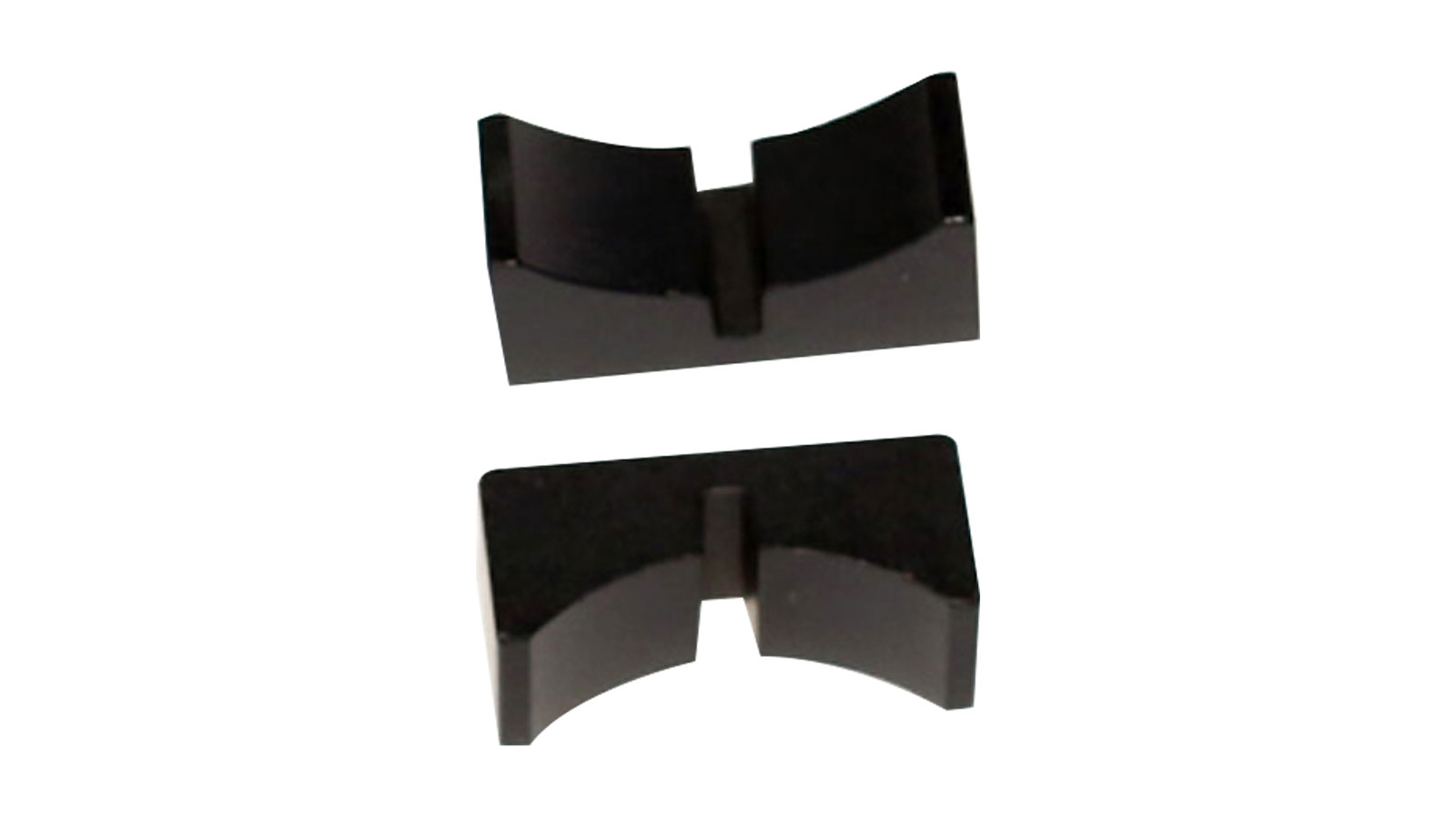
NdFeB magnet, 3 to 12MGOe
Company: Ningbo Yansen Enterprises Development Co. Ltd
Available in the YSNP-4 to YSNP-12 series, the CMN4849 NdFeB magnet from Ningbo Yansen has 3 to 12MGOe maximum energy product, 4 to 80kG residual induction, 3 to 6kOe coercive force, 5 to 9kOe intrinsic coercive force and 100 to 180 C maximum operating temperature.
MOQ: 100 units
Lead time: 20 days
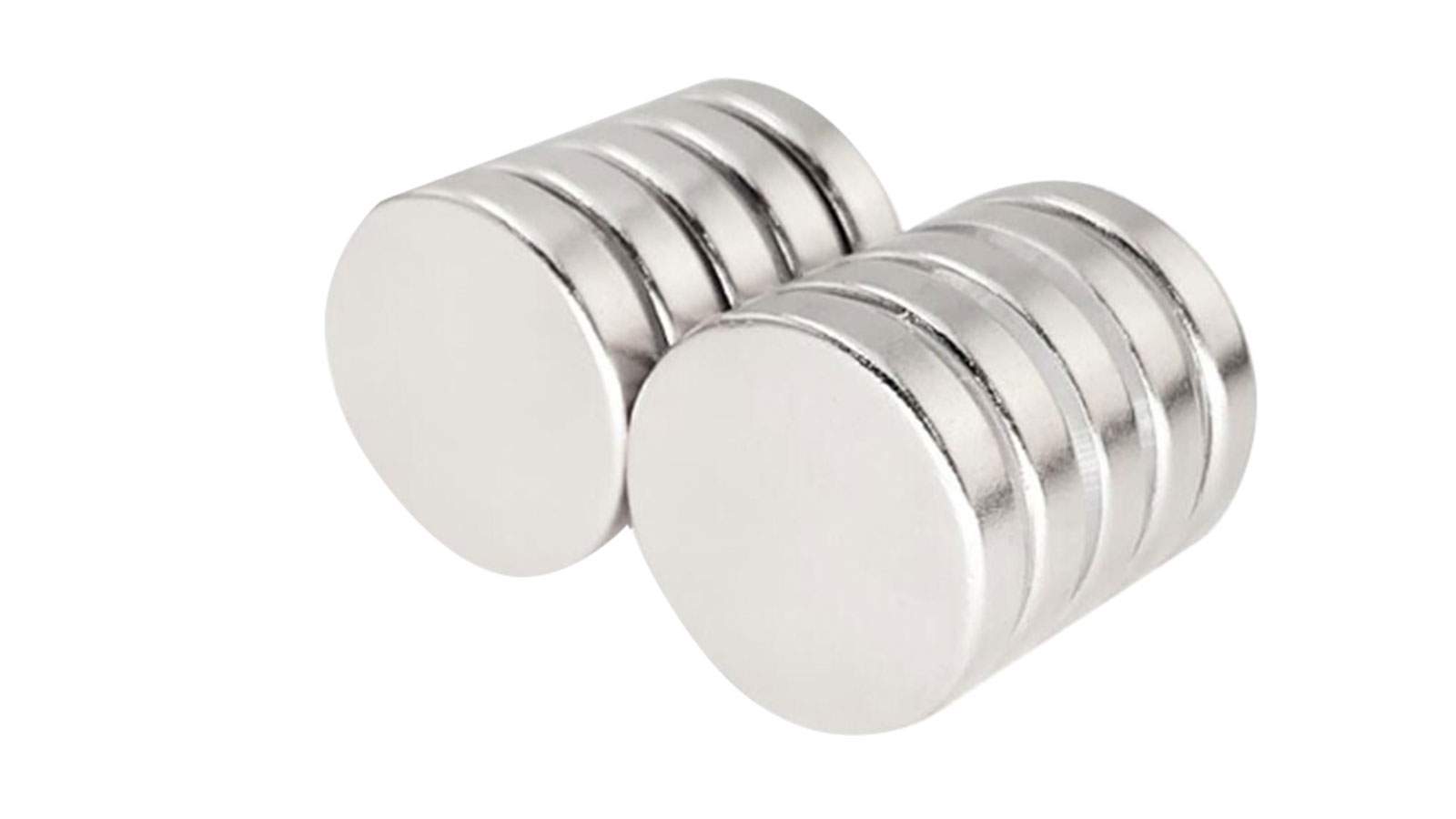
NdFeB magnet in various grades, shapes, coating
Company: Tan Magnetic Products Ltd
Tan offers the ND-1572 NdFeB magnet in N35, N38, N40, N42, N48, N50 and N52 (M, H, SH, EH, UH, AH) grades with nickel, NiCuNi, zinc, tin, epoxy resin, nickel-silver or nickel-gold coating. The options in terms of shape are disc, ring, block, segment, cylinder and trapezoid or as customized.
MOQ: 5 units
Lead time: 7 days

