Download App
Better Online and Trade Show Sourcing Experiences.Scan the QR code to download.
Learn More
Hot Topics
Makers emphasize use of high-grade materials and components for improved product performance. The range includes IP65 to IP68-rated units.

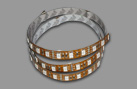
Boosting competitiveness in the outdoor lighting market spurs mainland China suppliers of flexible LED strips to keep improving product reliability and stability. Companies adopt materials that will ensure consistent performance in harsh environments. They use housings and adhesives for enhanced water and heat resistance. Silicone tubes and glue are widely employed to meet at least IP65 requirements. A number of makers can offer up to IP68-rated models.
Manufacturers choose LED chips from US, Taiwan and key domestic providers as additional quality measure. In high-end models, they replace conventional lead wires with gold ones for an extended operating life span.
At present, the outdoor-use category accounts for 10 to 50 percent of companies' production. This will increase as suppliers shift focus from the indoor illumination segment. Requirement in the former application has been on the rise in recent years. The trend is expected to persist in 2016, with projections of 5 to 10 percent increase. Indicator, decorative and advertising lighting products fuel demand.
Qingdao Hehui Optoelectronic Co. Ltd, which turns out flexible LED strips for indoor and outdoor uses, allocates half of output for the latter. It plans to raise the level in the months ahead.
There are 300-plus suppliers of flexible LED strips for outdoor and indoor applications in mainland China. They still export between 10 and 80 percent of output to Europe, the US and Asia, while looking for opportunities in the Middle East and South America. Most also offer rigid versions, LEDs, modules and lights.
More than 70 percent of the pool consists of local operations, and the rest with investment from Taiwan and Hong Kong.
The coastal areas in the south and east remain key hubs for the line. Over half of the makers are in Guangdong province, specifically in the cities of Shenzhen, Dongguan and Zhongshan. The others are in Fujian, Zhejiang and Jiangsu provinces in respective cities of Xiamen, Ningbo and Suzhou.

More Sourcing News
Read Also

关注 “环球资源外贸” 官方微信,获取实时外贸资讯
iOS & Android
iOS & Android(Mainland China)
Copyright © 2026 Publishers Representatives Limited. All rights reserved.