Download App
Better Online and Trade Show Sourcing Experiences.Scan the QR code to download.
Learn More
Hot Topics
Continuous exposure to the sun weakens the ability of sunglasses to protect the eyes from harmful UV rays.
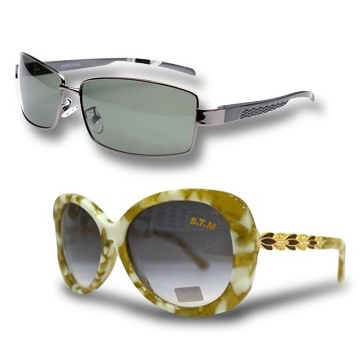
Scientists at the University of Sao Paulo in Brazil recommends that people change sunglasses every two years after their recent study revealed that prolonged sun exposure wears down the lenses ability to protect the eyes against harmful UV rays.
"Sunglasses play an important role in providing safety and their lenses should provide adequate UV filters," the researchers, led by Dr. Liliane Ventura, wrote in their study.
The report added that "ocular health is a serious concern worldwide, but particularly in tropical countries where UV indexes are extremely high in summer and still very high in winter compared to countries that are farther apart from the tropics. In most countries in the southern hemisphere…sunglasses standards are not quite appropriate for the ultraviolet conditions…the public should be more aware about ultraviolet protection as a whole."
For their research, Ventura and her team developed an aging test that determines how sunglasses withstand wear-and-tear of their UV-protective property.
Working on the assumption that people in Brazil use their sunglasses about two hours each day and change eyewear every two years, the team placed sunglasses in front of the sun simulator lamp for about 135 hours at a distance of 5cm. This replicated how much sun shades worn by locals are exposed to.
The study said that sun exposure varies based on world latitudes. Tropical countries have higher UV indexes that are extremely high during the summer and continue even during the winter season. Based on these findings, sunglasses worn in the southern hemisphere should be replaced more often.
Ventura and her team hope that manufacturers and health officials will use their aging test to ensure that sunglasses provide optimal UV protection.
"Lenses should offer UV filters that protect against developing corneas, swelling of the eye that can distort vision and even other concerns, such as the growth of pink, fleshy tissue on the whites of the eye that can tamper with vision," she said.
Her team's full findings can be viewed in the Biomedical Engineering Online journal.
More Sourcing News
Read Also

关注 “环球资源外贸” 官方微信,获取实时外贸资讯
iOS & Android
iOS & Android(Mainland China)
Copyright © 2026 Publishers Representatives Limited. All rights reserved.