




Image from iStock
Smart mirrors are redefining connected living as we move into 2026, merging sleek design with AI-powered functionality. From biometric tracking to virtual try-ons, these dual-purpose displays offer retailers and tech-savvy consumers a dynamic blend of utility and innovation. As demand surges, smart mirrors are becoming essential fixtures across homes, stores and wellness spaces.
First introduced in the early 2010s through DIY prototypes by tech enthusiasts, smart mirrors transformed into sophisticated, multifunctional devices that are reshaping how users interact with their environments.
Smart mirrors gained commercial momentum around 2015, particularly in the automotive sector, with US companies like Gentex and Magna International introducing rearview mirrors featuring auto-dimming and blind-spot detection. By 2016 to 2018, the technology expanded into retail and residential spaces, where brands began integrating interactive displays for virtual try-ons and smart home connectivity. By 2022, advanced models with AI-driven sizing tools and touchless point-of-sale systems – such as those from clothing brand MySize – marked a turning point in mainstream adoption.
Smart mirror vs LED displays
Smart mirrors combine a semitransparent reflective surface with embedded digital displays and sensors. Unlike traditional mirrors, they deliver real-time information – weather, calendar updates, fitness metrics – while maintaining their reflective function. This dual capability sets them apart from standard LED displays, which are designed solely for visual output and lack the mirror’s physical utility. The fusion of reflection and interactivity makes smart mirrors especially valuable in space-conscious environments like bathrooms, fitting rooms and fitness studios.
Typically featuring OLED or microLED displays layered beneath moisture-resistant glass, smart mirrors are housed in sleek frames suitable for both residential and commercial use. Integrated sensors, cameras and microphones enable touchless control, while embedded processors and wireless modules ensure seamless connectivity. Voice assistants and AI interfaces are now standard, offering personalized experiences. Many models also include ambient lighting, biometric tracking and modular components, transforming smart mirrors into dynamic hubs for health monitoring, entertainment and productivity. As innovation continues, smart mirrors are poised to become essential fixtures in connected living spaces.
Market outlook
Worldwide, smart mirrors had a market value of about $1.8 billion in 2024, according to research by Global Market Insights (GMI). This is projected to reach $6 billion by 2034, at a CAGR of 12.9 percent. This growth is fueled by rising consumer demand for smart home technologies, increased adoption in automotive safety systems and expanding applications in retail and hospitality environments such as for virtual fittings and automated concierge services.
Per GMI, North America, which generated $500 million in 2024, is expected to remain the dominant region with 13.1 percent CAGR through the decade. Germany, China and Saudi Arabia are growth spots driven by smart city initiatives, luxury home upgrades and the proliferation of connected vehicles.
Key product trends
1. AI-Powered Personalization
Smart mirrors in 2025 are increasingly equipped with AI capabilities that enable personalized user experiences. Facial recognition, voice assistants and behavioral analytics allow mirrors to deliver tailored content – ranging from health insights and skincare recommendations to calendar alerts and traffic updates. These features are particularly attractive in residential settings, where mirrors function as lifestyle companions rather than passive fixtures.
2. Health and Wellness Integration
Health monitoring has become a central feature of next-generation smart mirrors. Devices now include sensors capable of tracking heart rate, posture, skin condition and even sleep quality. Some models offer virtual fitness coaching, integrating with wearable devices and fitness apps to provide real-time feedback. This convergence of wellness and technology is driving adoption among health-conscious consumers and positioning smart mirrors as essential tools in personal care routines.
3. Augmented Reality (AR) and Virtual Try-On
Retailers are leveraging AR-enabled smart mirrors to enhance customer engagement. Virtual try-on capabilities allow users to preview clothing, accessories and cosmetics without physical interaction. This not only improves the shopping experience but also reduces product returns and supports omnichannel retail strategies.
4. Smart Home Integration
Smart mirrors are increasingly functioning as control centers for home automation. Through voice commands or touch interfaces, users can manage lighting, temperature, security systems and entertainment devices. Compatibility with major smart home ecosystems – such as Google Home, Amazon Alexa and Apple HomeKit – has become a standard expectation, enabling seamless integration into connected living environments.
5. Automotive Applications
In the automotive sector, smart mirrors are being adopted for advanced driver assistance systems (ADAS). Features such as auto-dimming, blind-spot detection, rearview camera integration and real-time navigation support are enhancing vehicle safety and comfort. With electric vehicle (EV) adoption accelerating, manufacturers are incorporating smart mirrors to meet regulatory requirements and consumer expectations for high-tech interiors.
Design and form factor trends
Wall-mount smart mirrors dominate the market, accounting for over 64 percent of installations in 2025, according to Future Market Insights. Their sleek, space-saving design aligns with modern interior aesthetics and supports multifunctional use in bathrooms, dressing rooms and entryways. Freestanding models are also gaining traction in commercial settings, particularly in salons, gyms and retail stores.
Display technology continues to advance, with manufacturers adopting flexible OLED panels, anti-fog coatings and high-brightness screens for improved visibility and interactivity. Touchscreen interfaces, gesture recognition and voice control are becoming standard features, enhancing usability across demographics.
Sustainability and materials innovation
Eco-conscious design is emerging as a differentiator in the smart mirror category. Manufacturers are incorporating recycled glass, vegan leather and energy-efficient lighting to meet sustainability goals. Waterproofing and durability standards are also improving, with hospitality-grade models offering long-term reliability in high-traffic environments.
Emerging considerations
Despite strong momentum, the smart mirror market faces several challenges:
Integration complexity: Ensuring compatibility with diverse smart home platforms and devices remains a technical hurdle.
Privacy concerns: Facial recognition and health monitoring features raise questions about data security and user consent.
Cost barriers: Premium models with advanced features can be prohibitively expensive for some consumers, limiting mass adoption. Smart mirror retail prices in 2025 span from around $150 for basic models to over $5,000 for advanced systems with AI and biometric features. While entry-level options target home users, high-end mirrors dominate luxury retail and hospitality, with some custom installations exceeding $10,000.
Manufacturers and retailers must address these concerns through transparent data policies, modular product offerings and scalable pricing strategies.
Conclusion
Smart mirrors in 2025 are more than reflective surfaces – they are intelligent interfaces that blend design, utility and connectivity. As the market matures, buyers and enthusiasts should expect continued innovation in AI, AR and IoT integration, alongside expanding applications across industries. With a projected multibillion-dollar valuation and strong consumer interest, smart mirrors represent a compelling frontier in the evolution of electronic products.
Here is a product gallery chosen by our analysts as representing trends in smart mirrors available from suppliers in China.
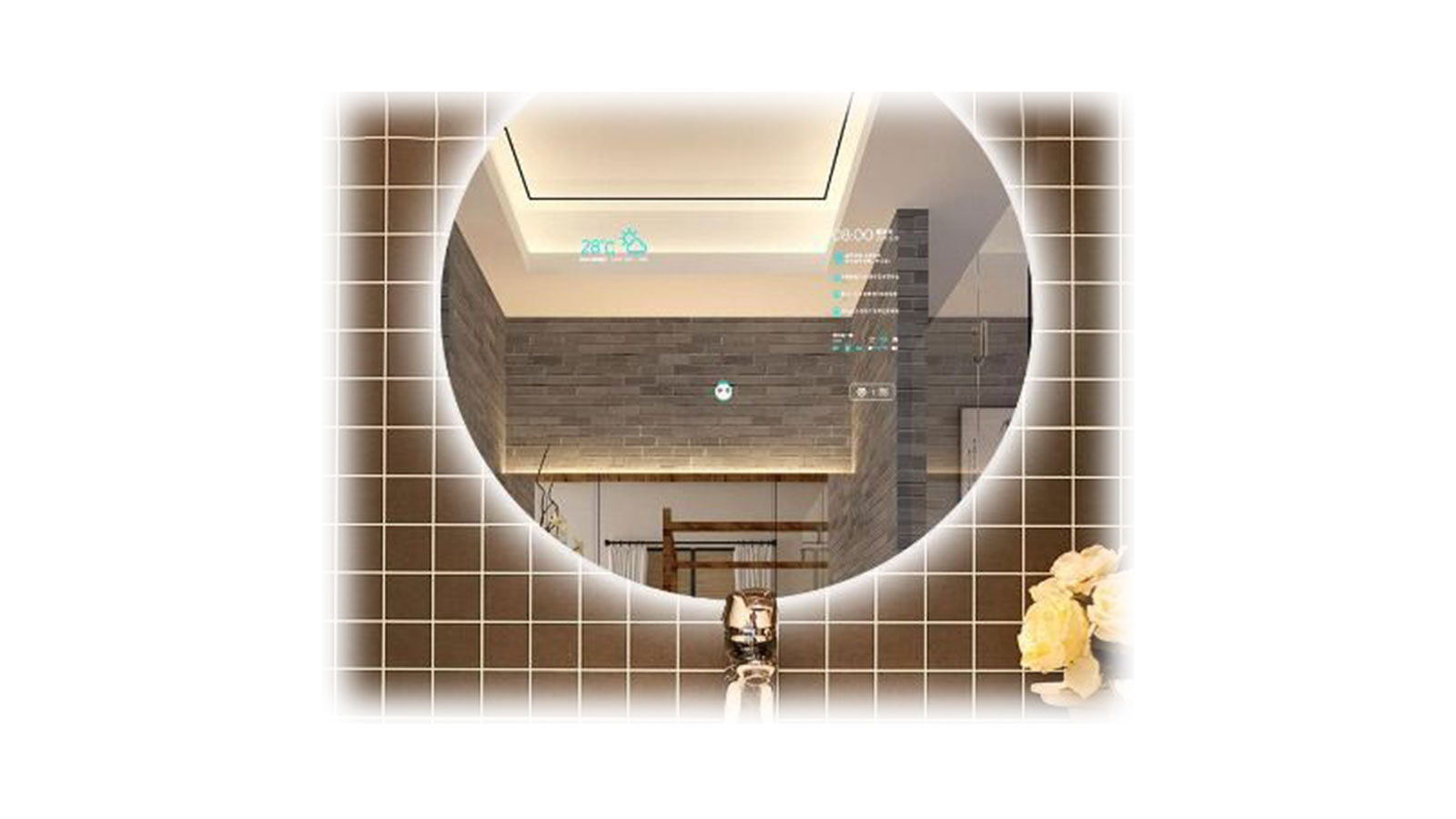
13.3-inch smart mirror with touchscreen
Company: Shenzhen Teejoin Technology Co. Ltd
Model YI from Shenzhen Teejoin is a 13.3-inch smart mirror featuring 8GB memory, 1366x768-pixel resolution, 16:9 aspect ratio and 1,000:1 contrast ratio. It supports touchscreen input, Wi-Fi, Bluetooth and video playback, with internal dual speakers and 5,500K LED lighting. Sound control is integrated. Electrical properties include 100 to 240VAC, 50/60Hz input, and 15W active and <2.5W standby power. This unit ships frameless, with a mirror diameter of 630mm and depth of 40mm.
MOQ: 1 unit
Lead time: 3 to 15 days
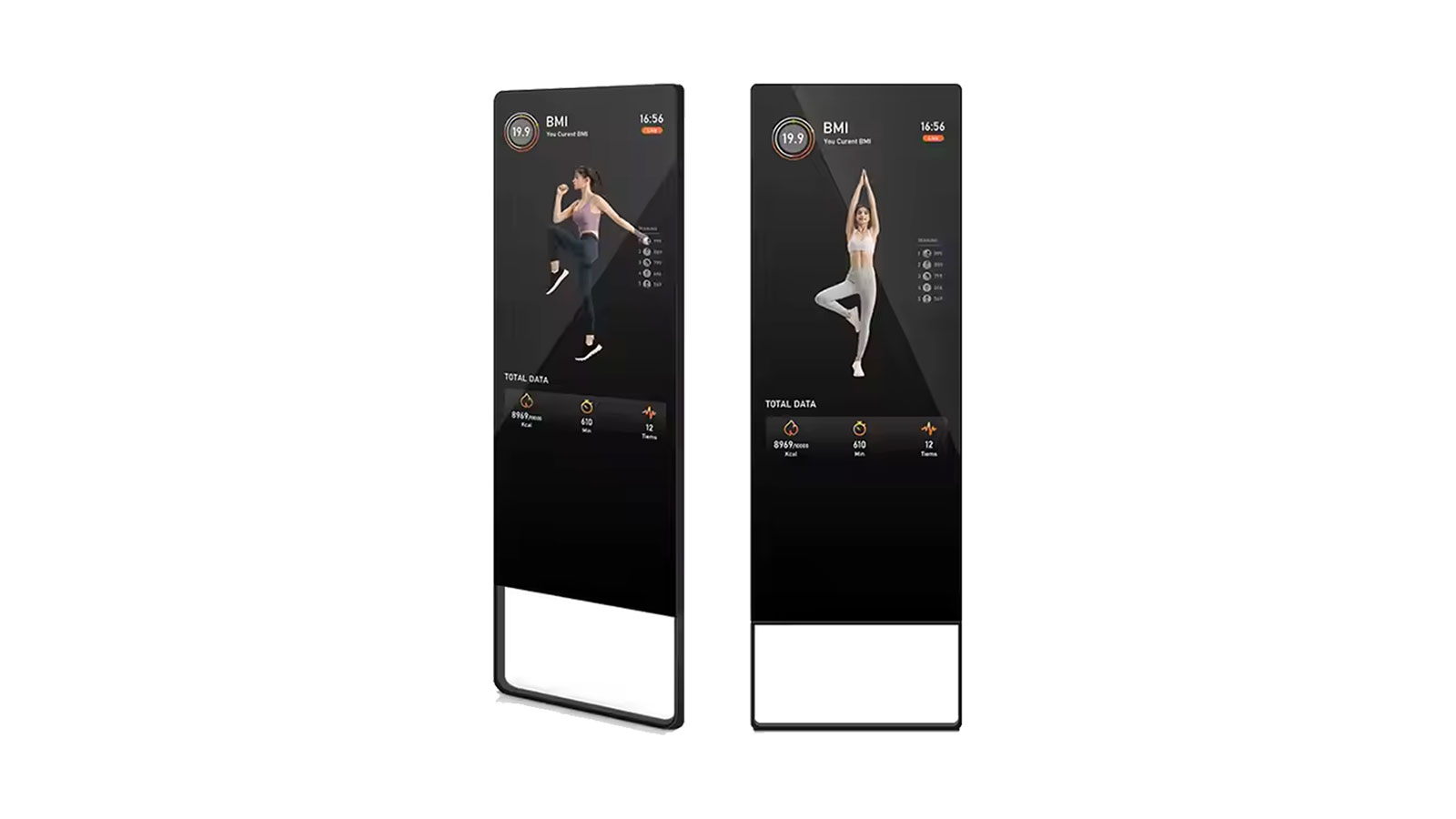
43-inch smart mirror, triple OS support
Company: Shenzhen Windro Technology Co. Ltd
From Shenzhen Windro, model WD-PM-43-3 is a 43-inch smart mirror display with an A+ grade LCD, 1920x1080-pixel resolution, 3,000:1 contrast ratio and 700cd/sqm typical brightness. It supports Android, Windows and Linux OS, and has 2, 4 or 8GB RAM and 8, 16 or 32GB storage. Designed for 24/7 operation, it features an LED backlight rated for 50,000+ hours. Touch functionality is integrated and ruggedization options range from IP65 to IP68.
MOQ: 1 unit
Lead time: 7 to 15 days
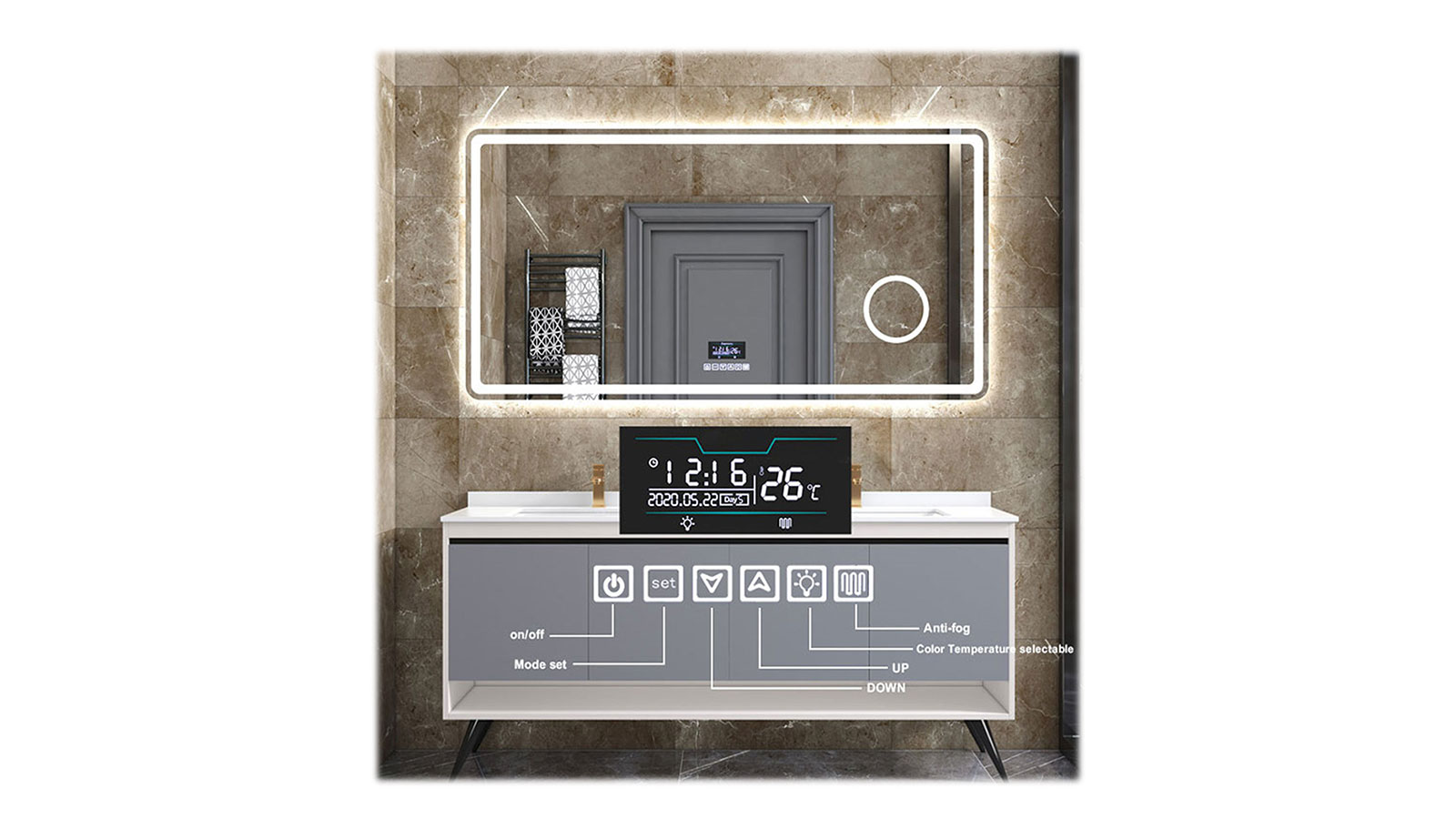
Dual-sided smart mirror with touch controls
Company: Quanzhou Maxtop Group Co. Ltd
Quanzhou Maxtop’s model NPP-109-008 is a dual-sided smart mirror featuring LED illumination, touch switch, anti-fog capability and selectable color temperature. Functional integrations include time, date and temperature display, with optional demister and SDK support. This heat-insulated mirror is built with explosion-resistant silver glass and framed in aluminum alloy or stainless steel for acid and wear resistance. It measures 10x10x10 cm and weighs 10g.
MOQ: 5 boxes
Lead time: 15 to 25 days
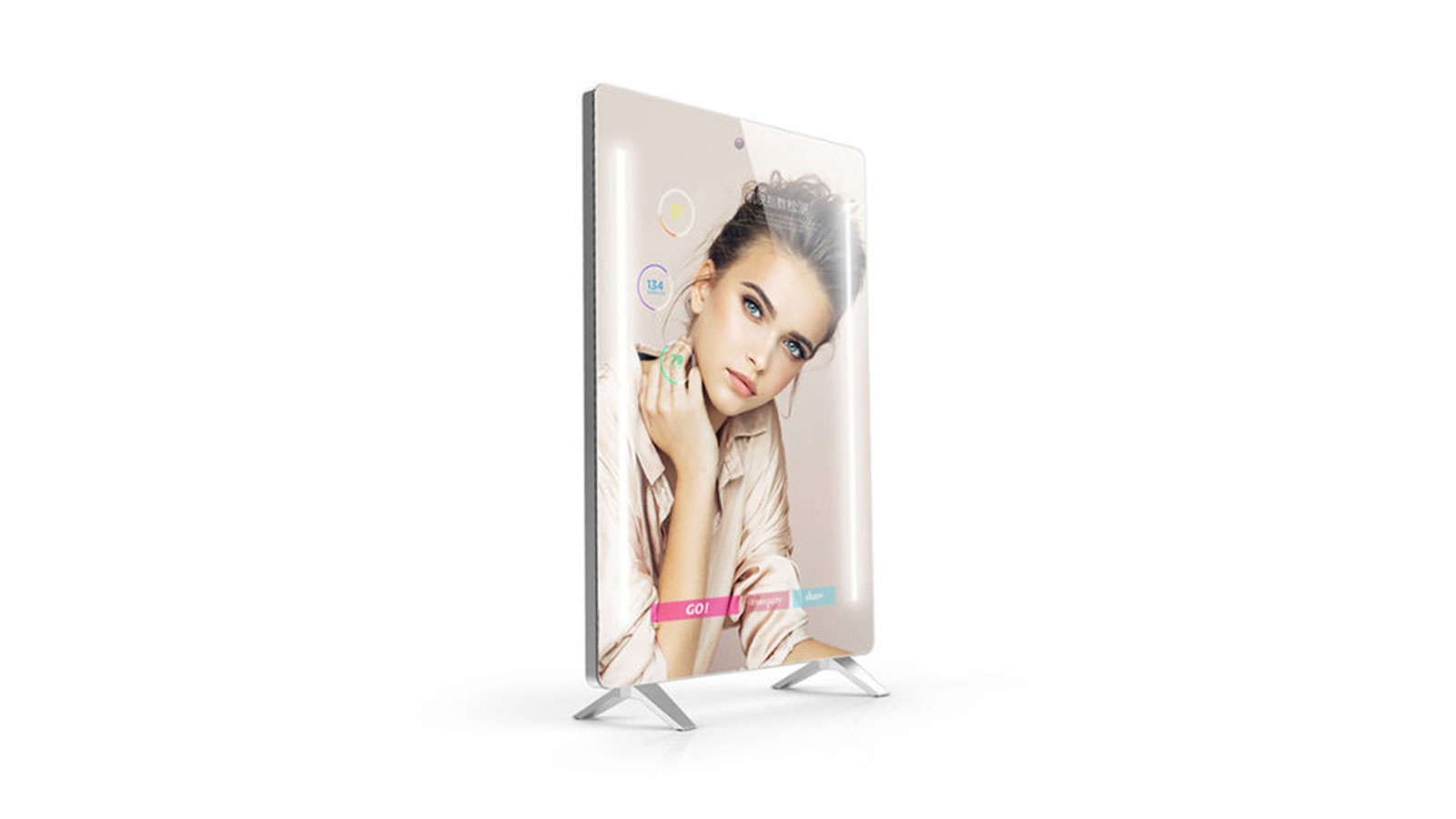
21.5-inch smart mirror, dual 4K output
Company: Fuzhou Haomin Imp. & Exp. Co. Ltd
Model Leo-00121 from Fuzhou Haomin is a 21.5-inch smart mirror with a 1920x1080-pixel FHD LCD, 3,000:1 contrast ratio, 450cd/sqm brightness and 178-degree viewing angle. A 10-point capacitive touch panel is optional. Powered by an Android octa-core 1.6GHz CPU, this product includes 1GB DDR3 RAM and 8GB eMMC storage. Connectivity includes Wi-Fi, Bluetooth, Ethernet and USB. Display interfaces support HDMI 4Kx2K, LVDS and dual-screen output. Additional features include real-time clock, gravity sensing and support for MIPI camera, infrared remote and external modules. The MOQ and the lead time are on direct inquiry.

