




Resurgent interest in sodium-ion batteries, driven by initiatives to find lithium alternatives with better performance in extreme temperatures and made with more widely available materials, is expected to yield new breakthroughs. Ongoing research promises further advancements in energy density – though still not comparable to lithium’s – is closing in, while commercialization efforts have resumed.
In a February 2026 commentary, the International Energy Agency (IEA) noted the recent investment announcements of three Chinese companies. These were CATL and BYD, respectively the world’s largest and second-largest battery manufacturers, and HiNa, a smaller company but the first to use sodium-ion batteries (SIBs) in an electric vehicle (EV).
After releasing its first-generation SIBs in 2021 for EVs in regions with extremely low temperatures and for energy storage applications, CATL followed through, announcing the second generation in 2024. The latter batteries are slated for deployment starting 2026 in battery swap systems, passenger and commercial vehicles, and energy storage.
Reuters reported in April 2026 that CATL signed a deal with Beijing-based HyperStrong, an energy storage system manufacturer. This covers a delivery of 60GWh batteries over three years. “This collaboration signals that CATL has successfully resolved the difficulties of sodium ion battery production across the industrial chain and has the capability for large-scale deliveries,” according to a statement posted on CATL's WeChat account.
BYD, meanwhile, is targeting EVs, grid-scale storage and industrial use. The company began construction of a 30GWh SIB plant in 2024, a $1.4 billion joint-venture project with the Huaihai Holding Group.
HiNa’s sodium-ion batteries, launched in March 2025, have been deployed in electric two-wheelers, EVs and energy storage power stations, according to a report from Shanghai-based news site CnEVPost. These have cells with an energy density exceeding 165Wh/kg, are capable of full charging in 20 to 25 minutes and exhibit stable discharge performance at -40 to 45 C.
Ensuring global lead
China is pursuing both lithium and sodium-ion battery development to secure future industry dominance. It remains the leader in the LiFePO4 category, the most widely used chemistry in EVs and energy storage, while consolidating resources to build the alternative SIB segment.
State-owned China Petroleum & Chemical Corp. (Sinopec) has stated that the country’s SIB market is projected to reach 292GWh by 2034 from 10GWh in 2025, or about 45 percent average annual growth rate, per a report from electronics manufacturer IMI. “By the end of this decade, China is forecast to account for more than 90 percent of global sodium-ion battery output, cementing its role as the central hub for production, materials, and supply chains.”
SIBs are also forecast to eat into the market share of lithium batteries, especially in the cost-sensitive segment.
Fueling this development is the expected realization of 200Wh/kg energy density from the current level of 160Wh/kg or almost the same as that of LFPs in the next two years. So far, CATL has already reached industrialization stage for sodium-ion cells with 175Wh/kg, over 3,000 cycles and -40 C ambient operating temperature.
As for BYD, a February 2026 CnEVPost article reported that the company developed sodium-ion batteries with a life span of over 10,000 cycles, trumping EV LFP batteries’ 2,000 to 3,000 cycles. It did not include data on energy density. However, a May 2025 BitAuto report said these SIBs have a cell capacity of 200Ah.
Many Chinese companies are into similar initiatives. Guangdong NPP has announced a new project with a total investment of $964 million. Located in Shaoguan Renhua Industrial Park, the first phase is scheduled to be completed in June 2027 and will turn out 5GWh sodium-ion batteries, 10,000 tons of anode materials and 5,000 tons of cathode materials every year, or a production value of $416 million. When fully operational, the company will realize $2.142 billion annually.
The growing shift to SIBs can be gleaned from the expanding market for materials as well. From 535,185 tons in 2026, the volume is expected to reach 2.548 million tons by 2035 at a CAGR of 18.93 percent, according to a Towards Chem & Materials report. In value, that’s $3.81 billion to $40.74 billion by 2035 or a 30.11 percent CAGR during the period.
China-made SIBs
Widely available sodium-ion batteries from Chinese suppliers have an energy density of 140 to 170Wh/kg, charging and discharging cycles of about 3,000 times and operating temperature of -40 to 80 C. These can be customized according to requirements. All comply with industry safety standards such as UL, CE, UN 38.3 and RoHS.
These batteries are usually made using cathode and anode materials, electrolyte, separators, aluminum foils and shells from domestic providers. For cathode materials, the go-to suppliers include MGL, Easpring and Changyuan Lico, while Fujian Yuanli and Shanshan are the primary sources of anode materials.
About 100 companies make up the production pool for sodium-ion batteries in China, most of which are homegrown operations. Many are found in Shenzhen, Dongguan, Zhongshan and Guangzhou, with others in Suzhou, Changzhou and inland areas.
Besides CATL and BYD, the top players include CALB and Gotion. All four are among the leading suppliers worldwide.
Solid-state bid
In addition to the two-prong strategy on sodium-ion and lithium batteries, both relying on liquid electrolyte, China is pursuing the development of solid-state SIBs, which are expected to be the future trend for higher safety and performance.
R&D activities at research institutes and universities have led to some breakthroughs. The most recent is from the Shanghai Institute of Ceramics, Chinese Academy of Sciences on such a battery with cells having a capacity retention of 90.2 percent after 5,100 cycles at 10C rate.
Battery technology comparison
Sodium-ion batteries excel where cost, safety and sustainability matter more than compactness, making them ideal for stationary storage and low-cost mobility. Lithium-ion batteries, on the other hand, remain the top choice where high energy density and lightweight design are essential, such as in premium EVs and portable electronics. The two technologies are viewed as complementary rather than directly competing.
| Parameter | Sodium-ion battery (SIB) | Lithium-ion battery (LIB) |
| Charge carrier | Na⁺ ions | Li⁺ ions |
| Raw material abundance (% of Earth's crust) | Very high, sodium is about 2.6 percent | Limited, lithium is about 0.002 percent |
| Raw material cost | Low, about $150 to $250/ton for sodium carbonate (Na₂CO₃) | High, about $15,000 to $30,000/ton for lithium carbonate (Li₂CO₃) |
| Nominal cell voltage | 3.1 to 3.3V | 3.6 to 3.7V |
| Gravimetric energy density | 100 to 160Wh/kg | 150 to 270Wh/kg |
| Volumetric energy density | 250 to 375Wh/L | 400 to 700Wh/L |
| Cycle life | 2,000 to 5,000+ cycles | 1,000 to 3,000 cycles, LFP up to 6,000+ |
| Operating temperature range | –30 to 60 C, excellent cold performance | –20 to 55 C, degrades in cold |
| Safety | Higher; can be safely discharged to 0V, less thermal runaway risk | Moderate; risk of thermal runaway and fire |
| Charging speed | Fast, can reach 80 percent in about 15 minutes | Moderate to fast, varies by chemistry |
| Anode material | Hard carbon, no graphite needed | Graphite, silicon-graphite composites |
| Cathode material | Prussian blue analogs, layered oxides (Na-Fe-Mn-Ni) or polyanionic compounds | LFP, NMC, NCA or LCO |
| Current collector (anode) | Aluminum, cheaper and lighter | Copper, more expensive |
| Electrolyte | Sodium salts (NaPF₆) in organic solvents | Lithium salts (LiPF₆) in organic solvents |
| Self-discharge rate | Low | Low to moderate |
| Environmental impact | Lower; uses abundant, nontoxic materials | Higher; mining of lithium, cobalt and nickel raises concerns |
| Transportation safety | Can be shipped at 0V or fully discharged for safer logistics | Must be shipped partially charged |
| Recycling | Developing; simpler due to cheaper materials | Established but complex and costly |
| Cost per kWh (projected) | $40 to $80/kWh at scale | $100 to $140/kWh |
| Maturity/Commercialization | Early commercial stage (CATL, BYD, HiNa, Faradion) | Fully mature, dominant market |
| Main applications | Grid storage, low-speed EVs, e-bikes, backup power, entry-level EVs | EVs, smartphones, laptops, power tools, grid storage |
| Key limitation | Lower energy density means heavier or larger for same capacity | Resource scarcity, cost, safety concerns |
| Key advantage | Cost, safety, sustainability, cold-weather performance | High energy density, mature supply chain |
Here is a selection of sodium-ion batteries from China.
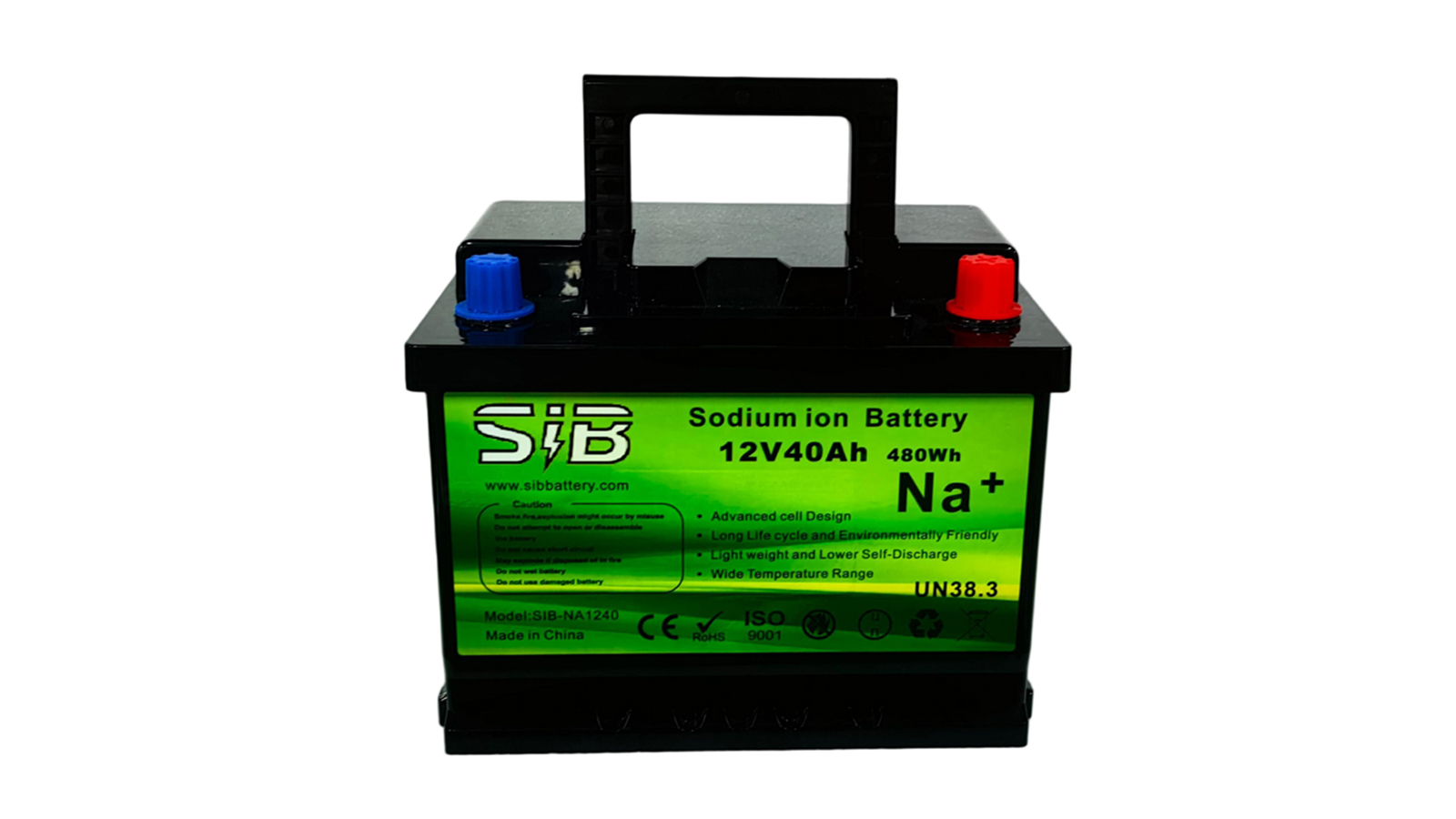
Sodium-ion battery, 16V charge, 8V discharge voltage
Company: Mica Power Co. Ltd
This sodium-ion battery from Mica, model SIB-NA1240, has charge and discharge levels of 16 and 8V and charge and discharge temperatures of 0 to 45 C and -30 to 60 C. It meets CE, RoHS and UN 38.3 standards.
MOQ: 10 units
Lead time: 15 days
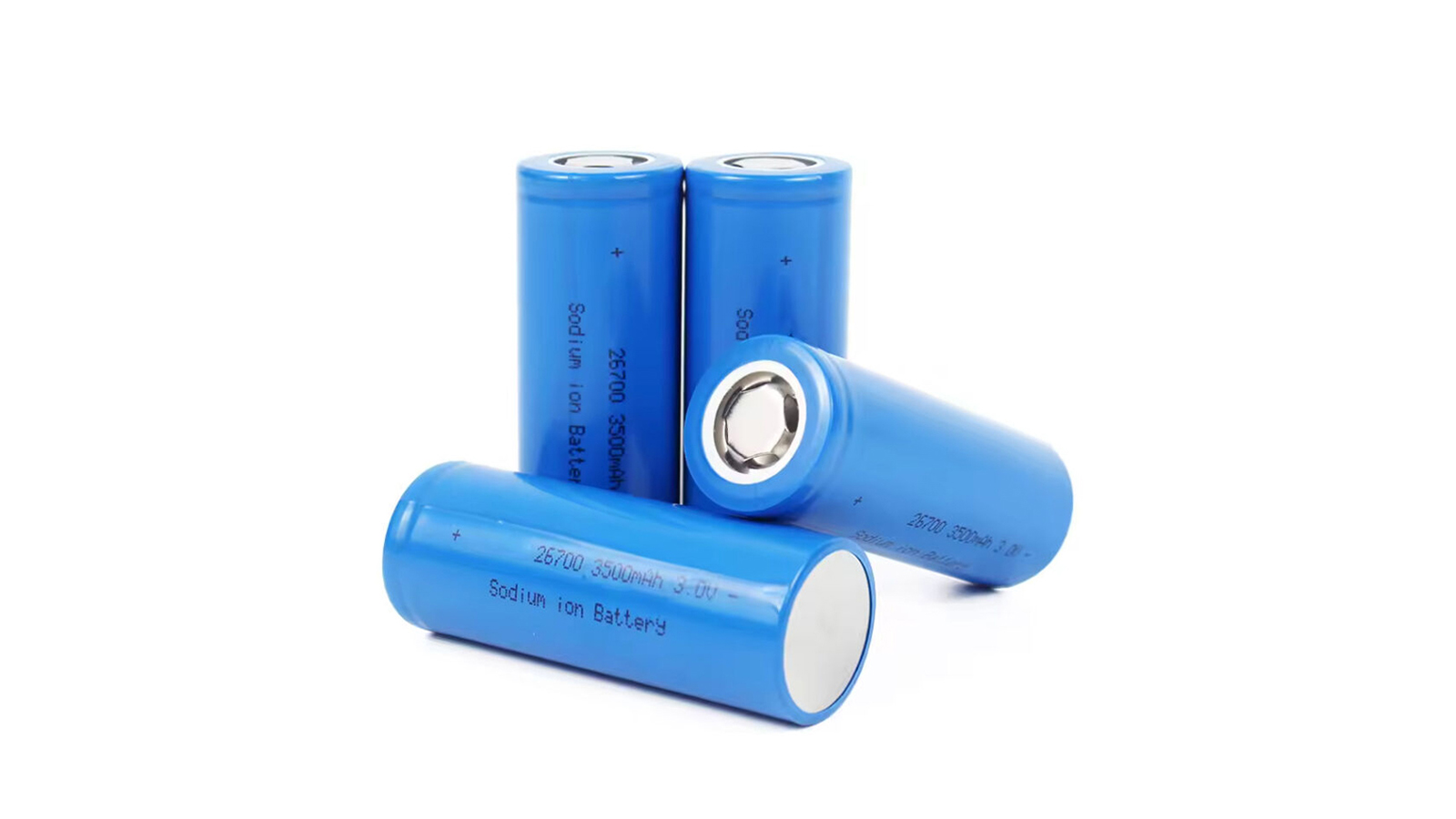
3V, 3,500mAh sodium-ion battery
Company: Shenzhen Boye Energy Co. Ltd
The 3V-3500 from Shenzhen Boye is a 3V-rated sodium-ion battery with capacity of 3,500mAh, energy density of 128Wh/kg and life span of ≥3,000 cycles. The end-of-charge and -discharge voltage levels are 4.1 and 1.5V and the charge and discharge temperatures are 0 to 60 C and -30 to 60 C.
MOQ: 5 units
Lead time: 7 days
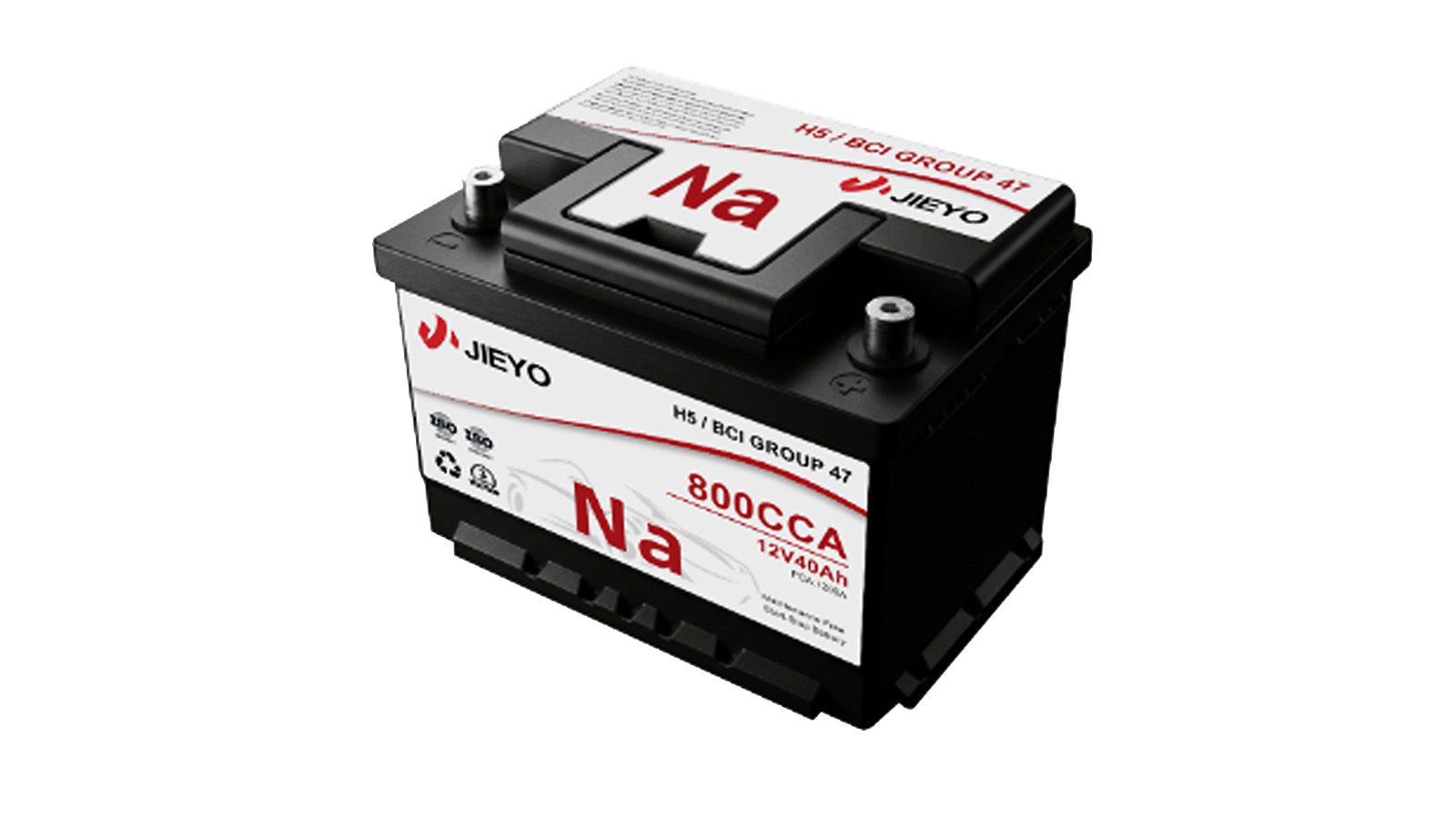
12V, 40Ah sodium-ion battery
Company: Shenzhen J&Y Technology Co. Ltd
From Shenzhen J&Y, this sodium-ion battery, model JYF1240, has 12V rated voltage, 40Ah rated capacity, -40 to 80 C operating temperature and 3,000-cycle life span. It has built-in overcharge, -heat, -current, -load, short-circuit and earth-leakage protection.
MOQ: Negotiable
Lead time: 7 days
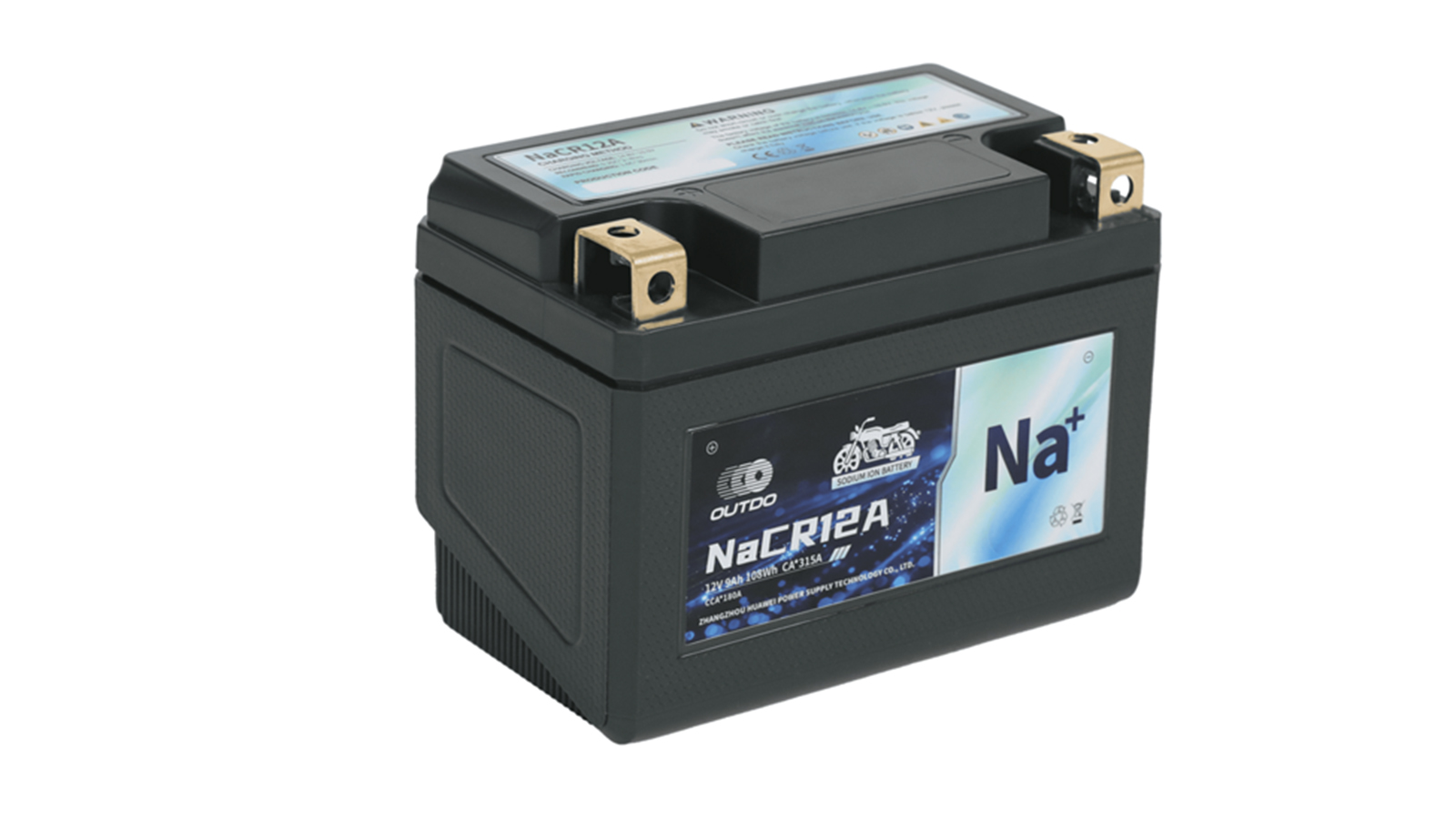
12V, 9Ah, 108Wh sodium-ion battery
Company: Zhangzhou Huawei Power Supply Technology Co. Ltd
The NaCR12A sodium-ion battery from Zhangzhou Huawei has a rated voltage of 12V, rated capacity of 9Ah and power of 108Wh. This IP66-rated unit measures 150x87x105mm and weights 1.45±0.1kg.
MOQ: 500 units
Lead time: 20 days

