





Pickleball, a unique and rapidly growing sport, has gained popularity worldwide. There are different types of pickleballs available on the market, specifically indoor and outdoor pickleballs. While they may appear similar at first glance, there are significant differences between the two that can greatly impact the gameplay experience.
In this comprehensive guide, we will explore the major differences between indoor and outdoor pickleballs. By understanding these distinctions, you can make an informed decision about which type of pickleball is best suited for your customers' needs. So let's dive in and examine the key factors that differentiate indoor and outdoor pickleballs.
 Are you familiar with the methods sellers on platforms like Amazon, Temu, Wish, eBay, Shein, and Walmart use to find suppliers for the goods sold on their B2C platforms?
When it comes to major purchases, sellers tend to establish long-term strategic partnerships with manufacturers while also exploring trusted wholesalers face-to-face at trade shows. Additionally, in the digital age, finding verified suppliers through online third-party B2B platform channels has become a common and effective practice.
One notable B2B platform excelling in this regard is Global Sources. For over 50 years, Global Sources has stood as one of the world's largest facilitators of Business-to-Business (B2B) trade, garnering trust as a genuine and safe hands-on sourcing platform.
With a remarkable track record, it has served over 10 million registered buyers and users worldwide, boasting the participation of 97 of the world's top 100 retailers. Global Sources caters to online sellers across various platforms, including Amazon, Temu, Wish, eBay, Shein, Walmart, and Etsy. It offers a wide array of trusted suppliers from countries like China, Vietnam, South Korea, and India, ensuring diverse sourcing options.
Top Picks of Wholesale Pickleballs from Global Sources
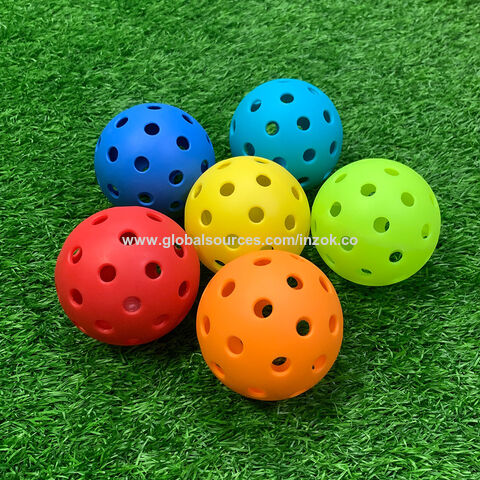
Wholesale Approved Standard 40 holes Pickleball Outdoor Balls Competition Seamless Pickleball
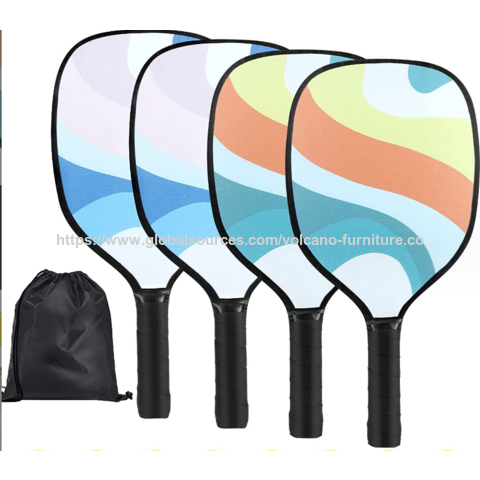
Wholesale Sports Pickleball Sling Bag Racket Tennis Paddle Tote Carry Bag Travel Pickleball Bag

Wholesale Custom High Quality Adults 40 holes Pickleball Outdoor Balls Competition Seamless Pickleball
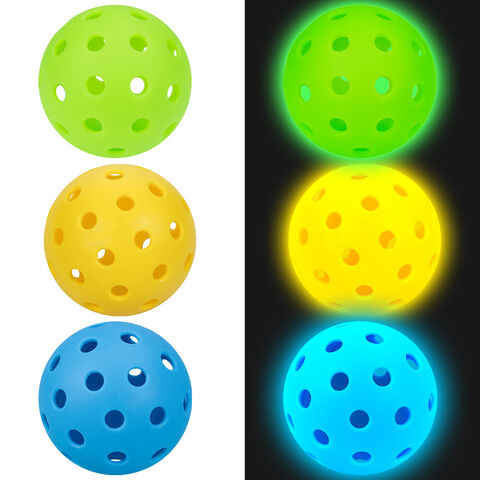
Noctilucent Pickleball with 26-hole OEM Outdoor luminous Pickleball with Low MOQ
How Do You Differentiate Between Indoor and Outdoor Pickleballs?
At first glance, indoor and outdoor pickleballs may seem identical. However, upon closer inspection, you will notice several distinct characteristics that set them apart. While there may be exceptions to these general differences, the majority of indoor and outdoor pickleballs adhere to the following variations:
- Number of Holes: Indoor pickleballs typically have 26 larger holes, whereas outdoor pickleballs usually feature 40 smaller holes.
- Hole Diameter: The holes on indoor pickleballs have wider diameters compared to outdoor pickleballs.
- Weight: Outdoor pickleballs tend to be heavier than indoor pickleballs.
- Hardness: Outdoor pickleballs are generally made of harder plastic, providing more bounce.
- Durability: Due to their harder composition, outdoor pickleballs are more prone to cracking and have a shorter lifespan compared to their indoor counterparts.
While each brand and type of pickleball may have specific variations, the aforementioned differences hold true for the majority of indoor and outdoor pickleballs.
Now, let's delve deeper into each of these factors to gain a better understanding of the disparities between indoor and outdoor pickleballs.
1. Number of Holes
The number of holes on a pickleball plays a crucial role in maintaining its consistency and flight trajectory. Outdoor pickleballs typically feature 40 closely-packed holes, while indoor pickleballs have 26 wider holes. The design of outdoor pickleballs with numerous smaller holes offers more robustness, making them suitable for playing in windy conditions. These holes are strategically beveled into the plastic to ensure a truer bounce and shot.
According to the guidelines set by USA Pickleball, a pickleball should have a minimum of 26 holes and a maximum of 40 circular holes. However, there is no specific regulation regarding the number of holes for indoor or outdoor playing situations. It is worth noting that some outdoor pickleballs may deviate from the standard 40-hole design, incorporating two different sizes of holes on the same ball.
2. Hole Diameter
The diameter of the holes on a pickleball varies significantly between indoor and outdoor balls. On average, indoor pickleballs have holes with a diameter of approximately .43 inches, while outdoor pickleballs have narrower holes with a diameter of roughly .282 inches. This translates to indoor pickleball holes being approximately 40% larger than outdoor pickleball holes.
The hole diameter plays a crucial role in the aerodynamics of the ball, impacting its flight and bounce. While there are no specific regulations regarding hole diameter for indoor vs. outdoor pickleballs, the differences in size contribute to variations in gameplay experience.
3. Weight
Outdoor pickleballs are generally heavier than their indoor counterparts. The weight difference between the two types of pickleballs can be attributed to multiple factors, including the number and size of holes and the materials used. Despite having fewer holes (26) compared to outdoor pickleballs (40), indoor pickleballs tend to have a larger total surface area due to their wider holes. This results in a lighter weight for indoor pickleballs.
The weight of a pickleball is also influenced by external conditions such as wind interference. Heavier balls are more beneficial for outdoor play as they are better equipped to resist the effects of wind and maintain their intended course. However, it is important to note that the impact of weight on gameplay is secondary to the aerodynamics determined by hole patterns and sizes.
According to the guidelines provided by USA Pickleball, a pickleball should weigh between 0.78 and 0.935 ounces (22.1 and 26.5 grams). There are no specific weight restrictions based on the classification of indoor or outdoor pickleballs.
4. Hardness
The hardness of a pickleball is a crucial factor that significantly influences its performance. Different materials and construction thicknesses contribute to variations in hardness among pickleballs. While there is no general rule on hardness assigned to indoor or outdoor balls, it is widely recognized that outdoor pickleballs are typically harder than indoor pickleballs.
Indoor pickleballs are made of softer plastic, which results in a lighter profile and slower pace on indoor court surfaces. The softer plastic used in indoor balls is more prone to drag. On the other hand, outdoor pickleballs are constructed using thicker, harder, and heavier plastic, enhancing their durability for outdoor play.
The hardness of a pickleball is typically measured using the durometer hardness test, which assigns Shore D values to plastics. While there are different materials used in pickleball manufacturing, they fall within a range of hardness values. For instance, low-density polyethylene (LDPE) rates between 40-50, high-density polyethylene (HDPE) rates between 60-70, polypropylene (PP) rates between 70-83, and polyethylene terephthalate (PET) rates between 85-95 on the hardness scale.
5. Durability
Durability is a key consideration when choosing pickleballs, as they are subject to wear and tear over time. Both indoor and outdoor pickleballs are prone to losing their shape and durability, but there are notable differences between the two types.
Indoor pickleballs, typically made of softer plastics, tend to be more durable than outdoor pickleballs. The harder plastic used in outdoor pickleballs makes them more susceptible to cracking, splitting, and losing shape. Indoor balls may develop soft spots towards the end of their lifespan.
The durability of a pickleball is influenced by various factors, including the materials used in its construction. Materials with high elastic properties, such as thermoplastic rubber (TPE), are less likely to crack or change shape, offering greater durability. Harder plastics, on the other hand, are more prone to cracking.
USA Pickleball's regulations state that a pickleball should be made of a durable material, but the guidelines do not specify the exact requirements for durability.
Can You Use Indoor Pickleballs Outdoors and Vice Versa?
While it is technically possible to use indoor pickleballs outdoors and vice versa, it is not advisable. The characteristics of indoor and outdoor pickleballs are specifically designed to cater to different playing environments. Using an indoor ball outdoors is not recommended due to its lightweight nature, inability to withstand wind interference, slower pace on outdoor courts, and unsuitability for outdoor conditions.
While it is more common to see outdoor pickleballs used indoors, it is still ideal to use the appropriate type of pickleball for the respective playing environment. Bringing an indoor ball to an outdoor game may result in frustration and suboptimal gameplay.
It is important to consider the unique requirements of each playing environment and select the right pickleball accordingly. Whether you're playing indoors or outdoors, using the appropriate type of pickleball will ensure a more enjoyable and satisfying gameplay experience.
Conclusion
In conclusion, indoor and outdoor pickleballs have distinct characteristics that differentiate them from each other. Understanding these differences is essential in selecting the right pickleball for your gameplay needs.
Indoor pickleballs typically have 26 larger holes, wider hole diameters, lighter weights, softer plastic compositions, and greater durability compared to outdoor pickleballs. On the other hand, outdoor pickleballs have 40 smaller holes, narrower hole diameters, heavier weights, harder plastic compositions, and are more prone to cracking.
While it is possible to use indoor pickleballs outdoors and vice versa, it is not recommended due to the specific design and characteristics of each type of pickleball. It is crucial to choose the appropriate pickleball for the playing environment to ensure optimal gameplay.
By considering the number of holes, hole diameter, weight, hardness, and durability, you can make an informed decision when selecting between indoor and outdoor pickleballs.
Frequently Asked Questions
How Do You Tell the Difference Between Indoor and Outdoor Pickleballs?
There are a few ways to differentiate between indoor and outdoor pickleballs. Firstly, you can check the packaging or labeling of the pickleballs, as they are often clearly marked as either indoor or outdoor. Secondly, you can examine the appearance of the pickleballs. Indoor pickleballs usually have larger holes, while outdoor pickleballs have smaller holes. Additionally, indoor pickleballs may have a softer feel compared to outdoor pickleballs, which tend to be more robust and firm.
Do Indoor or Outdoor Pickleballs Have More Holes?
Indoor pickleballs typically have more and larger holes compared to outdoor pickleballs. The larger holes in indoor pickleballs allow for slower flight and better control on the smooth indoor playing surfaces. More holes also mean that indoor pickleballs are lighter and have less wind resistance, making them ideal for indoor play where wind is not a factor. On the other hand, outdoor pickleballs have smaller holes, which make them more resistant to wind and better suited for outdoor play on rougher surfaces.
Why Do Indoor Pickleballs Have Larger Holes?
Indoor pickleballs have larger holes primarily for two reasons: flight control and playing surface. The larger holes in indoor pickleballs result in slower flight, allowing players to have better control over the ball's trajectory. Moreover, indoor pickleballs are designed for smooth indoor surfaces, which offer less resistance. The larger holes help reduce wind resistance, making it easier for players to hit accurate shots. Overall, the larger holes in indoor pickleballs enhance gameplay and make them more suitable for indoor pickleball courts.

