Download App
Better Online and Trade Show Sourcing Experiences.Scan the QR code to download.
Learn More
Hot Topics
Nano-enhanced shirts, which can break down organic matter such as stains and grime, are the future of garments.
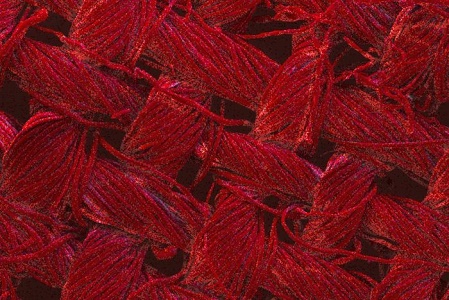
Silver nanoparticles in the fabric, shown here in red, can break down stains.
Image source: RMIT University
Liquiproof, the eponymous startup behind a nontoxic and environment-friendly coating material that renders anything it comes into contact with waterproof, signed a partnership deal with UK-based luxury brand Hawes & Curtis to release a line of stain-resistant shirts.
According the company, which secured funding via the BBC television series Dragon's Den, the invisible coating will be applied to the garments during production, making them stain-resistant yet can still be machine-washed and ironed.
Liquiproof founder Caner Veli, a former pharmaceutical science student, said that the coating "uses nanotechnology to bind to particles at a nanoscopic level." It is also breathable, nonflammable and fluorine-free.
Hawes & Curtis is currently conducting an independent testing and has set an August release.
Meanwhile, researchers at RMIT University in Melbourne, Australia is developing a self-cleaning fabric by growing nanostructures that, when exposed to light, release a burst of energy that degrades organic matter. This means that sunshine or even an ordinary light bulb can eliminate stains and grime.
According to Dr. Rajesh Ramanathan, one of the lead researchers at the Ian Potter NanoBioSensing Facility and NanoBiotechnology Research Lab at RMIT, the team is working with copper- and silver-based nanostructures, which are known for their ability to absorb visible light.
The team grows the nanostructures directly on the textiles by dipping them into a few solutions, resulting in the development of stable nanostructures within 30 minutes. When exposed to light, the nano-enhanced fabrics take between six minutes and half an hour to self-clean.
"Our next step will be to test our nano-enhanced textiles with organic compounds that could be more relevant to consumers, to see how quickly they can handle common stains like tomato sauce or wine," Ramanathan said.
Recently, Odo Denim, another startup based in the US, has launched nano-enhanced self-cleaning jeans that repel stains and odor-producing microbes.
More Sourcing News
Read Also

关注 “环球资源外贸” 官方微信,获取实时外贸资讯
iOS & Android
iOS & Android(Mainland China)
Copyright © 2026 Publishers Representatives Limited. All rights reserved.





