




Whether as an alternative to batteries or a complementary solution, supercapacitors have been gaining traction in consumer electronics, communications, automotive, power supplies and industrial applications. In recent years, they have also extended reach in electric vehicles, smart home devices and industrial automation. This is because of their advantages of high power density and capacitance, fast charging and discharging, wide operating temperature and long operating life span in addition to being compact and lightweight.
For wearable health devices, there is ongoing research on flexible supercapacitors. Once commercialization is achieved, these components can be used in fitness trackers, smartwatches, ECG, blood pressure and glucose monitors, insulin pumps, skin patches, defibrillators, medical implants and smart clothing.
Flexibility concept
The flexible supercapacitor concept was first pursued more than a decade ago, from patent applications made by Samsung Electronics in South Korea in 2010 and the following year in the US, and by Georgia Tech Research in the US in 2011. Both were published in 2011 and granted in 2017.
In 2015, Universiti Putra Malaysia (UPM) filed for a patent on a flexible supercapacitor achieved using a nanocomposite containing a conducting polymer, graphene oxide and a metal oxide.
A paper published by the Multidisciplinary Digital Publishing Institute in 2022, meanwhile, announced the development of a flexible supercapacitor using a PET substrate, which is reused from beverage bottles, and a conductive ink based on carbon black and cellulose acetate.
Similar studies are underway in China, with breakthroughs in recent years including wire-shaped supercapacitors fabricated from two twined d-MnO2/holey reduced graphene oxide (HRGO) fibers with polyelectrolyte, a collaboration between Shaanxi Normal University and Dalian Institute of Chemical Physics, CAS.
Researchers at Zhejiang Sci-Tech University have developed high-performance stretchable supercapacitors based on centrifugal electrospinning-directed hetero-structured graphene-polyaniline hierarchical fabric. These components have maintained their high energy density, specific capacitance and cycle stability, showing their potential in wearable devices.
Other current efforts toward adoption in wearables include a collaboration between Penn State University, in the US, and two Chinese academic institutions, Minjiang University and Nanjing University. This team is working on stretchable micro-supercapacitors for wearable health-monitoring and diagnostic devices, according to Tech Briefs. Its goal is to come up with self-powered systems that can harvest energy from human motion.
At the University of Nebraska–Lincoln, researchers have developed a wool-based supercapacitor and are working on a prototype of a wearable wristband with it. The device can be used to monitor vital signs such as heart rate, blood oxygen content and temperature during surgical procedures.
While all these developments are promising, there are still no specific brands of wearable health devices that explicitly highlight the use of such supercapacitors in their products at the time of this writing.
Supercapacitor market
The global market for supercapacitors continues to grow, driven by adoption in electric vehicles as well as industrial applications. It will achieve a CAGR of 18.2 percent between 2025 and 2034, according to Global Market Insights. Using 2024 as the base year when the category reached $2.9 billion, this source estimates a value of $15.3 billion by the end of the forecast period.
China Super Capacitors Industry Alliances offers a lower projection, expecting the value to be $5.7 billion worldwide by 2029. Based on its statistics, the global market realized $1.59 billion in 2021 and $2.1 billion in 2023.
China’s supercapacitor sector reached $423 million in 2023, according to Qianzhan Industrial Research Institute, and will increase to $750 million in 2029 thanks to demand in EVs and renewable energy systems.
As the upward trend is clear, it will keep attracting interest in R&D and manufacturing.
In China, there are companies expanding their production. Others are venturing into this category, including Xinlian Shidai, which was established in 2024. This company has allocated $555 million for a 713,690sqm facility, which will have an annual output of 10GW and deliver $1.94 billion once fully operational in December 2026.
At present, the global market is dominated by Maxwell, Ioxus, Elna, Panasonic, LS Mtron and Vina Tech.
Supercapacitors from China
Tier-one manufacturers of supercapacitors in China are strengthening their production and R&D capabilities to catch up with foreign counterparts. They include CRRC, Jianghai and Aowei. In 2023, CRRC accounted for 21 percent of the country's market, while Jianghai and Aowei had 8 and 7 percent shares respectively.
Many suppliers are found in Guangdong, Jiangsu, Hebei, Shanghai and Beijing, with some in Hubei, Hunan and Yunnan.
Widely available supercapacitors from these companies include button types with a rated voltage ranging from 2.5 to 50V, capacitance of 0.33 to 100F, operating temperature of -40 to 85 C and life span exceeding 100,000 cycles.
These products have up to 98 percent charge and discharge efficiency and 300 to 5,000W/kg power density. They can be customized based on specific requirements, including the option to use domestically sourced or imported components.
A number of suppliers aim for continuous innovation to achieve product differentiation. Jiangxi Fujing Electronics Co. Ltd, for example, has developed its own dry-electrode technology to ensure high electrode unit energy density and temperature performance and long operating life span.
As for the price trend in China, it is expected to be stable throughout 2025.
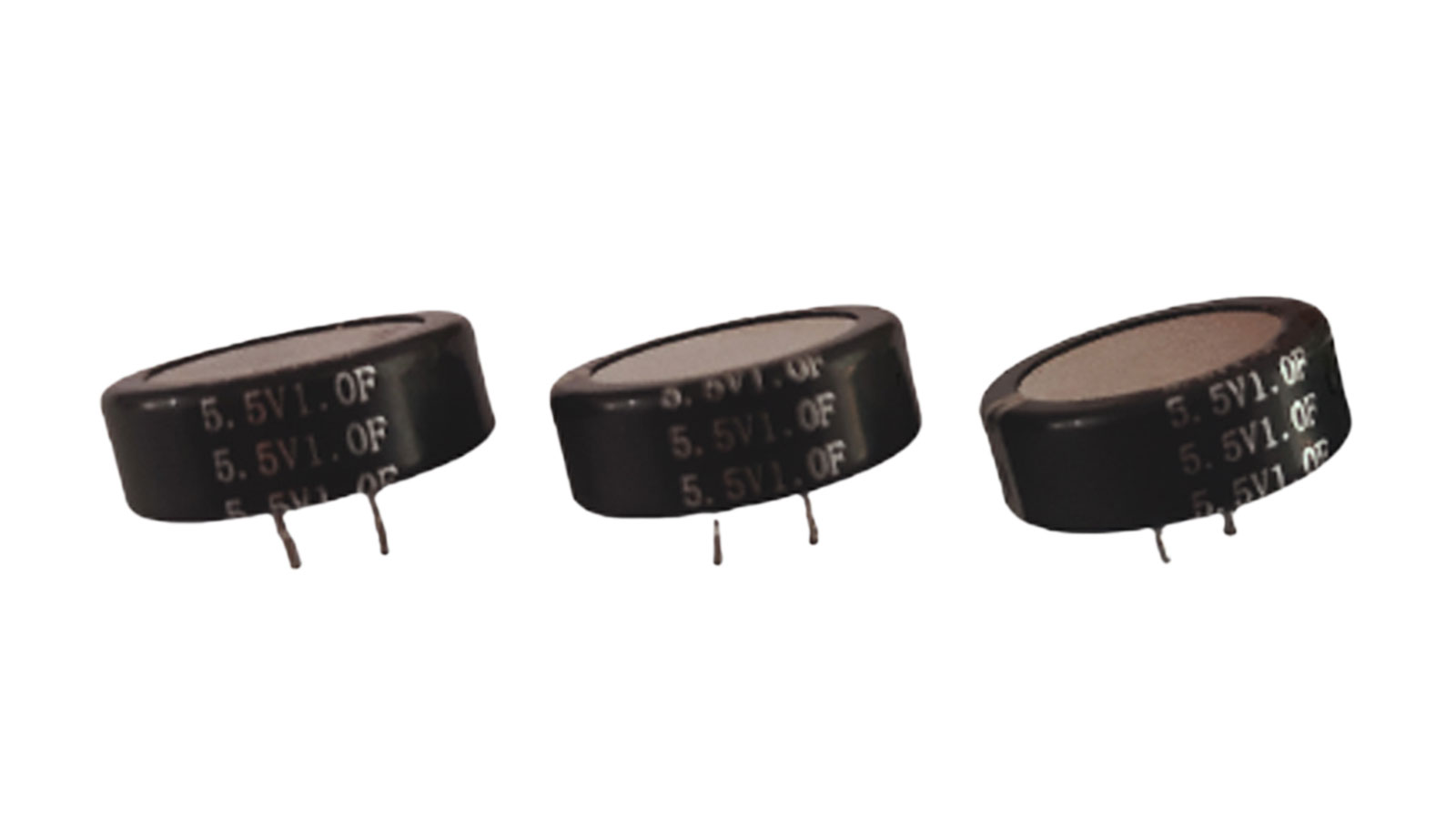
Supercapacitor, 0.1 to 4F capacitance
Company: Jiangxi Fujing Electronics Co. Ltd
Jiangxi Fujing’s FBCC5R5C105TBN supercapacitor has 0.1 to 4F capacitance, 5.5V rated voltage and -40 to 70 or 85 C temperature range.
MOQ: 700
Lead time: 7 days
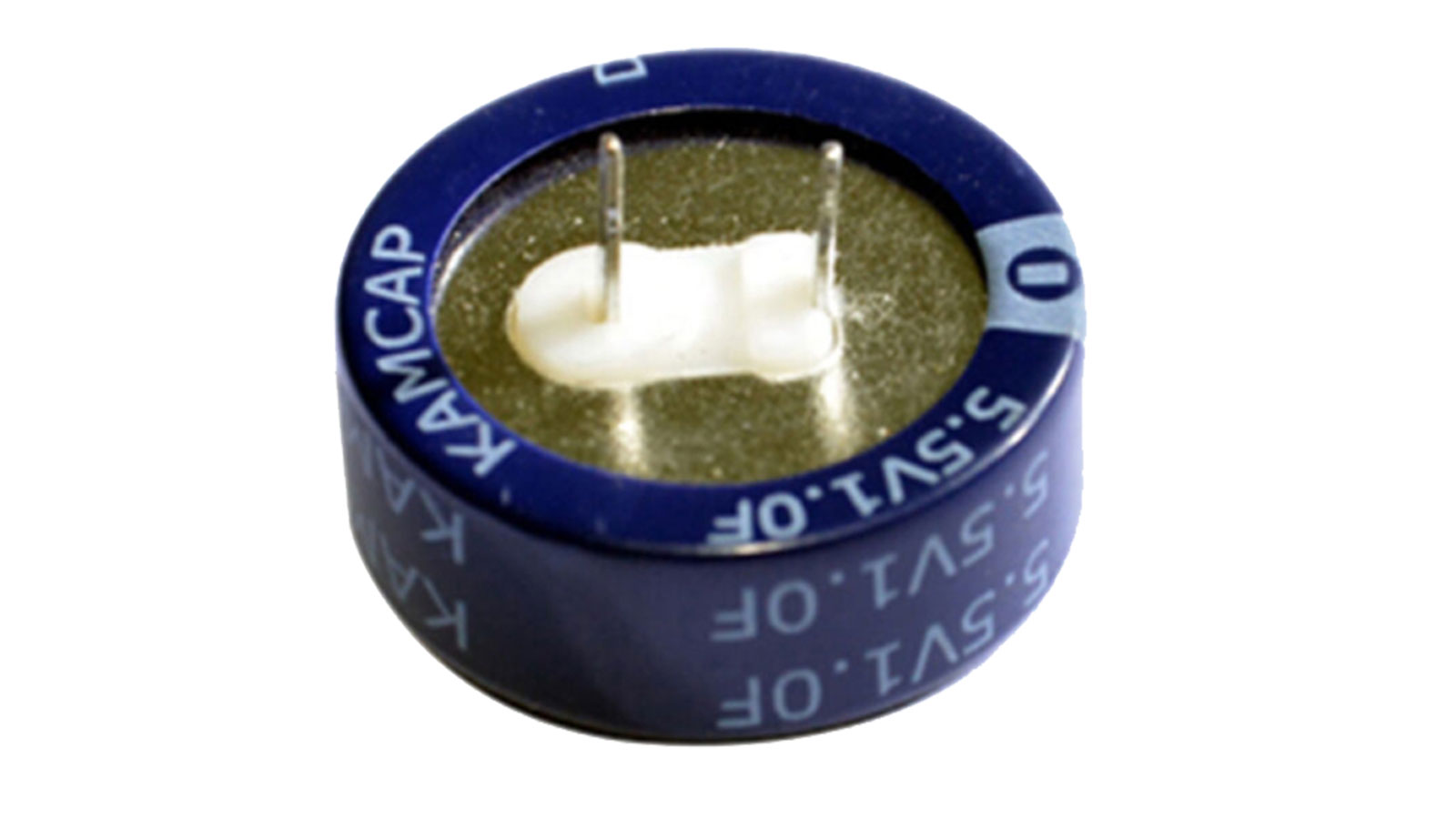
Supercapacitor, 1F rated capacitance
Company: Jinzhou Kaimei Power Co. Ltd
The SE-5R5-D105VY0 from Jinzhou Kaimei is a supercapacitor with 5.5V rated voltage and 1F rated capacitance. It operates in -25 to 70 C and has a life span exceeding 500,000 cycles.
MOQ: 100 units
Lead time: 7 days
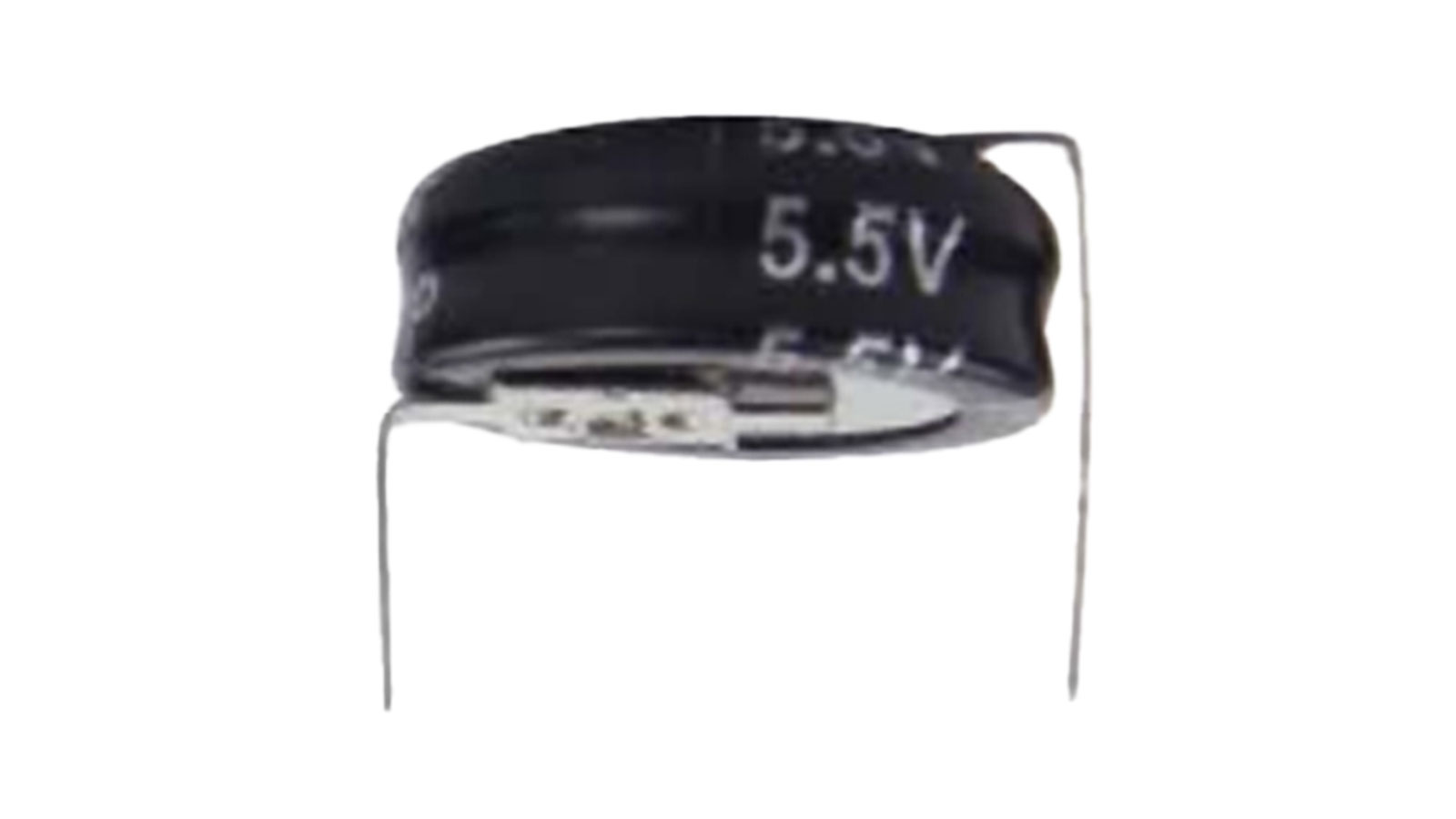
Supercapacitor, 0.1 to 4F rated capacitance
Company: Shenzhen Topmay Electronic Co. Ltd
Shenzhen Topmay’s supercapacitor, the TMCS02, has 5.5V rated voltage, 0.1 to 4F rated capacitance, 1,000C discharge current, -20 to 70 C operating temperature and 100,000-cycle life span.
MOQ: 2,000 units
Lead time: 15 days
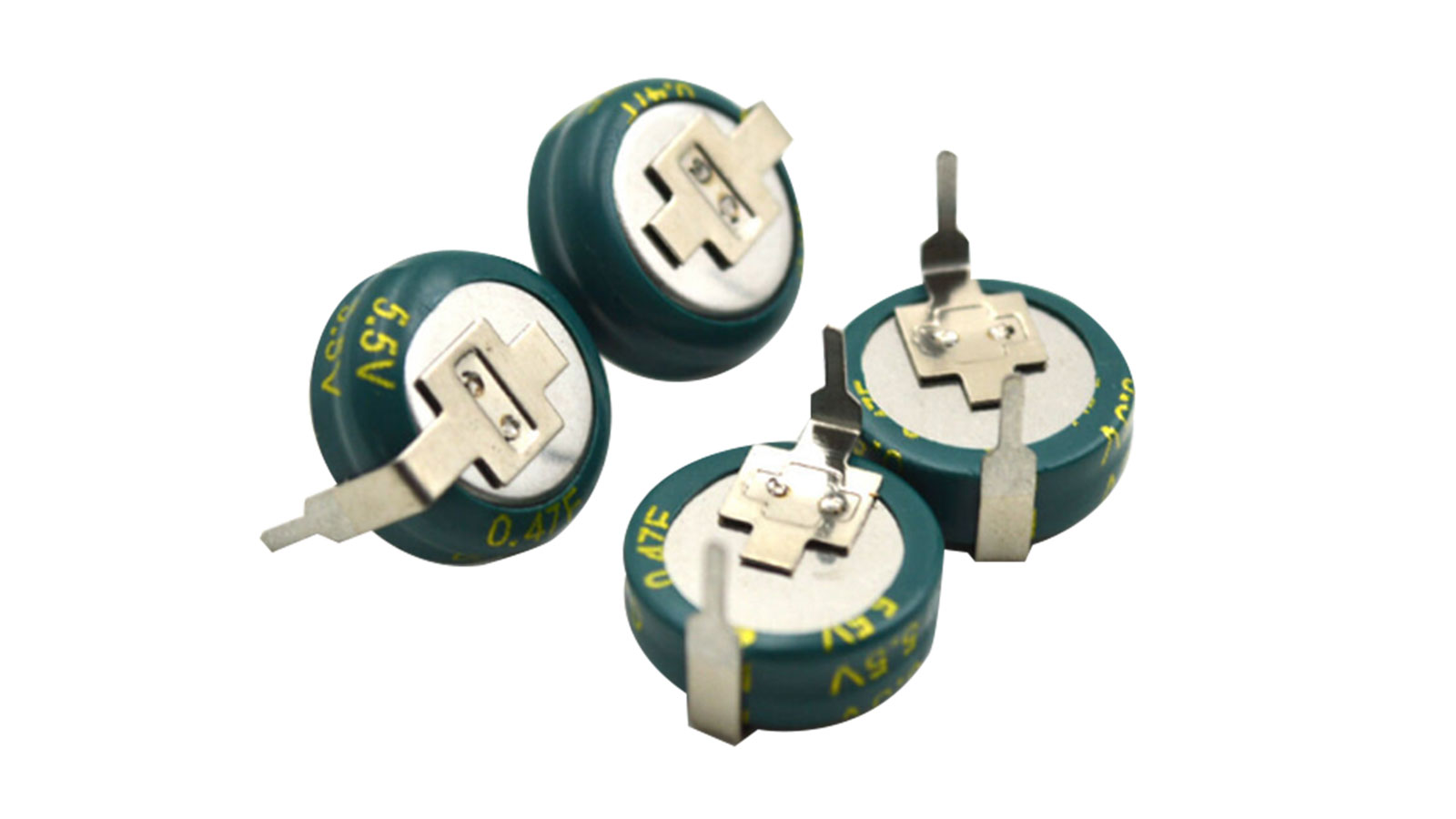
Supercapacitor, 1 to 1.5F capacitance
Company: Spark International Electronic Co. Ltd
The HESC Series supercapacitor from Spark has 5.5V rated voltage, 1 to 1.5F capacitance range, -20 to 80 percent capacitance tolerance and ≤0.02mA leakage current.
MOQ: 1,000 units
Lead time: 7 days

