




Image from iStock
The CNC machining industry is undergoing significant transformation, driven by technological advancements, economic shifts and evolving market demands. From multi-axis machining to AI-driven optimization, these innovations are transforming how industries produce complex, high-precision components. Here’s a look at the most impactful technologies shaping the future of CNC machining.
Industry 4.0 and smart manufacturing
Machines equipped with IoT sensors now monitor temperature, vibration and tool wear in real time, enabling predictive maintenance and reducing downtime. Data analytics and cloud connectivity allow manufacturers to optimize workflows and improve decision-making. Digital twins – virtual replicas of machining environments – simulate processes, detect inefficiencies and prevent costly errors before production begins.
Multi-axis and hybrid machining
Traditional 3-axis machines are giving way to 5-axis and even 7-axis CNC systems, which allow cutting from multiple angles in a single setup. This reduces cycle times and improves accuracy for complex geometries, such as turbine blades and orthopedic implants. Additionally, hybrid machines that combine CNC machining with additive manufacturing (3D printing) offer unmatched flexibility – enabling rapid prototyping and the creation of intricate internal features that are impossible to achieve using subtractive methods alone.
AI and ML
Artificial intelligence and machine learning are redefining CNC operations. These technologies analyze machining data to predict tool wear, optimize toolpaths and adjust cutting parameters in real time, extending tool life as well as minimizing human intervention. AI-driven systems also enhance programming efficiency, reducing errors and improving throughput.
Automation and robotics
Automation is no longer optional – it’s essential. Robotic arms now handle material loading, unloading and part inspection, enabling lights-out manufacturing where machines run 24/7 with minimal supervision. Collaborative robots or cobots work alongside humans to manage repetitive or hazardous tasks, improving safety and productivity. This synergy between robotics and CNC systems is key to meeting high-volume production demands without sacrificing quality.
Advanced tooling and cooling techniques
Cutting tool technology has advanced significantly, with ceramic, carbide and diamond-coated tools offering superior durability and heat resistance. These tools enable high-speed machining of tough materials like titanium and Inconel. Cryogenic machining, which uses liquid nitrogen as a coolant, is another breakthrough. This reduces heat, extends tool life and improves surface finish, especially in aerospace and medical applications.
Sustainability and energy efficiency
Green manufacturing is gaining traction in CNC machining. Techniques like coolant recycling, dry machining and energy-efficient toolpaths help reduce environmental impact without compromising performance. These practices align with global sustainability goals while lowering operational costs.
Industries reliant on CNC machining
The aerospace industry stands as perhaps the most prominent beneficiary of CNC machining technologies. This is because of its requirement for components that are made of specialized materials such as titanium alloys, Inconel and other heat-resistant superalloys and have micron-level tolerances down to internal and structural parts with complex geometries.
The automotive sector, meanwhile, leverages CNC machining for high-volume production of identical components, including cylinder heads, engine blocks and transmission parts, with tight tolerances. In addition, this process is used in producing prototypes as well as specialized tools for assembly operations.
In the medical and healthcare sectors, this manufacturing technology is used orthopedic implants, dental components and surgical instruments which require extremely fine features and tight tolerances. It is also compatible with materials such as titanium, cobalt-chrome alloys and medical-grade plastics that are usually used for these parts.
The energy and power generation industry benefits from CNC machining’s capability to handle heat-resistant alloys used for components exposed to extreme operating conditions. In addition, this technique allows large-scale production of turbine parts, valve bodies, pressure vessels, cooling channels and internal geometries in heat exchangers.
Electronics and semiconductor manufacturing relies on CNC machining for device housings and enclosures, heat sinks and thermal management components, as well as for test fixtures and production tooling and prototype development.
Manufacturers of industrial equipment use CNC machining for critical original and replacement parts of gearing, transmission and hydraulic systems, all requiring tight tolerances. They employ this method as well for producing specialized or custom equipment.
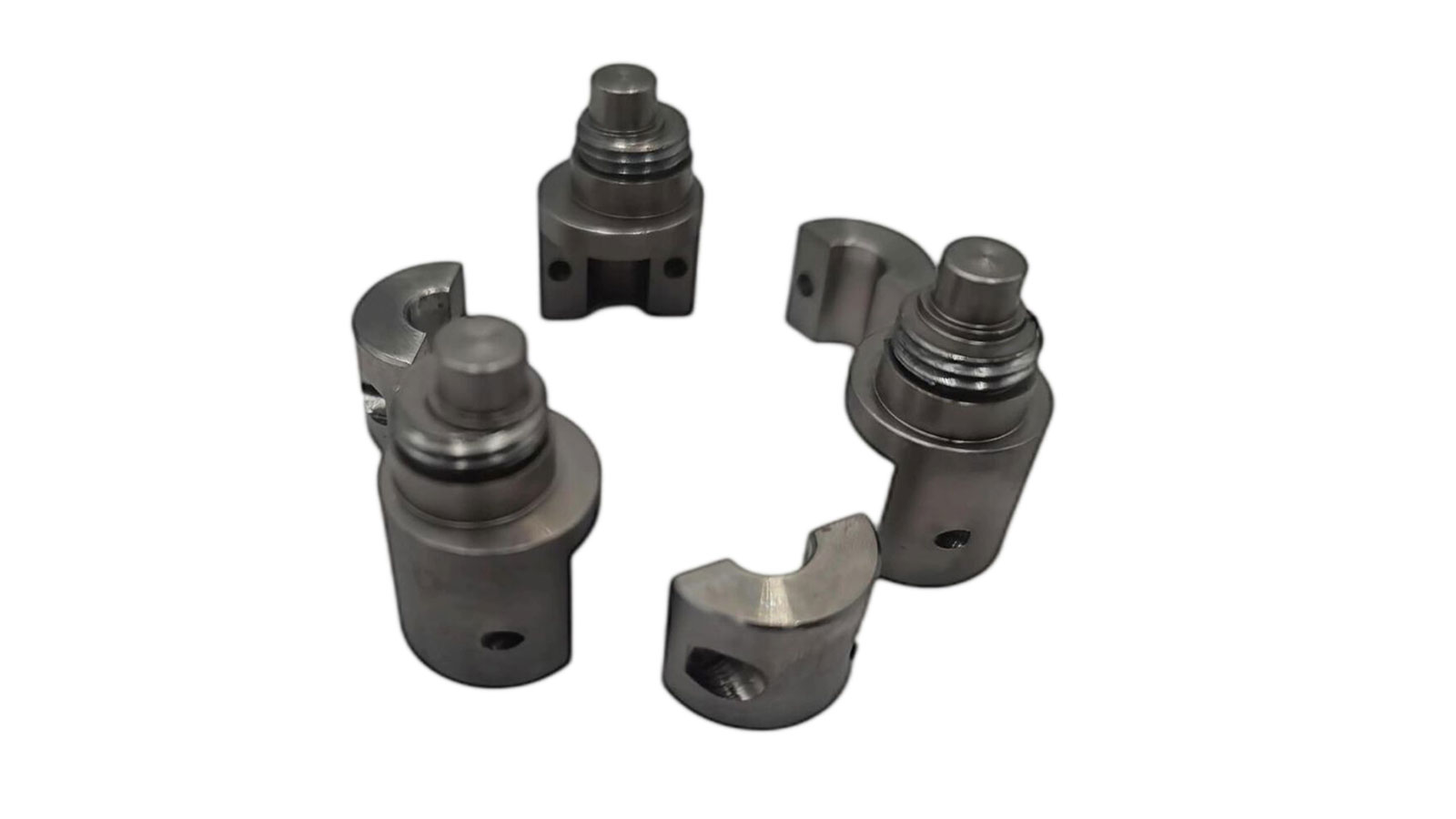
CNC turned part
Company: Dongguan Ganyuan Hardware Technology Co. Ltd
Model GY0211-060706 is a part made by Dongguan Ganyuan using a 5-axis CNC lathe. It has an accuracy of ±0.02mm and may have an electroplated, zinc-, chrome- or nickel-plated, oxidization or hard oxidation surface treatment. The supplier can produce automotive, agricultural machinery, bicycle and toy parts.
MOQ: 1 box
Lead time: 7 to 10 days
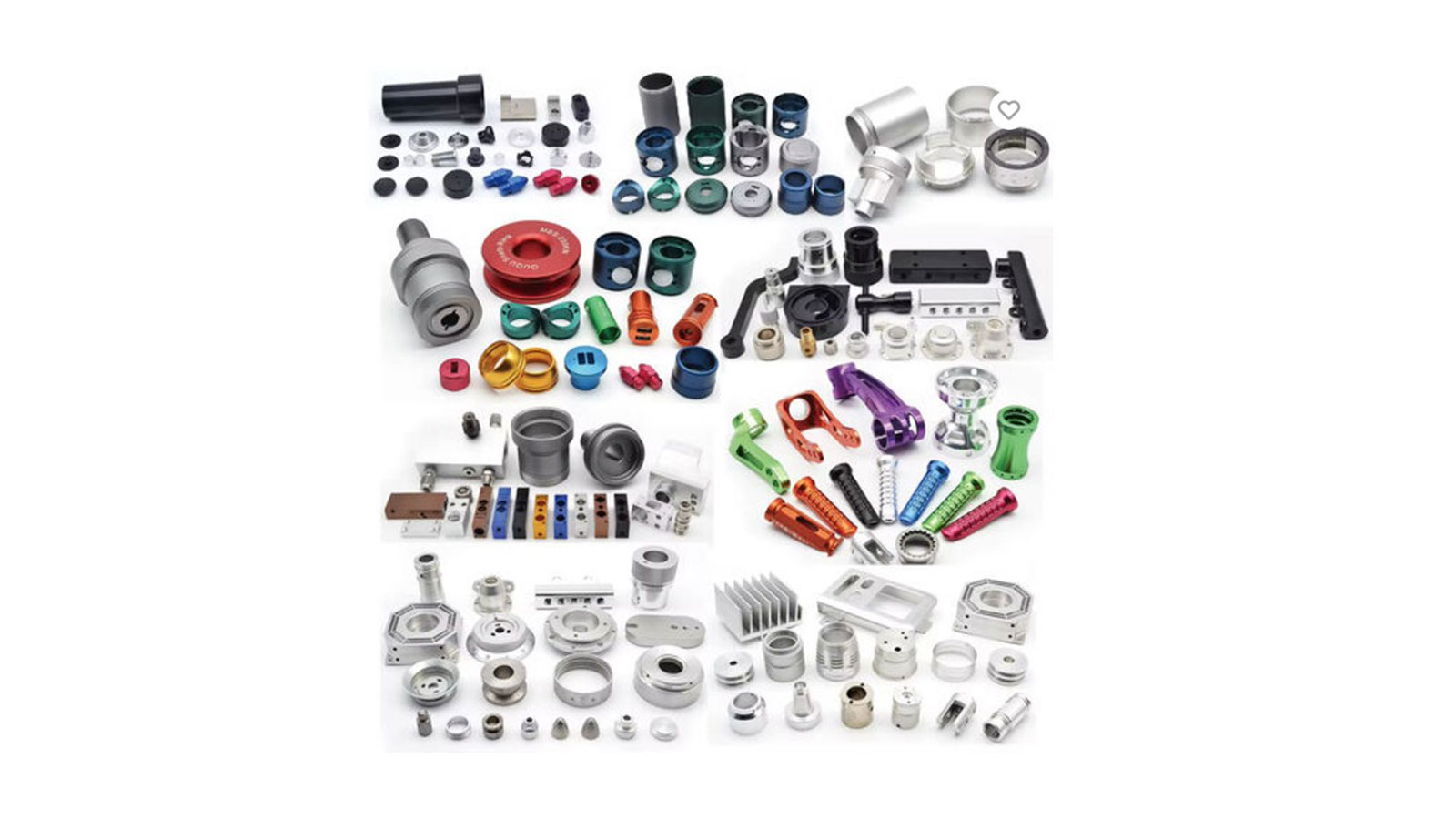
CNC machined part
Company: Dongguan Jinsheng Precision Technology Co. Ltd
Dongguan Jinsheng offers CNC machining services for parts, including plastic enclosures used in electronics, industrial equipment and custom applications. Engineering plastic materials are used for these enclosures, with the typical choices being ABS, PC and POM preferred for their light weight, impact resistance and dimensional stability. Custom sizes, shapes and finishes are welcome.
MOQ: 1 piece
Lead time: 3 to 7 days
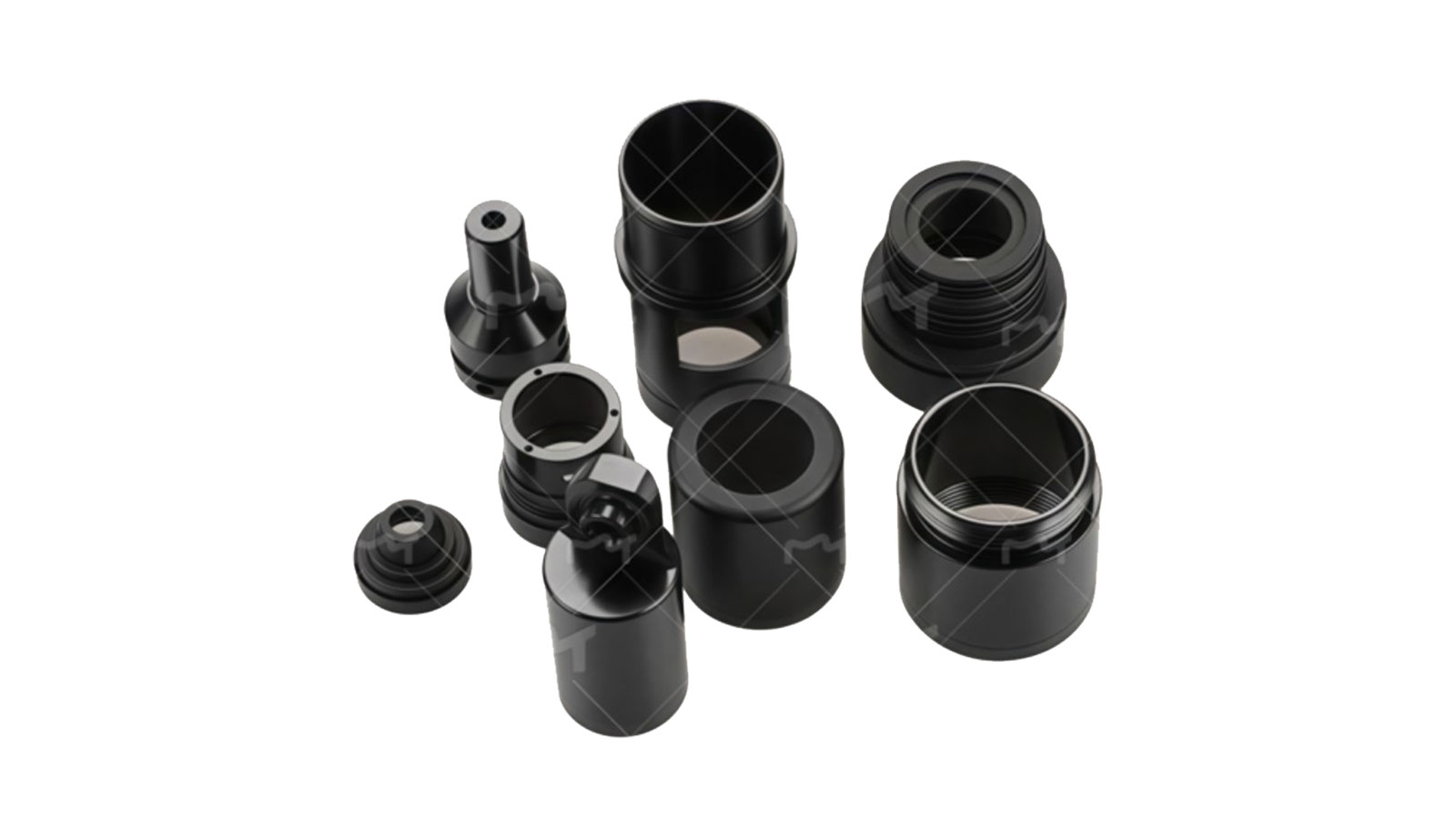
CNC turned part
Company: Dongguan Jianzhao Metal Plastic Co. Ltd
Dongguan Jianzhao offers metal and nonmetal turned parts, such as the JZ-L0011 made using aluminum or POM, CNC machining and hard anodizing. The supplier can also produce parts using other materials, machining processes and surface treatments based on buyers’ specifications.
MOQ: 500 pieces
Lead time: 15 to 20 days
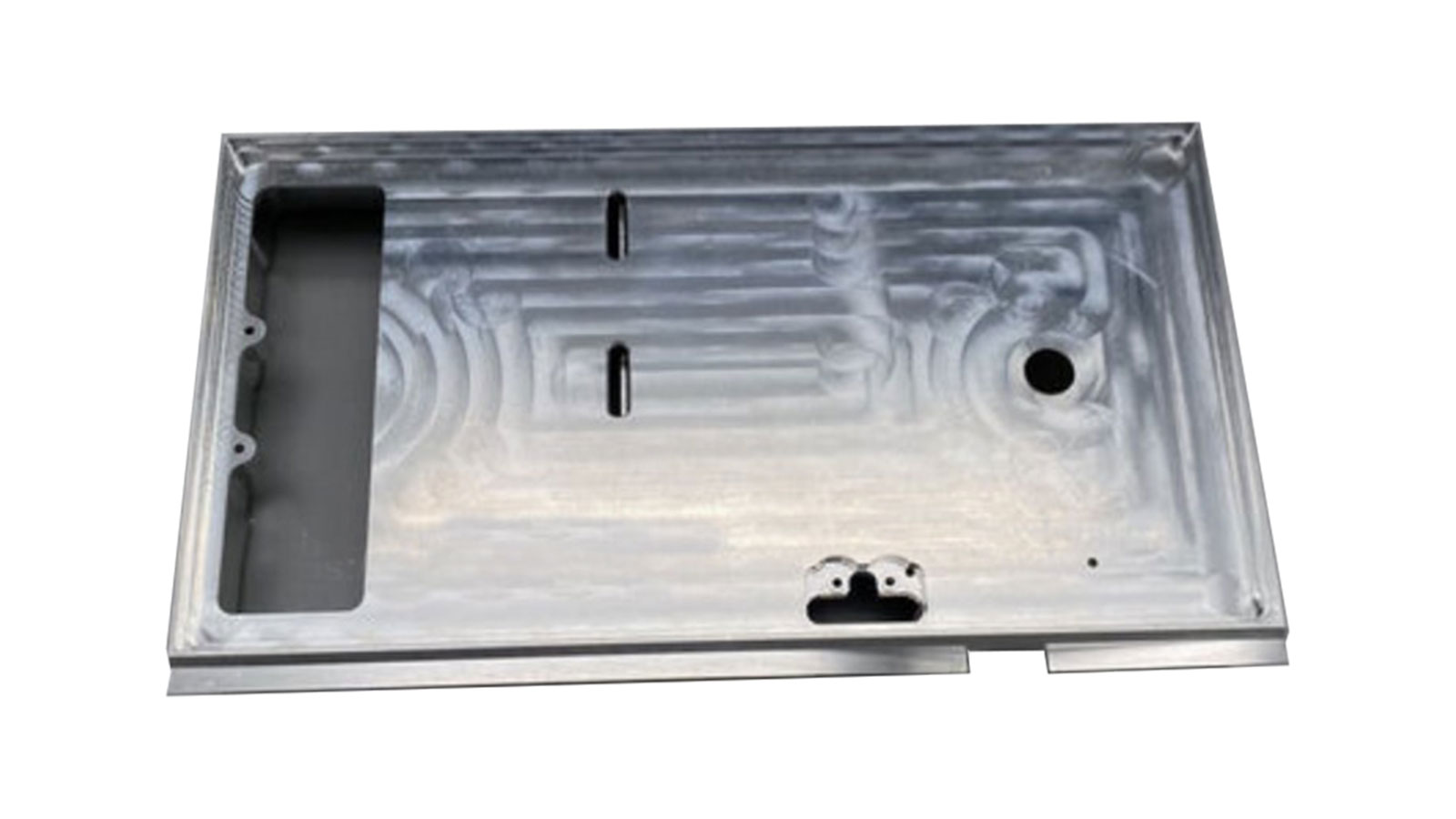
CNC machined part for industrial machinery
Company: Dongguan Taihe Hardware Products Co. Ltd
The CNC Parts 263657 from Dongguan Taihe is precision machined using a steel alloy sheet with enhanced hardness to match requirements in industrial machinery. It has 0.01mm tolerance. This product is processed to ensure no burrs, sharp edges, scratches and machining traces. The supplier accepts requests for other metal materials and surface treatments.
MOQ: 100 pieces
Lead time: 15 to 28 days
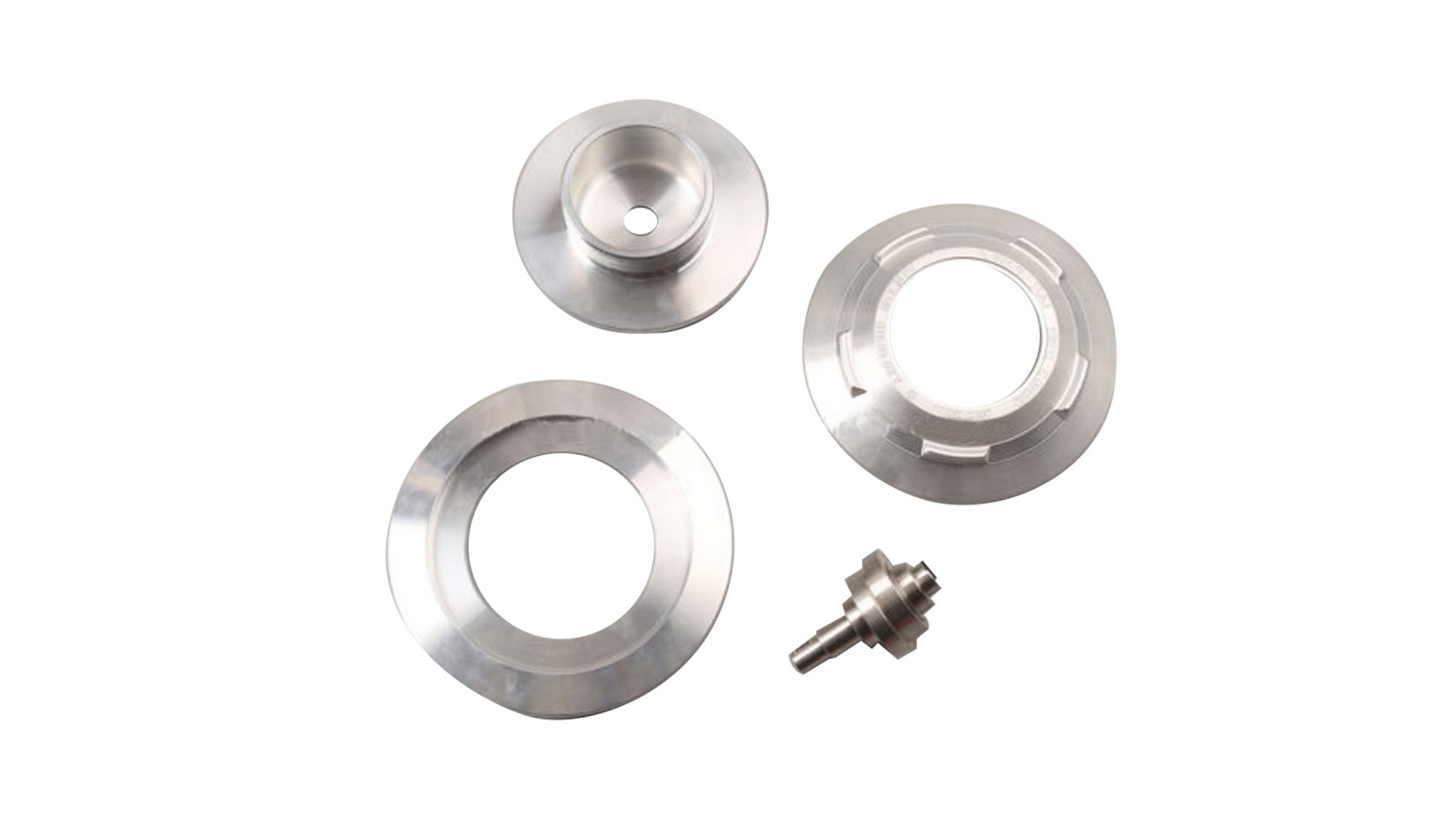
Part for machines
Company: Dongguan Taihe Hardware Products Co. Ltd
Dongguan Taihe manufactures machine parts using aluminum, brass, copper, stainless steel or steel and bead or sandblasting, anodizing, powder coating, brushing, electroplating, black oxide or chromate conversion coating.
MOQ: 100 pieces
Lead time: 15 to 28 days
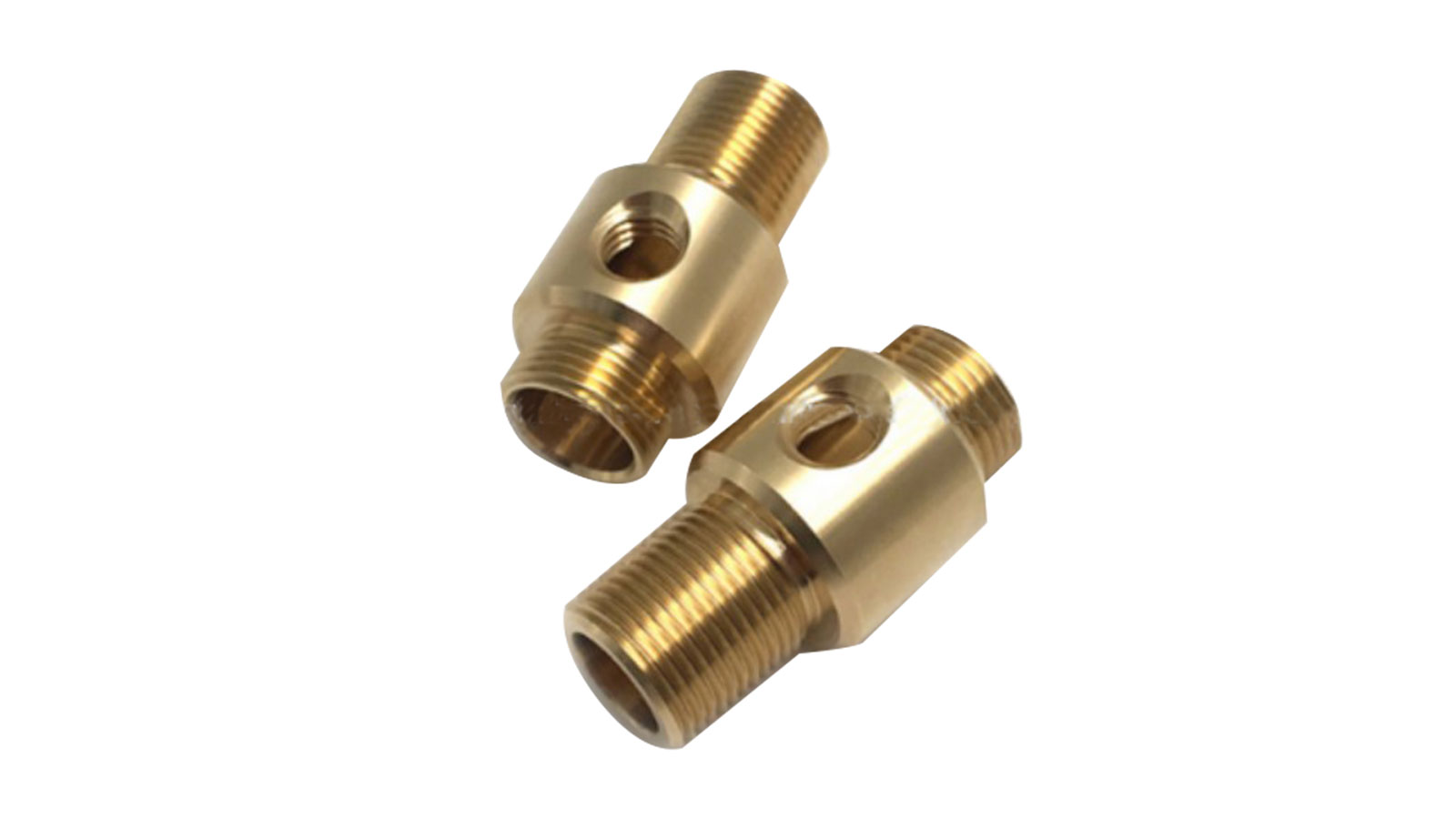
CNC milled part
Company: M&E Metalworks Ltd
M&E makes metal and plastic parts, such as the ME-451 made of Al 6061 or 6063 and processed using CNC milling based on customers’ drawings. The company has facilities for CNC turning, stamping, cutting and grinding as well and accepts other specifications. It can achieve ±0.005 to ±0.01mm tolerance and meet DIN, ASTM, GOST, GB or other standards.
MOQ: 500 units
Lead time: 7 to 15 days

