




Temperature sensors’ critical role in automation and the Internet of Things lies in the real-time data they provide for precise control, safety and efficiency of systems used in various fields. They ensure optimal operating parameters, minimal energy consumption and failure prevention.
In China, where most of these sensing devices are manufactured, consumer electronics, automotive, industrial equipment, household appliances and medical equipment are the top five applications. They accounted for 33, 22, 18, 12 and 8 percent of the market in 2024, according to QY Research. In the coming years, demand will come mostly from electric vehicles, the biochemical industry, and smart homes and buildings.
In EVs, these sensors are deployed in the battery pack, charger, charging handle, traction inverter, motor, DC-DC converter, passenger cabin and under the hood, according to EV Engineering & Infrastructure.
The biochemical industry, meanwhile, uses various types, with the most common being thermocouples, RTDs, thermistors and semiconductor-based sensors. These devices are utilized for precise temperature control required in drug and vaccine manufacturing and vaccine cold chain monitoring as well as in research and development.
In smart homes and buildings, temperature sensors are found in HVAC systems, including thermostats, as well as in fire detection systems, lighting control and smart appliances such as ovens. In buildings, they also help monitor equipment, ensuring efficiency and safety from overheating.
Healthy growth
The global market for temperature sensors is steadily expanding, driven by advancements in technology and applications. It reached $7.699 billion in 2024, with demand increasing by 3.8 percent year on year, according to Future Market Insights, and is estimated to finish 2025 with $8.03 billion. Between 2025 and 2035, the projected CAGR is 4.3 percent, with the market size $12.234 billion by then thanks to the trends for automation and smart solutions.
China figures prominently in the Asia-Pacific region, which accounts for the fastest growth in the temperature sensors category. In 2022, the country’s share was 34 percent of the global total of $44.27 billion, according to ChinaIRN, compared to North America’s 32 percent. From 2016 to 2022, China posted the highest annual growth at 13.52 percent.
This expansion is expected to continue, especially with the country pushing for more technological advancements and greater industrialization.
Some manufacturers are following this track. Zhejiang Fulede invested $416 million in an 80,000sqm facility at the Lishui Economic & Technology Development Zone. Construction began in 2023 and has been completed, enabling the company to go into mass production in mid-2025. The target annual output is 2.3 billion high-precision temperature sensors or a total production value of $278 million.
Temperature sensors from China
Most Chinese suppliers offer entry-level and midrange temperature sensors, specifically thermocouples, thermistors, RTDs and ICs in contact and noncontact configurations.
Thermocouples have a wide temperature sensing range and are inexpensive but have a relatively low level of precision. Thermistors offer high precision, small size and high reliability. RTDs have high precision as well, in addition to the ability to operate safely in high-voltage conditions and maintain performance despite mechanical stress from vibration. IC temperature sensors have advantages of quick response time, long transmission distance, low power dissipation and compact form.
Manufacturers welcome requests for customization of specifications, including sizes, and ensure all output is up to industry standards such as UL, CE and RoHS. They usually turn to domestic providers for sensing components, probes, metal and plastic shells, and wires, but will accommodate buyers’ preferences for imported materials. There has been a slight rise in the cost of these inputs, forcing many companies to adjust their quotes accordingly. In 2026, however, this expected to level off and ensure no further increases in the prices of temperature sensors.
These sensing devices are shipped mostly from factories in Suzhou, Kunshan, Changzhou, Ningbo, Wenzhou, Shenzhen and Dongguan, with some from Shandong, Sichuan and Shaanxi provinces.
To avoid the higher tariffs that have added more than 10 percent to total costs, some companies have set up factories in Southeast Asia and South America and are exploring opportunities in other markets.
Going high-end
First-tier Chinese manufacturers are developing more advanced temperature sensors to expand reach in the high-end segment.
There are companies that have taken up the integration trend in this category. Novosense, for instance, has announced the release of automotive-grade CMOS temperature sensors in MSOP-8 or SOP-8 package. These components have high precision and linearity and low power dissipation.
HG Tech, meanwhile, continues to develop new technology to attract more orders, with the goal of surpassing its sales record which amounted to $509 million in 2024. In the same year, the total number of its domestic and international technology patent applications exceeded 2,600.
Shenzhen Ampron, Shenzhen TOPOS and Jiangsu Olive are also among the key players in China.
Globally, the industry leaders are foreign suppliers such as Contrinex, Sensata, Bosch, Amphenol, TI, TDK and Honeywell. Among them are the top five that accounted for 14 percent market share in 2024, according to QY Research.
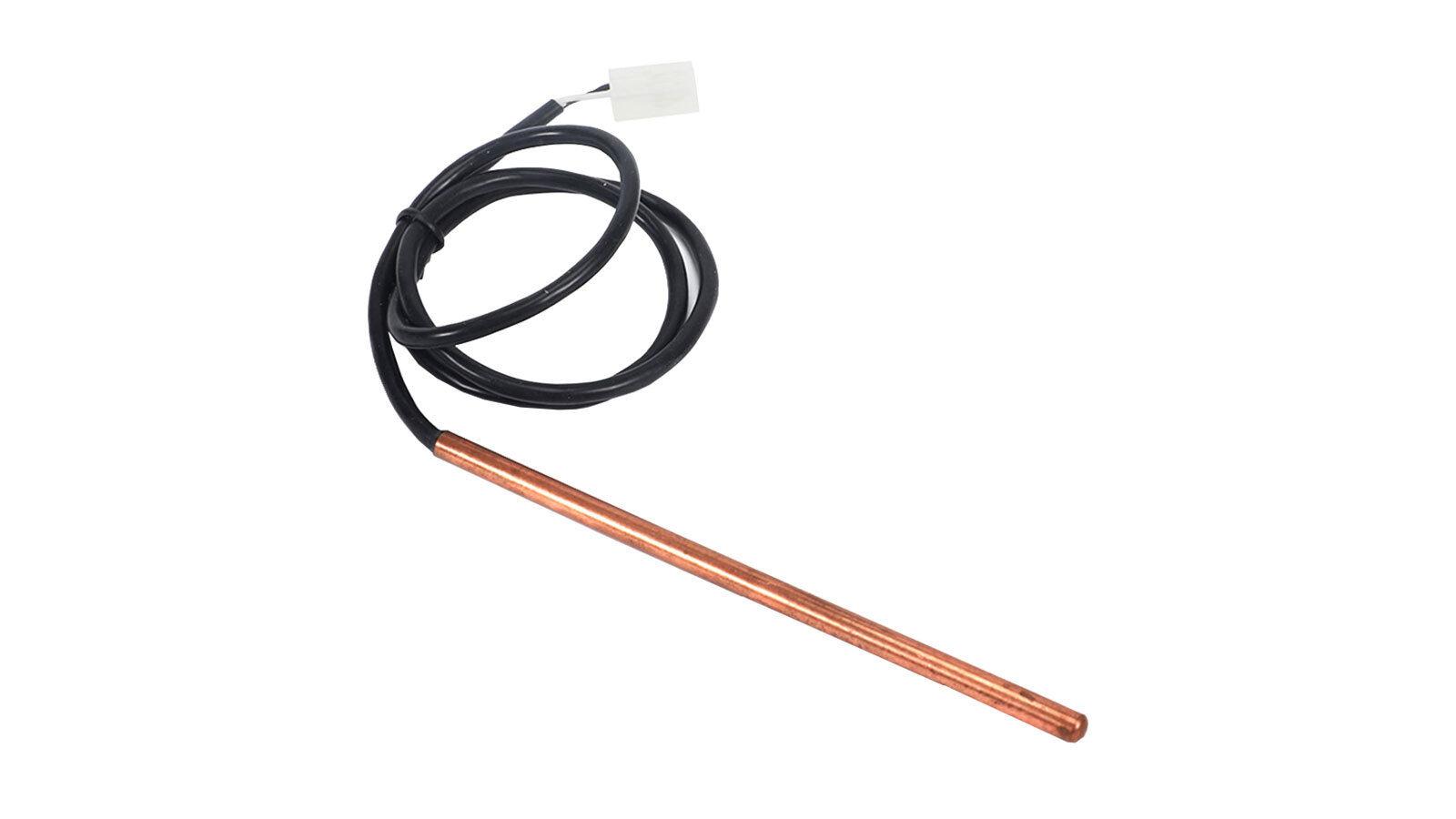
Temperature sensor, -20 to 100 C range
Company: Dongguan Evergreen Technology Co. Ltd
From Dongguan Evergreen, the EG-N021-02 temperature sensor has -20 to 100 C temperature range, ±1 percent tolerance and ≤10sec response time in liquids. It is designed for use in water heaters.
MOQ: Negotiable
Lead time: 7 days
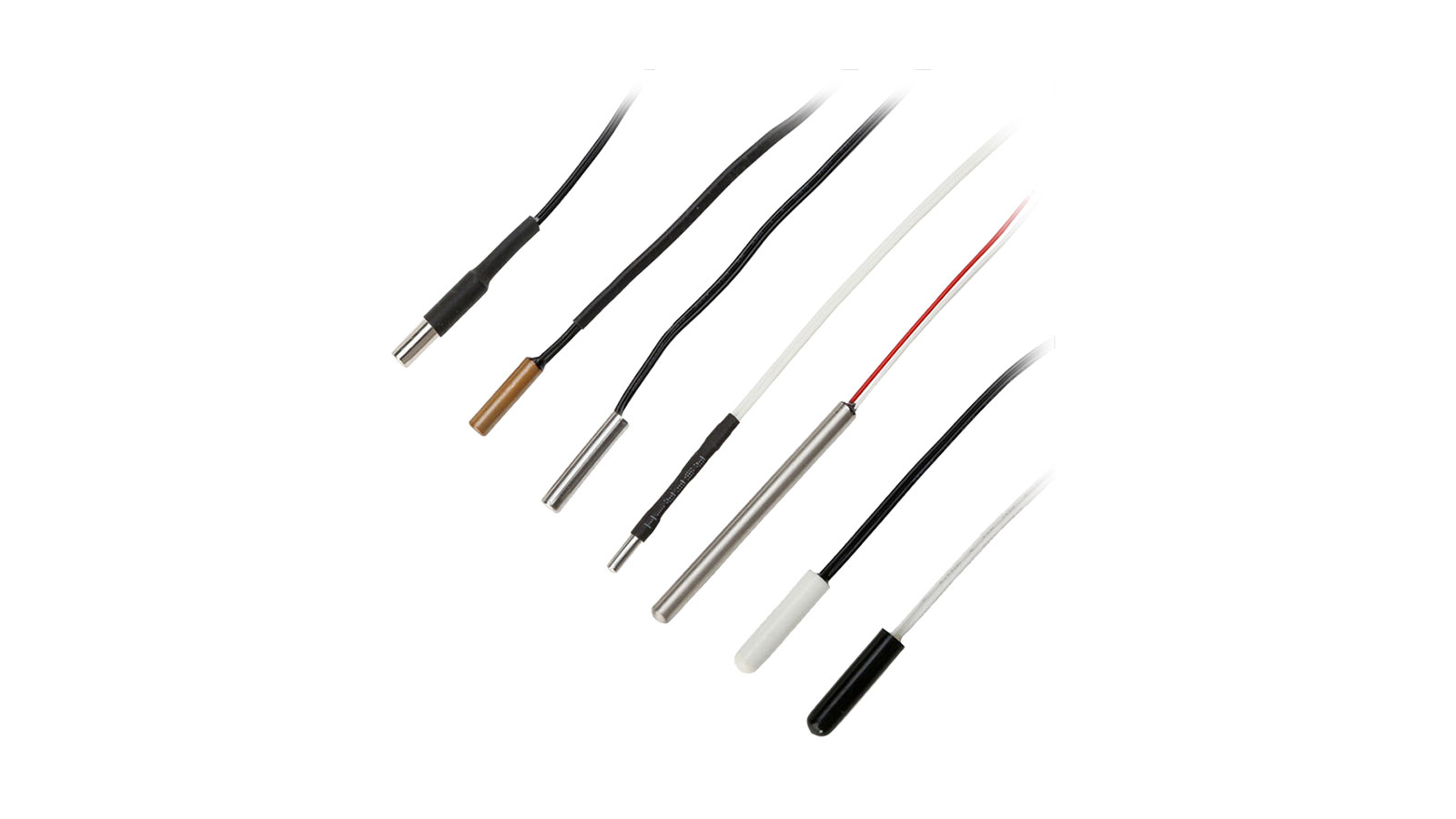
Temperature sensor, 3950 or 3435 K B value
Company: Dongguan Shengruichi Electronic Co. Ltd
The 6x30mm RTD Probe NTC Sensor from Dongguan Shengruichi has 3950 or 3435 K B value, 10, 50 or 100Kohm resistance, ±1, 2, 3, 4 or 5 percent tolerance and -25 to 150 C operating temperature.
MOQ: 500 units
Lead time: 7 days
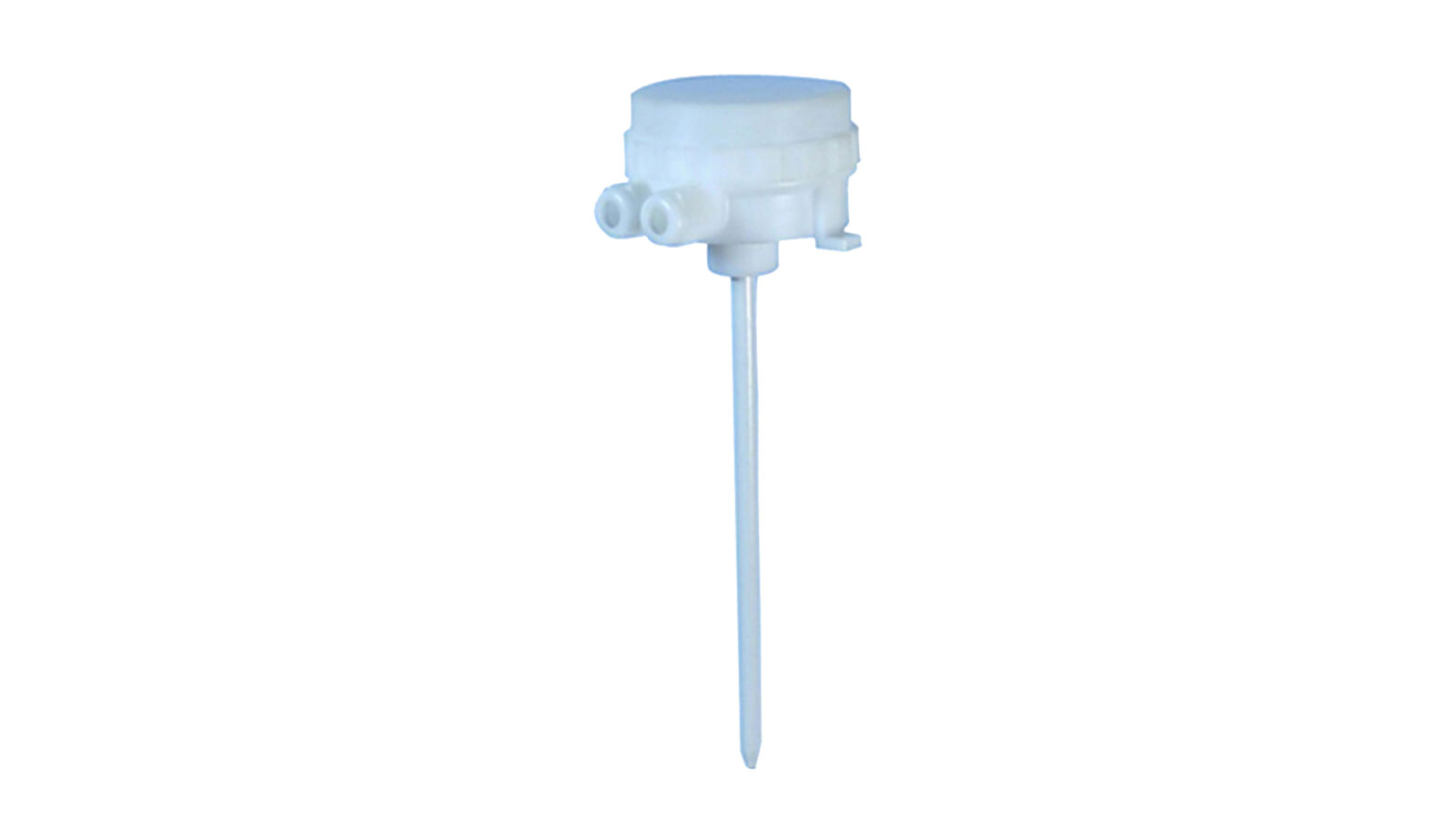
IP66-rated temperature sensor
Company: JPCI Controls (Foshan Gaoming) Co. Ltd
Available in NTC, Pt100, Pt1000, and thermocouple J and K types, the TY temperature sensor from JPCI has 120 C (250 F) maximum probe temperature and IP66 rating.
MOQ: 500 units
Lead time: 45 days
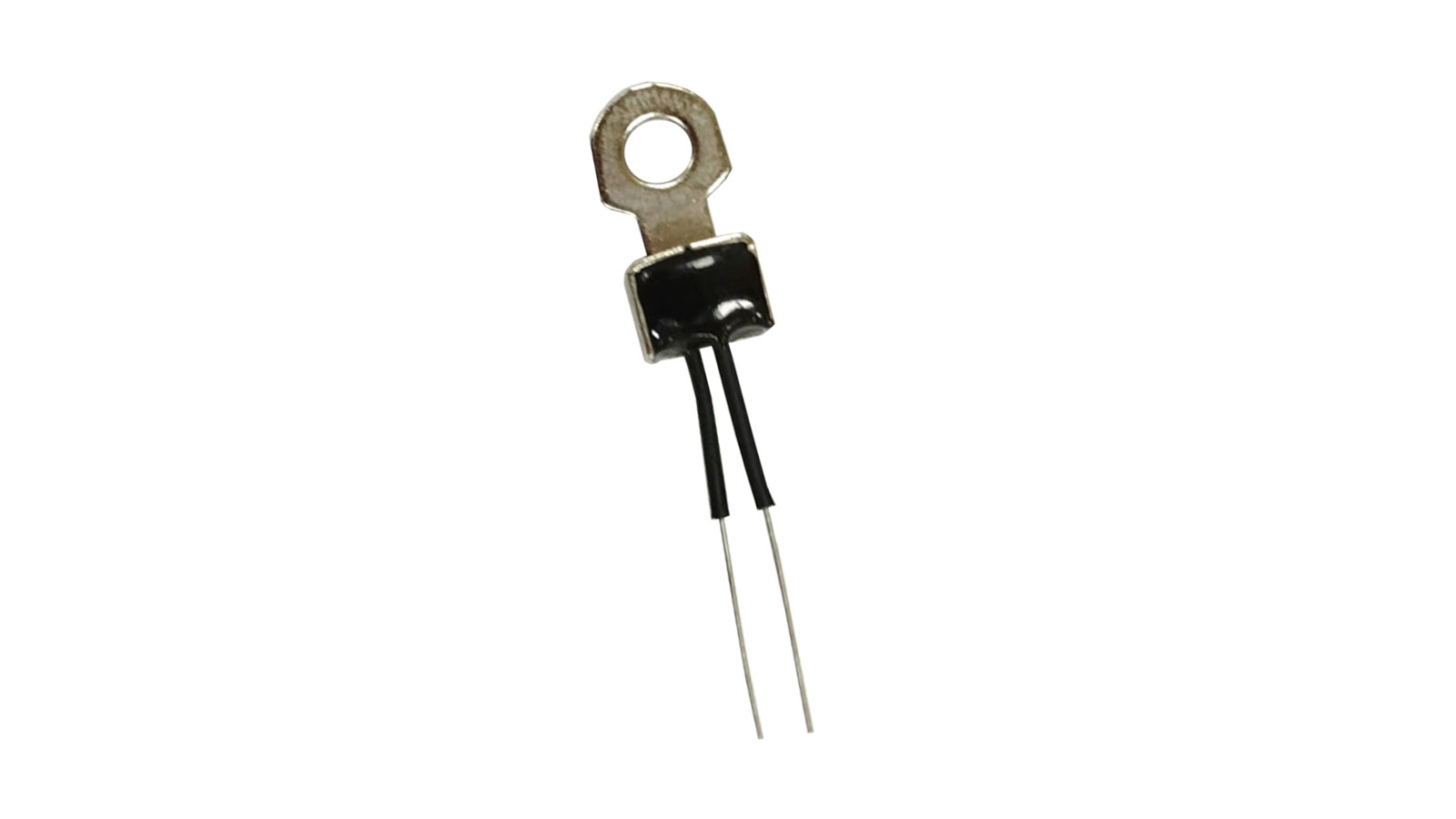
NTC thermistor
Company: Shenzhen Shangying Electronic Technology Co. Ltd
Designed for use in household appliances, power supplies, and automotive and medical applications, Shenzhen Shangying’s CWFA0104F3950A355 NTC thermistor has high precision, sensitivity and consistency and fast reaction speed.
MOQ: 1,000 units
Lead time: 10 days

