Download App
Better Online and Trade Show Sourcing Experiences.Scan the QR code to download.
Learn More
Hot Topics
by Cecile de Veyra (Managing Editor)
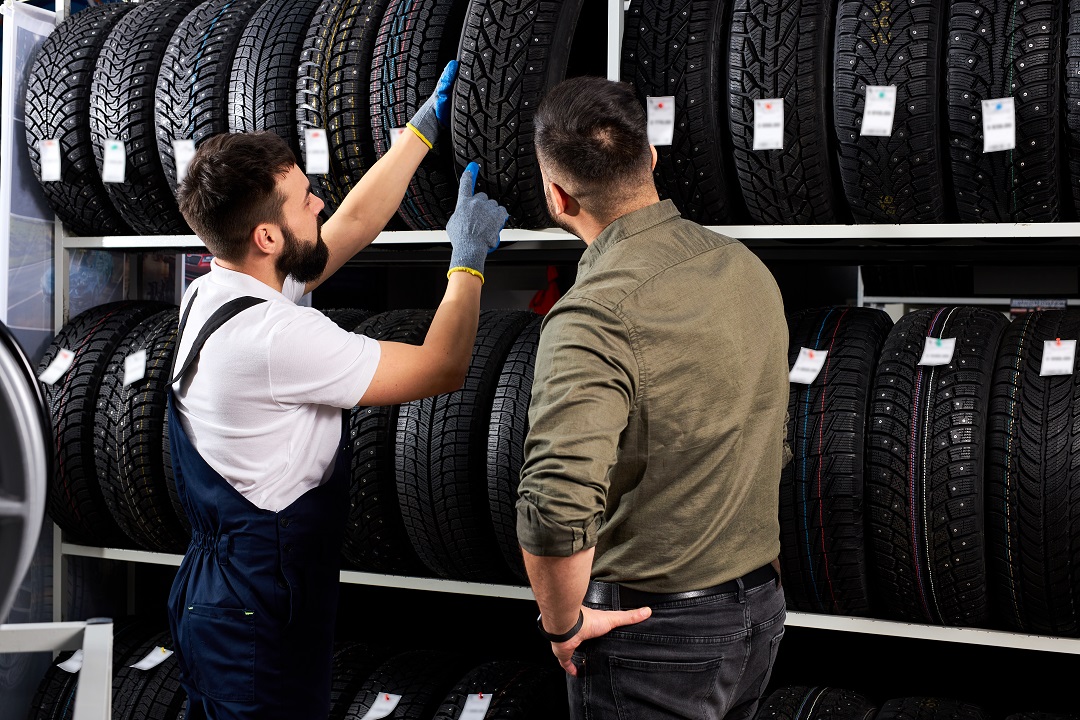
Image source: Shutterstock
Car tires make a lot of difference. They not only support the weight of the vehicle but also provide traction when accelerating and braking, act as shock absorbers and contribute to fuel economy. They do the hard work of ensuring safe driving, especially in wet, cold and hot weather conditions. As such, they can be considered the most important car safety feature, according to Claire Nowak in an article on rd.com and quoting Chris Welty of Bridgestone Tires, “it depends on the tire, not the car.” Michelin has another way of putting it: It's the tires that stop the car.
There are many types of tires, classified by performance needed based on typical weather driving and road conditions where they are used and the target driving experience. They differ in tread or contact area and in pattern, size and other structural elements.
According to online resource The Engineers Post, under the standard category are all-season, touring, performance, summer, and track and competition variants. As the name suggests, all-season tires are for comfortable and safe use on highways year-round. Touring tires have a wider tread, larger road contact and higher speed ratings than their all-season counterparts, but Tire Reviews and More says that “driving on light snow or slush covered roads can be an issue.” In bigger sizes, performance tires have better grip on wet roads and a higher speed capability than touring versions. They can be found in a range of vehicles, including sports and luxury models. Summer tires are for wet and dry conditions alike but understandably will not perform well on roads with snow, sleet and slush. Track and competition tires are designed for racing and are definitely an expensive choice for everyday driving.
For trucks and SUVs, more robust or aggressive tires fit the bill because of the heavier load supported and often off-road use. Highway, all-terrain, mud-terrain, all-purpose or trail, ribbed and sport truck types make up this category. The others fall under the special class, which includes winter, temporary, trailer, ATV/UTV, and lawn and garden tires. Golf car tires have their own range – turf, all-terrain and off-road kinds.
As if these choices were not complicated enough, there are also alphanumeric codes to contend with in tire sizes, with P215/60R16 94T an example. Here’s what they mean. The letter P stands for passenger, with others having an LT prefix for light truck. The first number refers to the width in millimeters and 60 to the aspect ratio or the height in relation to width. R is for radial construction, while D means diagonal or bias ply. The number 16 is the rim diameter in inches and the next number the load index in pounds. The last letter is the speed rating. According to US-based one-stop shop Tire Outlet, T is up to 118mph or 189.9kph, H up to 130mph or 209.2kph and ZR or Z above 168mph or 270.3kph.
So, what are tires made of? The US Tire Manufacturers Association says they have natural rubber used in combination with synthetic rubber, which may be butadiene, styrene butadiene or halogenated polyisobutylene. Steel wire is in tire belts and beads. This is also the material in plies in truck tires, while reinforcements in passenger tires are usually polyester, rayon, nylon and aramid cord fabrics. Fillers include carbon black and silica derived from sand. Antioxidants, antiozonants, and sulphur and zinc oxide curing ingredients are also in the composition.
More Sourcing News
Read Also

关注 “环球资源外贸” 官方微信,获取实时外贸资讯
iOS & Android
iOS & Android(Mainland China)
Copyright © 2026 Publishers Representatives Limited. All rights reserved.




