Download App
Better Online and Trade Show Sourcing Experiences.Scan the QR code to download.
Learn More
Hot Topics
Surveyed companies are attracted by the country's low labor cost, and stable political and legal systems.
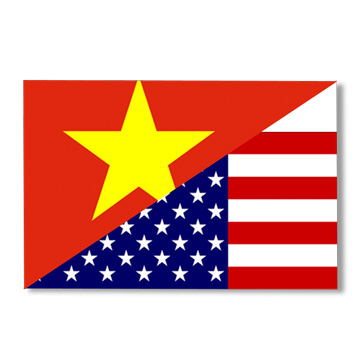
Vietnam tops ASEAN member nations in attracting investment from US enterprises, according to the 2017 ASEAN Business Outlook Survey issued recently by the US Chamber of Commerce and the American Chamber of Commerce in Singapore.
About 40 percent of respondents said they consider Vietnam as the priority market in Southeast Asia in the next two years as they plan to diversify businesses from China into the region.
Vietnam is among the world's fastest-rising hubs for apparel and textiles.
Most companies find the country's low labor cost, security, and stable political and legal system attractive. In addition, enterprises feel that the business climate in Vietnam has improved remarkably, although they noted that the country still needs to make a greater effort in fighting corruption.
About half of the surveyed companies are optimistic of the benefits that the formation of the ASEAN Economic Community will bring to their businesses with more than 50 percent stating that the Trans-Pacific Partnership or TPP will impact their investment plan in Vietnam and the ASEAN in general.
US firms claim that initiatives such as the TPP can help lay the foundation for a modern and high-standard free trade in the Asia-Pacific region.
More than half of respondents also revealed that the ASEAN markets have become a significant part of their businesses global revenue in the past two years, with about 80 percent projecting increased profit in 2017. Slightly less than half of surveyed companies also expect to beef up their workforce in the region by the year's end.
Moreover, an overwhelming majority of businesses expect their trade and investment in ASEAN member countries to rise in the next 5 years.
Enterprises, however, are concerned about issues that can obstruct their investment, including corruption, lack of transparency and trade barriers.
More Sourcing News
Read Also

关注 “环球资源外贸” 官方微信,获取实时外贸资讯
iOS & Android
iOS & Android(Mainland China)
Copyright © 2026 Publishers Representatives Limited. All rights reserved.