Download App
Better Online and Trade Show Sourcing Experiences.Scan the QR code to download.
Learn More
Hot Topics
Theme park operators are realizing VR tech helps them extend the life of old rides.
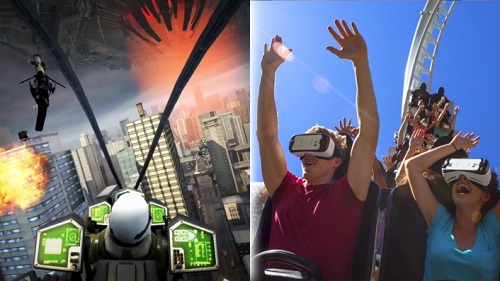
Samsung tied up with Six Flags this year to become the theme park company's "official technology partner" and deploy Samsung Gear VR at the parks (Source: Samsung)
One of the big promises for virtual reality is in the commercial market. Operators of movie theaters and theme parks have already been expressing keen interest in using VR headsets to bring new experiences to their consumers, and companies such as Acer are obliging. For theme parks, one big attraction of VR headsets is using the technology to give new life to old roller coaster rides. The Wall Street Journal reported recently that theme park companies such as Six Flags are "enthusiastic" about VR technology because it allows them to "repackage old rides digitally, without the cost of building or refurbishing a giant physical structure."
So far, VR headsets are not widely available in theme parks, although efforts to use the technology are still largely in early stages. There are more than 3,000 roller coasters globally, but fewer than 25 are using VR equipment, according to the WSJ. Nevertheless, theme parks seem to be doing quite well for themselves. Revenue reached about $32 billion in 2015, a 40 percent increase since 2009.
The economic gains of using VR instead of building more roller coasters are clear. However, there are consequences to arriving late to a popular technology. It is too early to tell exactly how the VR market will transform, but a lot of large, influential technology companies such as Facebook and Google are betting that the market will be big. While popular theme parks, including Six Flags, might be able to coast a little bit on their reputation and branded rides, the VR market opens up the potential for rivals who are not even in the theme park business. This makes staying on top of the new technology vital.
A lot of VR innovation is coming out of China these days. At least one estimate has China's market reaching $8 billion by 2020. Already there are VR attractions readily available in large cities in the country, especially in Shenzhen, where much of the hardware is made, especially mobile VR headsets. At some of these VR stations, about 100 yuan, or $15, gets a person threerides on a fake roller coaster. Some other games are also available, but the technology is still limited.
Perhaps the novelty allows places to set up shops around cities and get people to pay to try them out. Theme parks and movie theaters, however, are betting on something bigger. They recognize the potential and, perhaps, are also afraid of the competition. Home video games will continue to be a big market, and VR will probably take off there, too, but the opportunity is smaller. Consumers who are willing to pay the money for their own VR hardware and high-end computers to run the software are smaller in numbers than the potential number of people who are willing to pay a little money to experience something unique at a public venue. That is why some VR companies have realized that perhaps trying to compete with Facebook's Oculus Rift is not the best use of their money.
More Sourcing News
Read Also

关注 “环球资源外贸” 官方微信,获取实时外贸资讯
iOS & Android
iOS & Android(Mainland China)
Copyright © 2026 Publishers Representatives Limited. All rights reserved.




