Download App
Better Online and Trade Show Sourcing Experiences.Scan the QR code to download.
Learn More
Hot Topics
Companies leverage broad adoption in electric bikes, motorcycles, scooters, wheelchairs, forklifts and special-purpose vehicles such as golf carts.

China VRLA battery manufacturers continue to capitalize on the product's strong application bases in the transportation, telecom, electric power, medical, industrial, aviation and navigation fields despite lithium rival's steady rise. They are optimistic about the growing electric vehicle sector, in particular, which is now a key market accounting for 25 to 30 percent of sales for the line worldwide.
Electric bikes are the major demand driver in the EV segment, accounting for more than 80 percent of VRLA battery global yield. Nearly all adopt the chemistry. With this application's rising market, more opportunities are in store for upstream suppliers. By 2023, the worldwide sales of such bicycles will hit 40.3 million units from 31.7 million in 2014, according to Navigant Research. That of electric motorcycles and scooters is also in an upturn, with the total reaching almost 6 million units by 2024 from 5.3 million in 2015.
As such, China makers concentrate on low-speed EVs such as bicycles, motorcycles and scooters, and special-purpose types including golf carts, cars for sightseeing, forklifts and wheelchairs. They allot a large portion of their output to this automotive segment. The share is about 50 percent at Jiangxi Jingjiu Power Science & Technology Co. Ltd, a third at Shenzhen Sunnyway Battery Tech Co. Ltd, and approximately 20 percent at Bosfa Industrial Battery Co. Ltd.
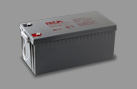
To boost competitiveness, suppliers press on with product initiatives, with the release of more gel units still being actively pursued to complement their semigel and AGM selections. A number have added tubular batteries, which adopt tubular positive plates and have a design life of 15 to 20 years. Subtypes such as OPzV and OPzS respectively categorized under gel and AGM are available in China.
Jiangxi Jingjiu's range for EVs includes tubular kinds with 140, 150 and 180Ah capacity and 12V nominal voltage. Between 70 and 80 percent of Shenzhen Sunnyway's VRLA models for EVs are tubular variants.
Gel batteries remain in the high end, priced 40 percent more than AGM models. Because of this, less-expensive semigel alternatives continue to dominate China's output of gel units, with share of about 80 percent. These surpass traditional AGM kinds in terms of reliability but the difference in rates is about 5 percent only.
Globally, VRLA types make up more than 60 percent of the secondary batteries market, owing to their enhanced capacity, power and reliability. Their cost-performance ratio is also a key advantage as Li-ion releases have quotes more than two times that of the former.
So despite the increasing share of Li-ion variants in various applications, which dented local production in January to August 2015, the overall outlook in coming years is positive. Yield in the year's first eight months reached 81.4 million kVAh, 7 percent lower than the same period in 2014. In 2018, China's output will hit 271.8 million kVAh, with about 5 percent CAGR in 2014-18, as forecast by the Lead-Acid Storage Battery Branch of the China Electrical Equipment Industrial Association.
China is the world's manufacturing center for VRLA batteries, churning out 45 percent of the total. Its volume in 2014 was 220.7 million kVAh, climbing nearly 5 percent from 2013.
About 300 suppliers constitute the line there. They are mainly based in the provinces of Zhejiang, Hebei, Jiangsu, Hubei and Anhui. The first three account for 27, 12.4 and 12.1 percent of aggregate local production.

More Sourcing News
Read Also

关注 “环球资源外贸” 官方微信,获取实时外贸资讯
iOS & Android
iOS & Android(Mainland China)
Copyright © 2026 Publishers Representatives Limited. All rights reserved.