Download App
Better Online and Trade Show Sourcing Experiences.Scan the QR code to download.
Learn More
Hot Topics
The wearables market grew 65.3 percent in the Middle East and Africa during 1Q 2016.
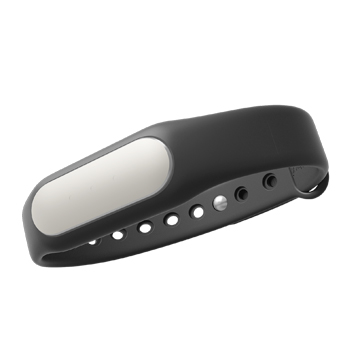
Basic wearables such as Xiaomi’s Mi Band, which cannot run third-party software and are less expensive than smart wearables, are seeing the most growth (Source: Xiaomi)
Personal computing products have not been doing well in developing markets such as the Middle East and Africa due partly to declining prices. Wearables, however, are bucking the trend. Numbers from IDC show the wearables market grew 65.3 percent in the MEA during 1Q 2016, with shipments reaching 419,925 units in seven countries.
IDC distinguishes between smart wearables, or those capable of running third-party software, and basic wearables. The latter has mostly dominated the MEA market at 71 percent. Smart wearables are still growing, which is coming mostly from the increased popularity of smart watches. IDC forecasts the CAGR for all wearables in MEA between 2016 and 2020 will be 20.1 percent.
While wearables are proving personal computing products can still see growth in the MEA region, they are also doing well elsewhere. IDC has forecast that shipments will reach 2.5 million units in Central and Eastern Europe by 2020. In the first quarter, the wearables market grew 78.7 percent. Smart wearables account for a little more than a fifth of the market in this region. If shipments reach IDC's projected target for 2020, it would be a 121.11 percent increase over 2015.
Most of the opportunity for wearables right now appears to be in basic devices. This is not surprising given that the price point is so much lower. Many wearables capable of running third-party software are more expensive smart watches with poor battery life.
More Sourcing News
Read Also

关注 “环球资源外贸” 官方微信,获取实时外贸资讯
iOS & Android
iOS & Android(Mainland China)
Copyright © 2026 Publishers Representatives Limited. All rights reserved.




