Download App
Better Online and Trade Show Sourcing Experiences.Scan the QR code to download.
Learn More
Hot Topics
Samsung unveiled an Android tablet, but its Surface competitor got all the attention.
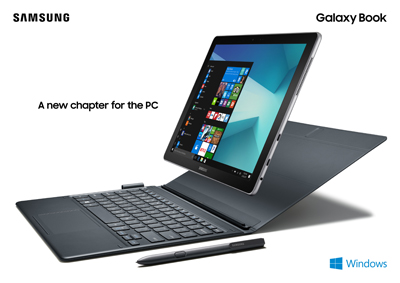
Samsung’s new Galaxy Book tablets run Windows to compete with the Microsoft Surface
line and got more attention than the Galaxy Tab S3 (Source: Samsung)
Tablets were once again a main attraction at Mobile World Congress this year, but the landscape has changed significantly. It has been seven years since Apple launched the iPad and sales have stagnated. Android tablets have also failed to impress. Google may have missed a good opportunity to improve Android’s productivity capability on tablets early on. Now, Microsoft is in the game with Windows 10, which has been stealing the tablet spotlight at MWC, as Computerworld reported.
The most important tablet launch at the event came from Samsung. The company delayed its Galaxy S8 announcement, so Samsung focused on its new tablet offerings. Two of the three new tablets are running Windows. The Windows tablets are called the Galaxy Book and have 10.6 and 12in versions. The smaller tablet is running an Intel Core m3 and the larger one has a 7th-generation Core i5 processor. The larger model maxes out specifications at 8GB of RAM and a 256GB SSD.
Like so many other Windows tablets, the Galaxy Book tablets are designed to compete with the Microsoft Surface. However, Samsung is one of the only companies designing Windows tablets that look more like iPads. They do not have a kickstand and use cooler chips for a fanless design. This makes the tablets cleaner, slimmer and lighter than similar products on the market. For those who want to use the tablet as a laptop, the accompanying keyboard case is designed to hold the Galaxy Book upright.
Samsung also released the Galaxy Tab S3, the follow-up to the company's previous Android tablets. While it is the best Android tablet to be released in some time, most of the attention seemed to be on the Galaxy Book. Samsung is not the only company with new Windows tablets out, either. These days, there are Windows tablets for everyone.
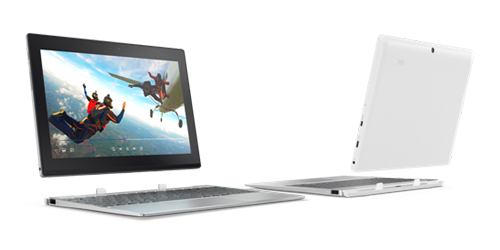
The IdeaPad Miix 320 from Lenovo is a $200 Windows tablet with a keyboard dock,
possibly allowing it to compete with Chromebooks (Source: Lenovo)
Lenovo is now focusing on two-in-one devices. It launched the new Yoga 720, an updateto the company's popular line of high-end laptops that feature a 360-degree hinge. It is also appealing to the low-end of the market with the $199 IdeaPad Miix 320, which has a detachable keyboard.
While Lenovo prefers to focus on laptops that double as tablets, China competitor TCL came out with something closer to the Galaxy or Surface tablets with the Alcatel Plus 12. It has an 11.6in screen and LTE support. The device is powered by an Intel Celeron processor, though. This makes it more powerful than the Miix 320, which uses an Intel Atom processor, but not nearly as powerful as a Yoga or Surface.
HP, on the other hand, returned with an update to the Pro x2. It is fanless, however, which means it uses Intel's Y-series chips. Consumers will still have the option between a Core m3, i5 and i7. The m3 version starts at $979.
The main distinguishing feature when Android launched was that the OS is more flexible than iOS. That led to a slew of two-in-one Android tablets with keyboards, but what people really wanted was the full productivity prowess of Windows. Now that Windows finally works as a decent mobile OS, it looks like manufacturers are all in. Although Android tablets still have their place, tablet makers have fully embraced Windows. The next move belongs to Apple, which is rumored to be working on a 10in tablet of its own.
More Sourcing News
Read Also

关注 “环球资源外贸” 官方微信,获取实时外贸资讯
iOS & Android
iOS & Android(Mainland China)
Copyright © 2026 Publishers Representatives Limited. All rights reserved.




