Download App
Better Online and Trade Show Sourcing Experiences.Scan the QR code to download.
Learn More
Hot Topics
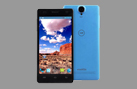
The newly released Yutopia from Micromax subsidiary YU is similar to the OnePlus 2 in many ways, even beating it in some areas.

The YU Yutopia has a fingerprint scanner on the back and a large 21MP camera
that protrudes slightly from the phone (Image from YU Televentures)
India smartphone maker YU is following the lead of OnePlus, releasing its flagship Yutopia phone with some premium hardware at a great price. Like OnePlus, YU is building hype by boasting about the device, calling it the “most powerful” smartphone in the world. Engadget, among others, has pointed out that is not the case, but it does pack a punch for its Rs24,999 price in India, the equivalent of about $377. Like the OnePlus 2, the phone has a Qualcomm Snapdragon 810 processor and 4GB of RAM. Its rear camera is a 21MP Sony that can shoot 4K video and capture stills at 8MP via the front camera. The unit’s fingerprint sensor is on the back, which has become standard for many Android phones, although it differentiates from the OnePlus 2.
The Yutopia also features Qualcomm’s Quick Charge technology, but it does not have NFC. The OnePlus 2 was widely criticized for leaving out both Quick Charge and NFC. The Yutopia has a slightly smaller battery, though, at 3,000mAh, a tinier 5.2in screen, and half the internal storage at 32GB. The OnePlus 2 also has a 16GB model, but it is cheaper and is often out of stock, suggesting the company does not produce as many.
India is a prime market for debuting a smartphone with high-end specs at a mid-tier price. The hardware is not new, though, and is similar to many other flagship phones that have come out this year. Still, it is a compelling buy at its current price point assuming people manage to get a hold of the phone, which is limited in stock.
OnePlus made recently the OnePlus 2 available without invites, which it had previously used to control demand. The Yutopia will also be running Cyanogen OS, a modified version of Android that OnePlus originally used until a dispute over its rights to use the OS in India. YU has exclusive rights to the OS in that country. OnePlus made its own version of Android called Oxygen OS with features similar to what is available on Cyanogen. There are advantages for a company to have more control over the software it uses, but Cyanogen is well-known now and that might have advantages for YU.
There is one more similarity between YU and OnePlus: Both are the beneficiaries of investments from larger companies. OnePlus’ sole investor is Oppo, making it the parent company.Oppo is owned by BBK Electronics. YU is a joint partnership between Cyanogen Inc. and Micromax, the company with the second-largest smartphone market share in India after Samsung. YU and OnePlus are both acting as small experiments to try to gain an edge in the highly competitive world of smartphone manufacturing. Consumers are increasingly price-conscious, as well. Apple has almost completely dominated the premium smartphone market, and the difference between a premium Android phone such as the Samsung Galaxy S6 and a phone similar to the Yutopia, which sells for much less brand new (the 32GB Galaxy S6 cost $600 when it was new). These types of phones are likely to be the new normal going forward and will become increasingly popular. China ODMs and OBMs that are reluctant to use Qualcomm because of its higher price tag often opt for MediaTek, which has done well by putting out octa-core chips at competitive prices. Still, the companies that stand out such as YU and OnePlus have continued to opt for Qualcomm.
More Sourcing News
Read Also

关注 “环球资源外贸” 官方微信,获取实时外贸资讯
iOS & Android
iOS & Android(Mainland China)
Copyright © 2026 Publishers Representatives Limited. All rights reserved.