




Image from Freepik
Wood-plastic composite (WPC) wall panels have moved from a niche decorative material into a mainstream interior and exterior cladding category. For B2B buyers, the appeal is straightforward: WPC panels offer the look of timber, faster installation than many traditional wall finishes, moisture resistance, and a wide range of decorative profiles suitable for residential, hospitality, retail, office and commercial renovation projects.
But sourcing WPC wall panels is not as simple as comparing catalog photos. Material formulation, fire rating, surface film quality, dimensional stability, packaging, certification and supplier consistency can vary widely. A low unit price may hide problems that only appear after installation: warping, color fading, poor clipping systems, inconsistent batches or noncompliant fire performance.
This article looks at what buyers should know before placing an order, how to evaluate suppliers and which specifications matter most.
Decorative, functional
WPC wall panels are decorative or functional wall cladding products made from a composite of wood fiber or wood flour, plastic polymers and additives. Common polymer bases include PE, PP and PVC, while additives may include colorants, foaming agents, coupling agents, UV stabilizers, flame retardants and anti-fungal agents.
In practical B2B sourcing terms, WPC wall panels are usually sold in several categories: interior fluted, flat decorative, slatted or grille-style, co-extruded, exterior cladding, acoustic or sound-absorbing decorative types as well as OEM or private-label systems.
The current market has especially strong demand for fluted and slat-style WPC panels, driven by the popularity of vertical texture, wood-look interiors and fast renovation systems in residential, hospitality and commercial spaces. Several supplier-side industry reports also identify fluted WPC panels and vertical decorative textures as major growth areas in the wall panel category.
Wood & PVC middle ground
For importers, wholesalers and building-material distributors, WPC wall panels sit in an attractive middle ground between low-cost PVC panels and higher-end natural wood, veneer, aluminum or stone-based finishes.
Key commercial advantages include:
| Advantage | B2B relevance |
| Wood-look aesthetics | Appeals to architects, interior designers, contractors and homeowners |
| Moisture resistance | Suitable for many interior environments where MDF or natural wood may be risky |
| Fast installation | Reduces labor time for contractors and renovation projects |
| Low maintenance | Attractive for hotels, offices, retail stores and rental properties |
| Design variety | Enables distributors to build collections by color, texture, profile and market segment |
| OEM flexibility | Suppliers can often customize size, surface film, color, packaging and branding |
| Better life cycle positioning than basic PVC | Useful for premium or mid-market sales strategies |
Some B2B platforms and supplier guides position WPC as a material with stronger life cycle value than entry-level PVC panels, especially where buyers want decorative performance, durability and a more premium appearance.
Main applications
WPC wall panels are commonly sourced for both stock distribution and project-based procurement.
Interior applications include living room feature and TV background walls, hotel lobbies and corridors, office reception areas, retail display walls, restaurant and café interiors, apartment and villa renovation, ceiling decoration and commercial partition decoration.
Exterior applications include building façade accents, balcony wall cladding, garden walls, outdoor ceilings or soffits, commercial exterior decorative strips and residential siding-style uses.
For exterior use, buyers should be much more selective. Outdoor WPC panels require stronger UV resistance, better thermal expansion control, weather-resistant formulation and a secure fastening system. Some exterior WPC specifications list performance requirements such as UV stabilizers, fire retardants, fungicides, low water absorption and dimensional tolerances, but buyers should verify these through test reports rather than relying only on catalog claims.
Key product specifications
A professional WPC wall panel RFQ should go beyond color, length and price. B2B buyers should ask for a full technical sheet and confirm the following details.
Material composition
Ask the supplier to disclose the approximate formulation based on wood fiber or wood flour percentage; polymer type, which may be PE, PP, PVC or mixed polymer; recycled versus virgin plastic content; additive package; flame retardant content; UV stabilizer content for exterior panels; foamed or solid-core structure; and co-extruded or standard extrusion.
Many WPC products are promoted as eco-friendly because they can incorporate recycled wood and plastic. However, the actual environmental value depends on the formulation, manufacturing controls, emissions performance and whether the product has credible supporting documentation.
Panel size and profile
Common WPC wall panel dimensions vary by supplier and market. Interior panels may be supplied in lengths of 2,440 to 3,000mm, while exterior cladding is usually longer. In terms of interior panel thickness, the typical range is 6 to 8mm for certain flat decorative products, with exterior cladding thicker.
Buyers should confirm length, width, thickness, flute depth, effective coverage width, weight per piece, tolerance range, installation gap requirement and compatible accessories. The effective coverage width is especially important. A panel may be listed as 160mm wide, but after overlap or clipping, the actual installed coverage may be lower. This affects project cost calculations.
Surface finish
WPC wall panels are commonly finished with hot-stamped or laminated decorative film, co-extruded colored surface, embossed wood grain, brushed texture, matte, semimatte or glossy surface or marble, stone, fabric or metal-look designs.
For distributors, surface quality is often the biggest differentiator. Ask for film thickness, abrasion and scratch resistance, color fastness, UV test data for exterior products, batch-to-batch color control process and minimum order quantity for custom colors.
A good supplier should be able to maintain color consistency across repeat orders. This is critical for project buyers who may need additional panels months after the first shipment.
Fire performance
This is one of the most important sourcing issues for WPC wall panels, especially for commercial interiors, hotels, apartment projects and public buildings. Depending on the target market, buyers may need documentation for standards such as ASTM E84/UL 723 for the US, EN 13501-1 for Europe, GB 8624 for China and other local building-code requirements.
However, buyers should treat fire claims carefully. Always request a test report from a recognized laboratory, and exact product name and formulation, panel thickness and surface finish tested as well as date of test, whether the tested product matches the quoted product and whether accessories or installation method were included.
A supplier may have a fire test report for one product but quote a different panel structure or surface film. That can create compliance risk.
Emissions and chemical compliance
For interior wall panels, emissions matter. Ask about formaldehyde and VOC emissions, heavy metals, phthalates if applicable, REACH compliance for Europe, RoHS where relevant, CE documentation where required and indoor air quality testing. Some WPC wall panel suppliers list formaldehyde emission standards such as EN 717-1 E1 and VOC testing such as ISO 16000 A+ for interior decorative panels.
For B2B buyers selling into regulated or premium markets, these documents can support sales to architects, developers and commercial contractors.
Interior vs exterior wall panels
One common sourcing mistake is using an interior WPC panel for an exterior application. Even if the product looks similar, the formulation and performance requirements are different.
Interior panels usually prioritize decorative appearance, lightweight structure, easy cutting, fast installation, low odor and VOCs, good surface film adhesion and cost efficiency.
Exterior WPC panels should emphasize UV, weather and impact resistance, thermal expansion control, water absorption performance, stronger wall thickness, better fastening system, wind-load suitability, fire and smoke compliance and long-term color stability.
If buying for outdoor use, request test data for UV exposure, freeze-thaw cycling, water absorption, flexural strength, impact resistance and installation span. Some exterior WPC product sheets include values for water absorption, thermal expansion, flexural strength, impact resistance, UV stability and freeze-thaw performance, which are the kinds of data buyers should ask suppliers to provide and verify.
Supplier selection
WPC wall panels are widely available from manufacturers, trading companies and online B2B marketplaces. Each source has advantages and risks.
Factory-direct sourcing
This is best for importers, large distributors, private-label brands, project contractors and buyers with repeat orders. Sourcing directly from factories offers advantages of better control over formulation and quality, more customization options, lower long-term cost, direct technical communication and easier factory audits. But this option may also mean higher MOQ, communication gaps, longer sampling process and stronger quality control required.
Trading company
For mixed container buyers, new importers, buyers testing multiple product categories and small and medium wholesalers, a trading company is best. This source usually has advantages of a more flexible product range, lower MOQ in some cases, easier communication and consolidated products from several factories. However, buyers have less control over actual production, can be faced with issues on quality consistency and raw materials that are harder to trace. There is also a possible price markup.
B2B platform
Sellers on these platforms are best for initial market testing, small trial orders, comparing many suppliers quickly and finding design trends. The advantages of turning to these sources include fast supplier discovery, wide design selection, visible transaction history or reviews on some platforms and easier sampling. There are accompanying risks such as product photos may not reflect actual quality, certification claims may be generic, supplier may not be the true manufacturer and pricing can vary widely by volume and packaging.
For serious B2B sourcing, the ideal approach is to shortlist suppliers online, request samples and documents, then perform a factory audit or third-party inspection before scaling.
Conclusion
WPC wall panels are a strong B2B product category because they combine attractive design, practical installation and broad market demand. For importers, distributors and contractors, they can deliver good margins and repeat sales, especially in renovation, hospitality, retail and residential interior markets.
However, successful sourcing depends on disciplined supplier evaluation. Buyers should focus on material formulation, fire performance, surface durability, dimensional stability, accessories, packaging and compliance documentation. The cheapest quote is rarely the best long-term choice.
For B2B buyers, the winning strategy is to source WPC wall panels as a complete system – not just as decorative boards. That means verified specifications, reliable production, matching accessories, proper packaging, clear installation guidance and documentation that supports the requirements of the destination market.
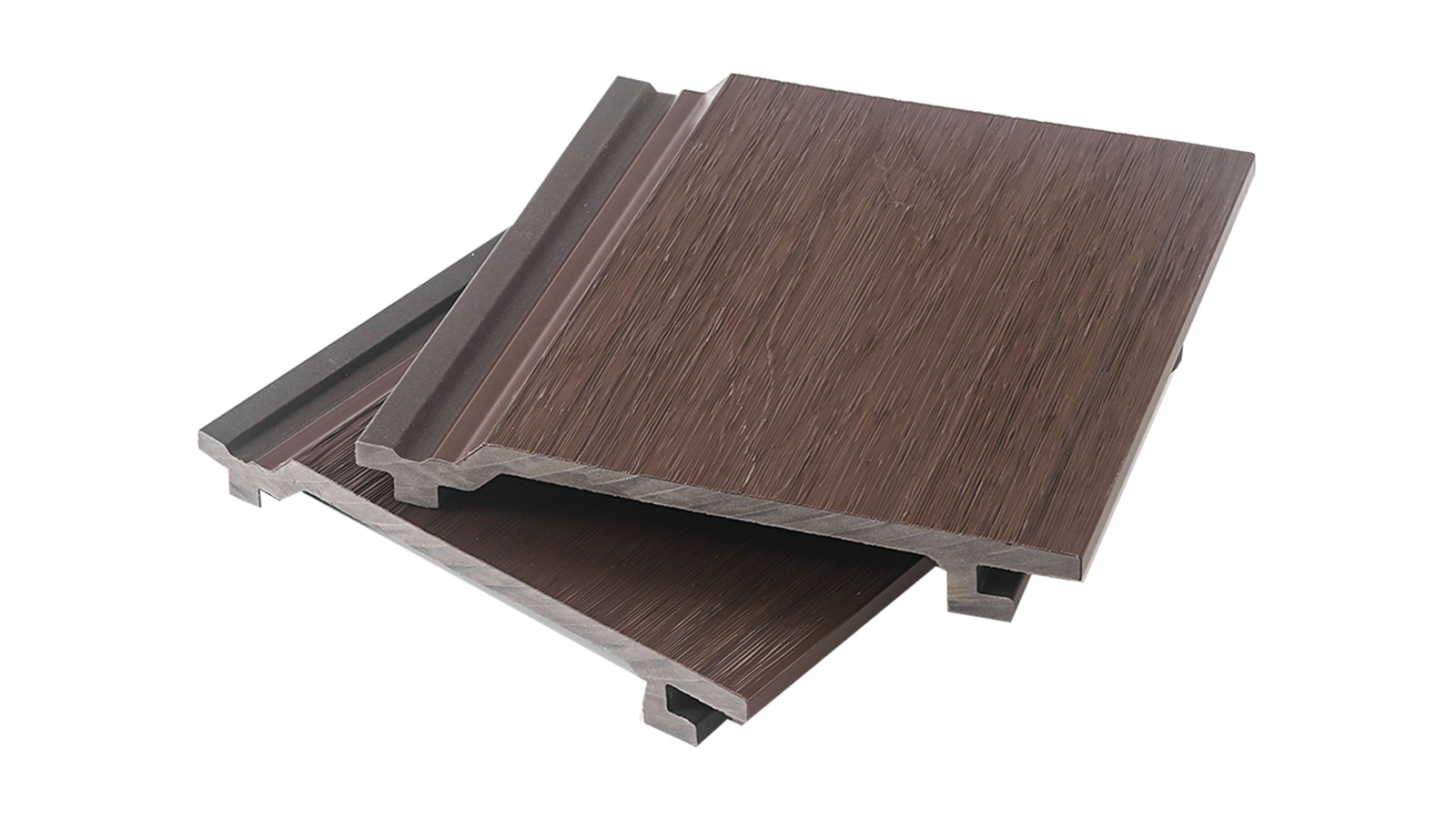
WPC wall panel for exterior cladding
Company: Feihong Industry Co. Ltd
Feihong’s model ECO-01-3299 is a WPC panel designed for exterior cladding. It is made using teak, walnut or other wood material and PVC, has a plastic film coating and can have a brushed, distressed, matte, pressed bevel or smooth finish. This building material is highly recyclable, water-, weather- and insect-resistant, requires no paint or glue in installation and is low maintenance. It is available in different colors as well as in versions for floor decking. The MOQ is provided on direct inquiry.
Lead time: 10 to 15 days
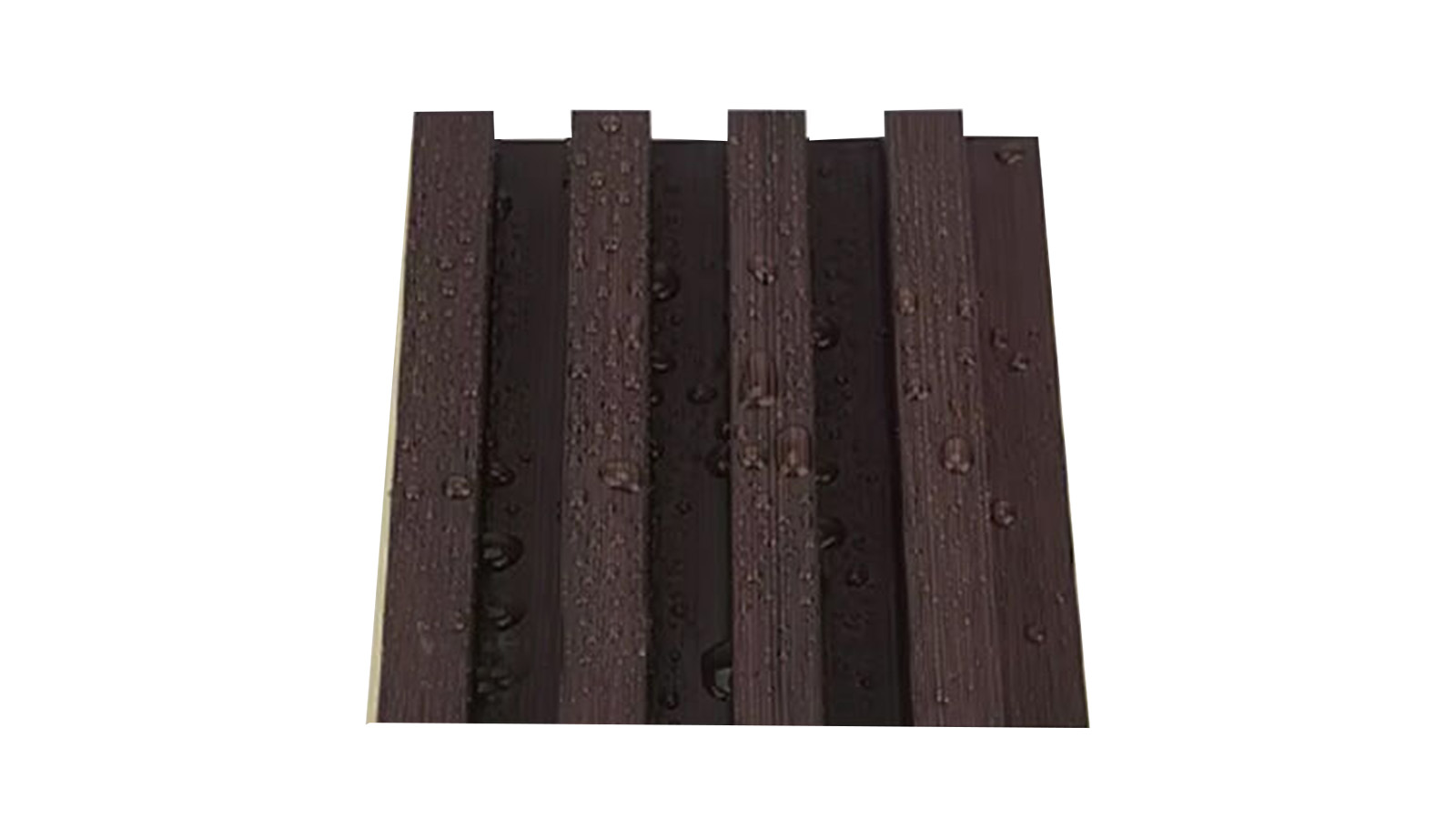
WPC wall panel for interior applications
Company: Foshan Gelinsen New Materials Technology Co. Ltd
The WPC-207 from Foshan Gelinsen New Materials Technology Co. Ltd is a water-resistant fluted WPC wall panel for interior cladding. It has a sanding super embossing, or what Chinese manufacturers describe as a tactile texture with a lightly sanded, matte and wood grain feel. This material is water-resistant and easy to clean and has a B1 fire rating. The standard sizes are 160x23mm, 159x18mm and 150x17mm, with other dimensions available on request.
Lead time: 15 to 25 days
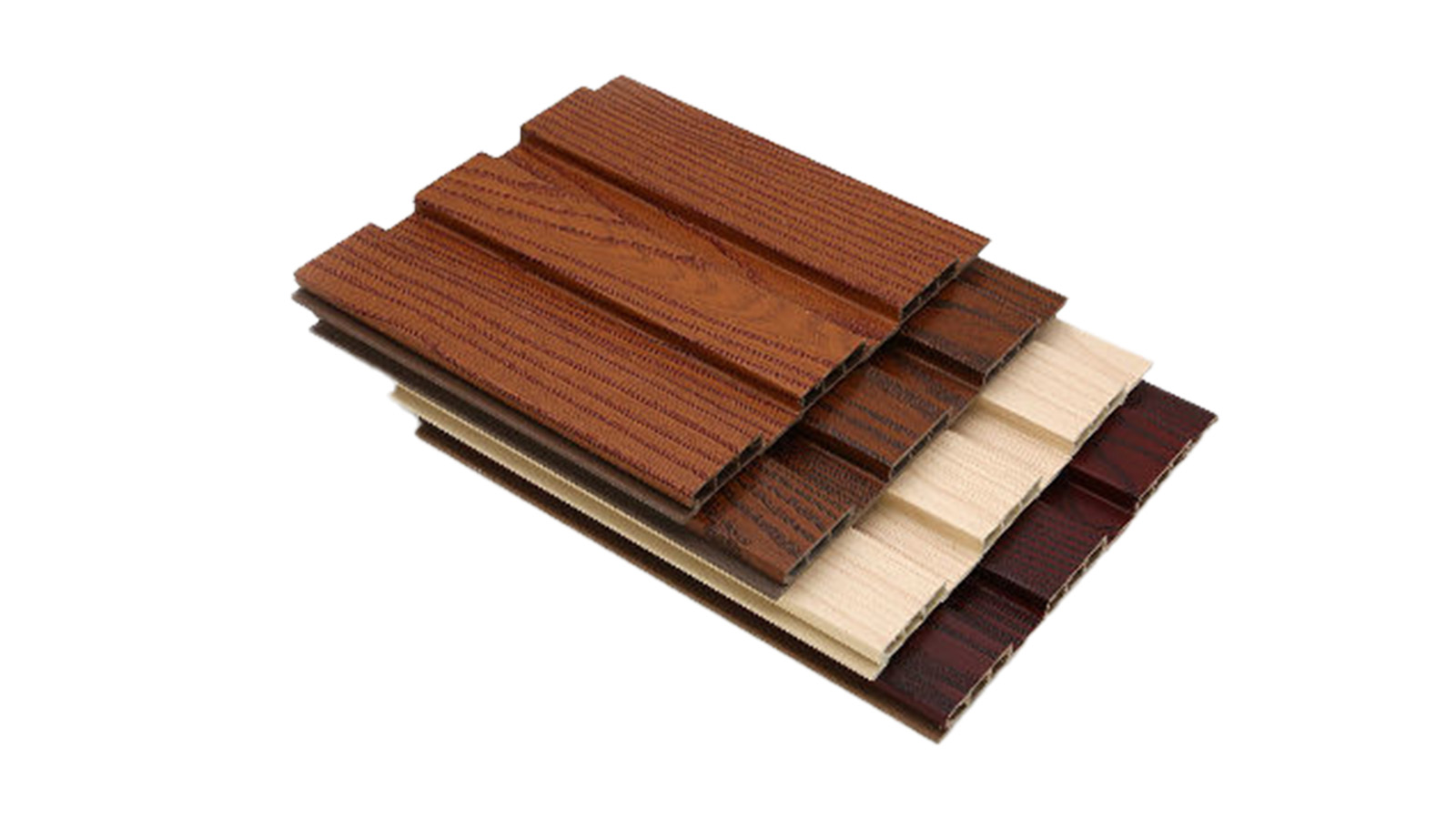
WPC wall panel for indoor ceiling wall skirts, background walls
Company: Linyi Jiate Import & Export Co. Ltd
Linyi Jiate markets this WPC wall panel, with model number 195*25-5896, which can be used as indoor ceiling wall skirt or background wall material. The typical sizes are 2,900x160x25mm and 2,900x195x28mm, with other lengths available. This building material, available in various colors, is highly recyclable, has water, weather, mold and insect resistance and will not crack or warp in temperatures of -40 to 60 C. Installation requires no glue or paint.
MOQ: 1,000 meters
Lead time: 15 to 25 days
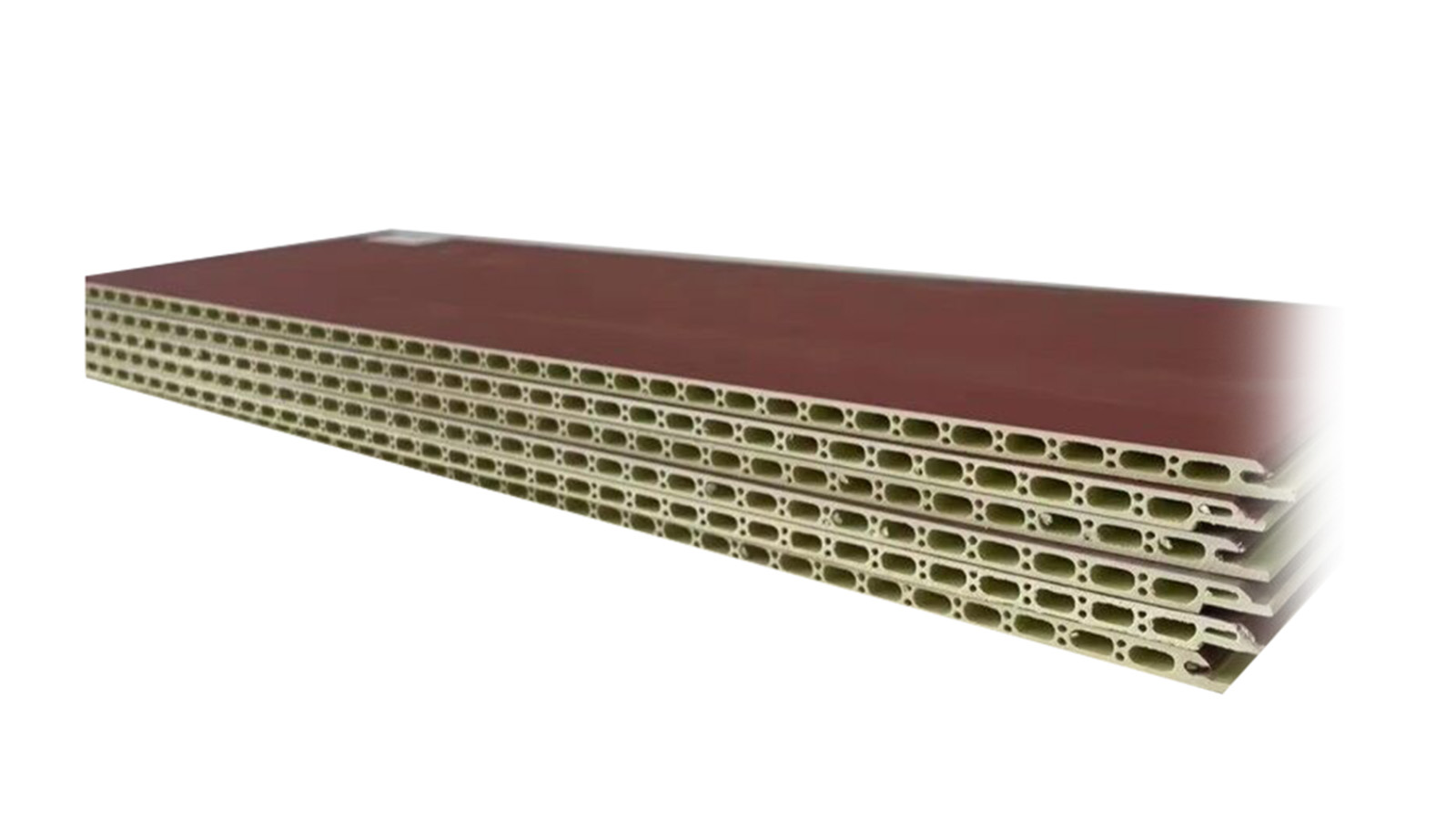
WPC wall panel for interior spaces
Company: Quanzhou Ridge Steel Structure Co. Ltd
Quanzhou Ridge’s WPC wall panel, with model name WPC-003 or model number 202503122, has PVC film coating. It has seamless or V-groove profile and requires clips and nails in installation. For interior applications, this building material is water- and moisture-resistant, flame-retardant and easy to clean. Dimensions are 3,000x300x9mm, 3,000x450x9mm and 3,000x600x9mm or as specified. Weight per square meter is 1.5kg. Custom colors are accepted.
MOQ: 1sqm
Lead time: 30 to 45 days
WPC wall panel with grooved, embossed or co-extruded profile
Company: Shouguang Huasheng Import and Export Co. Ltd
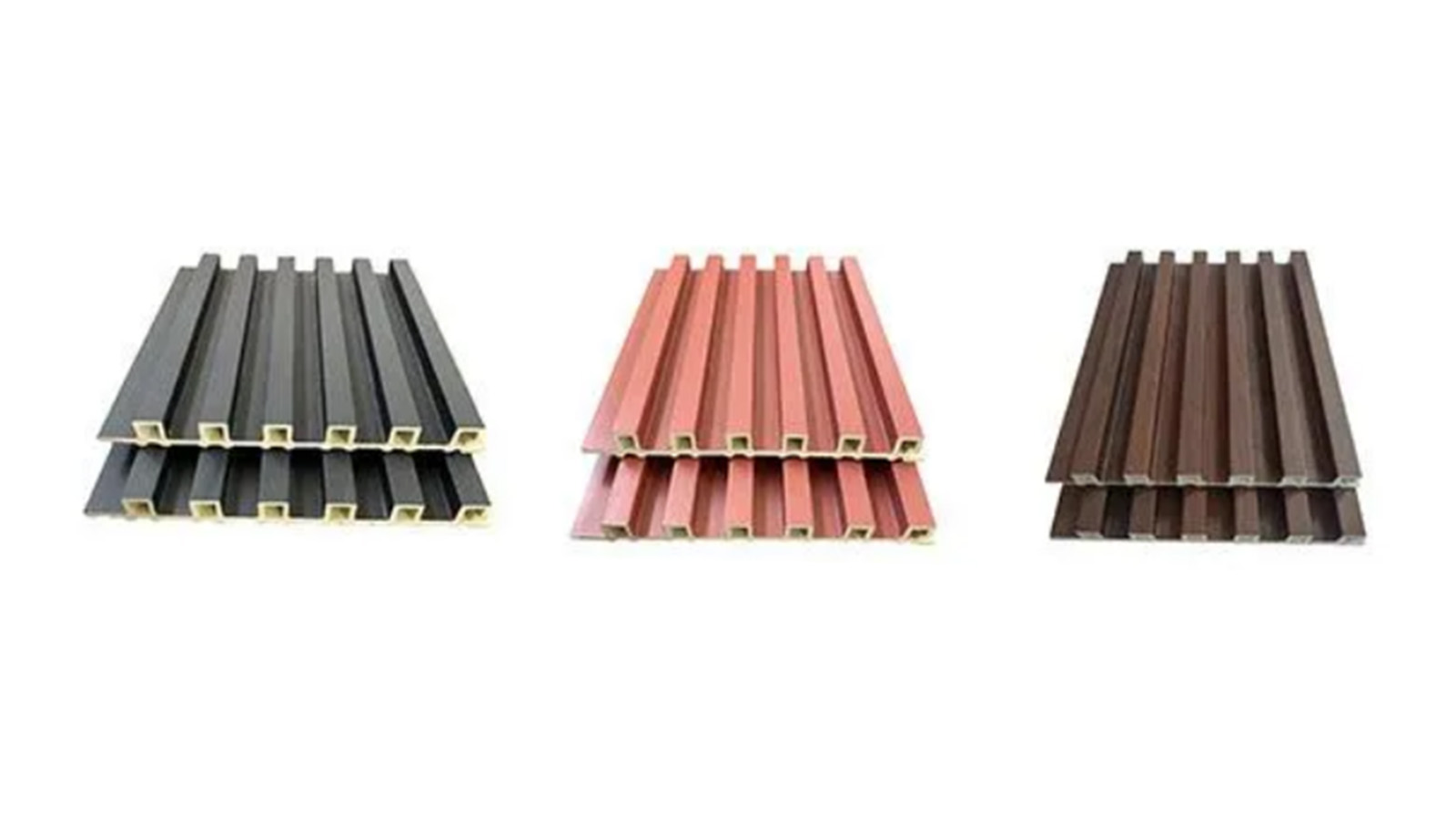
A WPC wall panel for interior cladding, Shouguang Huasheng’s model HS219 has a grooved, embossed or co-extruded profile and is flame-retardant and water- and scratch-resistant. It is available in widths of 150, 160, 168 and 200mm and thicknesses of 5, 10, 15, 27 and 30mm. Color can be customized.
MOQ: 200 pieces
Lead time: 15 to 20 days
WPC wall panel with flexible fluted design
Company: Shouguang Sunrise Industry Co. Ltd
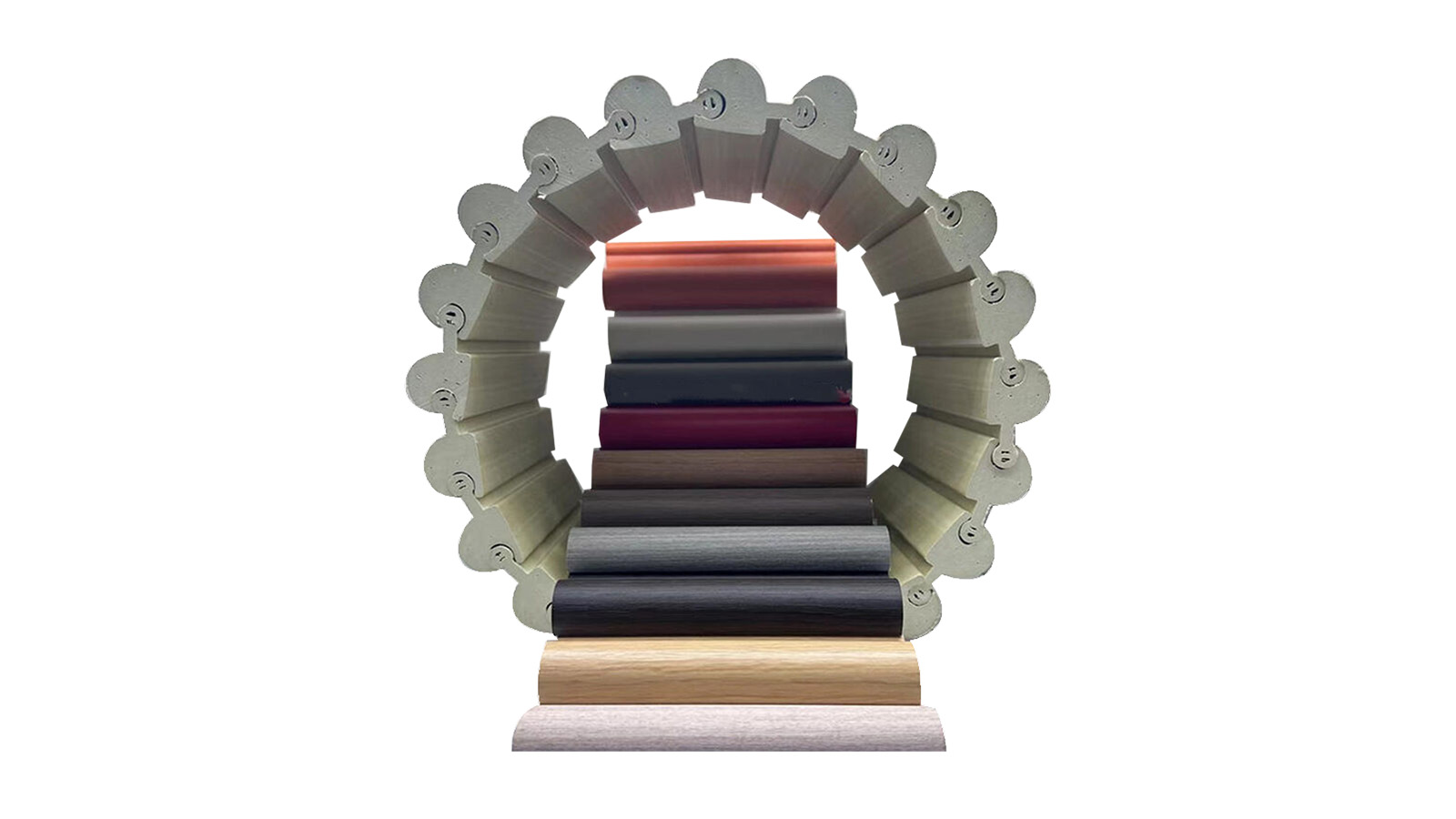
Shouguang Sunrise offers the Wall Panel-01-7355, an indoor-use WPC wall panel. This product has a flexible fluted and interlocking design and is available with a wood or marble texture, cloth pattern, metallic or plain color finish. It is eco-friendly and has water, fire, moisture, corrosion and insect resistance and has a B1 fire rating. Length is 2.9 meters.
Lead time: 15 to 30 days

