
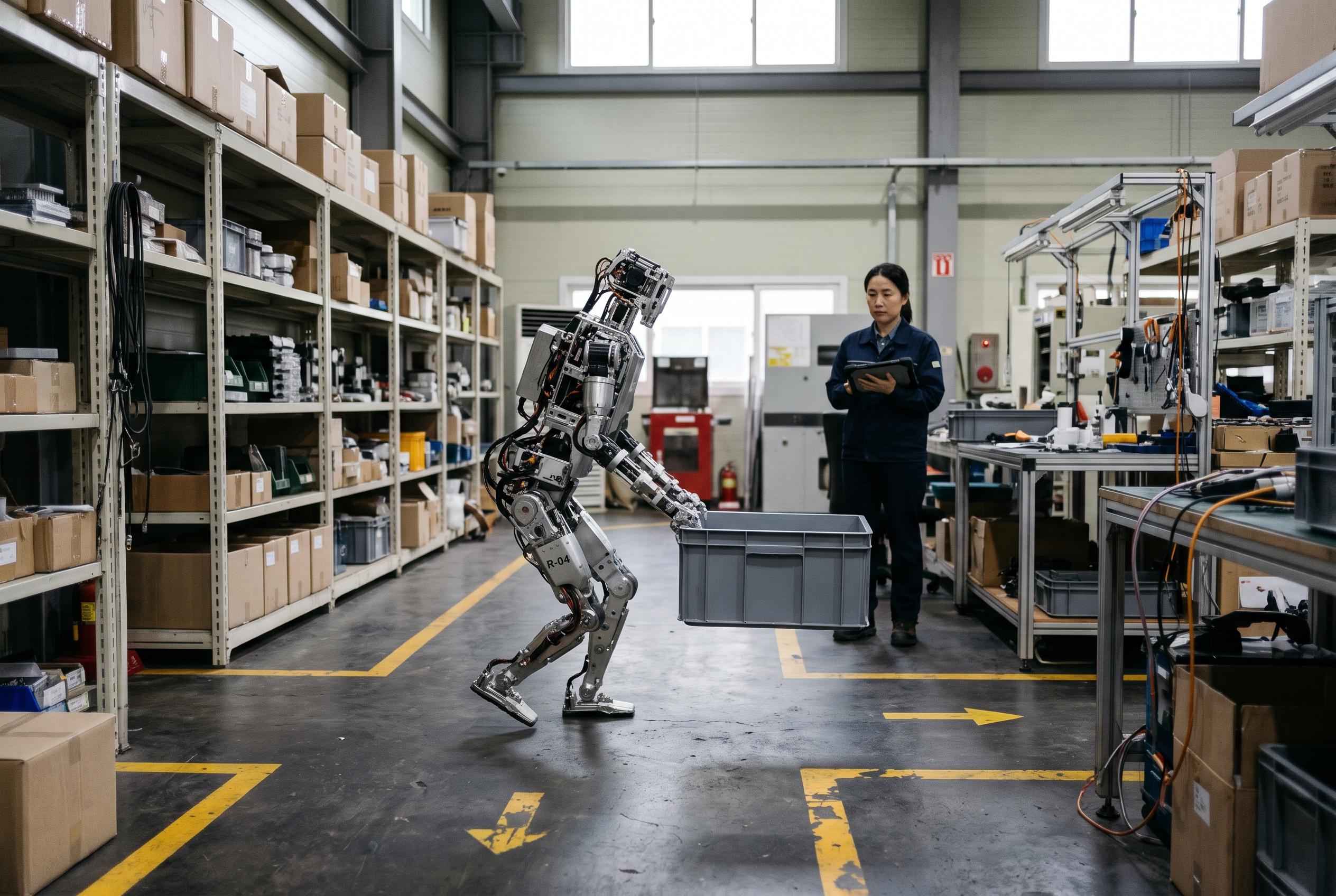
AI and robotics are moving beyond chatbots that forget one conversation to the next, but today’s systems are still a long way from a fully capable android. Newer models can connect visual information, language and movement, while memory features and factory trials hint at what comes next. The gap between a helpful tool and a truly adaptable robot remains the big question.
AI is leaving the blank-slate chatbot behind
The most useful way to judge today’s AI may be to compare it with two very different fictional extremes: an assistant that starts fresh each time, and a robot that can remember, reason and move through the world with human-like flexibility. Right now, most AI sits somewhere between those poles, with a long way to go before it can combine reliable memory and physical judgement.
Memory is improving, but it isn’t the same as a continuous inner life. OpenAI’s help information describes ChatGPT memory as a feature that can retain useful details between conversations, giving users more continuity without requiring them to repeat every preference. That’s handy for everyday tasks, though it doesn’t mean the system learns and develops like a person.
Vision-language-action models give robots a new playbook
A major shift in robotics is the effort to connect what a machine sees with what it’s told to do. Google DeepMind’s RT-2 model, for example, was designed to translate vision and natural-language instructions into robot actions, rather than relying only on a list of narrowly programmed movements.
That matters because the real world is untidy. Objects shift, instructions vary, and a robot can’t count on every task unfolding exactly as planned. More flexible models could help machines respond to unfamiliar situations, but a promising demonstration is not the same as dependable performance across a whole workplace or home.
Humanoid robots are moving into real workplaces
The humanoid form is attracting serious attention because it can, in principle, work in spaces built for people. Figure has announced a production deployment at BMW, a sign that companies are testing humanoid robots in practical manufacturing settings rather than keeping them confined to research labs.
The broader factory picture is already substantial, though it includes many kinds of industrial robots, not just humanoids. The International Federation of Robotics reported that five million industrial robots were operating in factories worldwide, a useful reminder that automation is established even as more flexible robot designs draw headlines.
Memory and training remain the hard parts
Robots don’t learn every skill by wandering around a factory floor. Simulation can expose them to many situations before they encounter physical equipment, while researchers continue to explore ways for AI systems to carry useful skills and information from one task to another. One influential research paper proposed a framework for combining language and robotic control, illustrating the broader push to connect abstract instructions with physical action.
Still, stored information and genuine understanding aren’t interchangeable. A robot might retrieve a past instruction or recognise a familiar object yet struggle when the lighting changes or a tool slips. Google DeepMind’s newer robotics work reflects the ambition to bring AI agents further into the physical world, but practical reliability remains a central test.
What to watch as embodied AI develops
For a grounded view of progress, look beyond sleek videos and ask what a robot can do repeatedly, safely and with minimal help. Can it recover when a task goes wrong? Does it handle objects it hasn’t seen before? And can the system retain useful experience without producing surprising or unsafe behaviour? Those questions are less cinematic than a robot with a personality, but they’re more revealing.
The near-term story is less about machines becoming people and more about software gaining better ways to guide machines through physical tasks. Chatbots are gaining features that make interactions feel more continuous, while robots are learning to connect perception, language and movement. That’s real progress, just not the same as sentience or human-level adaptability.
The next big milestone isn’t a robot that feels human; it’s one that handles the unexpected reliably.
Disclaimer: This article may have been created with AI assistance and reviewed by our editorial team. It is provided for general informational purposes only. Readers should verify information independently before relying on this content.
