
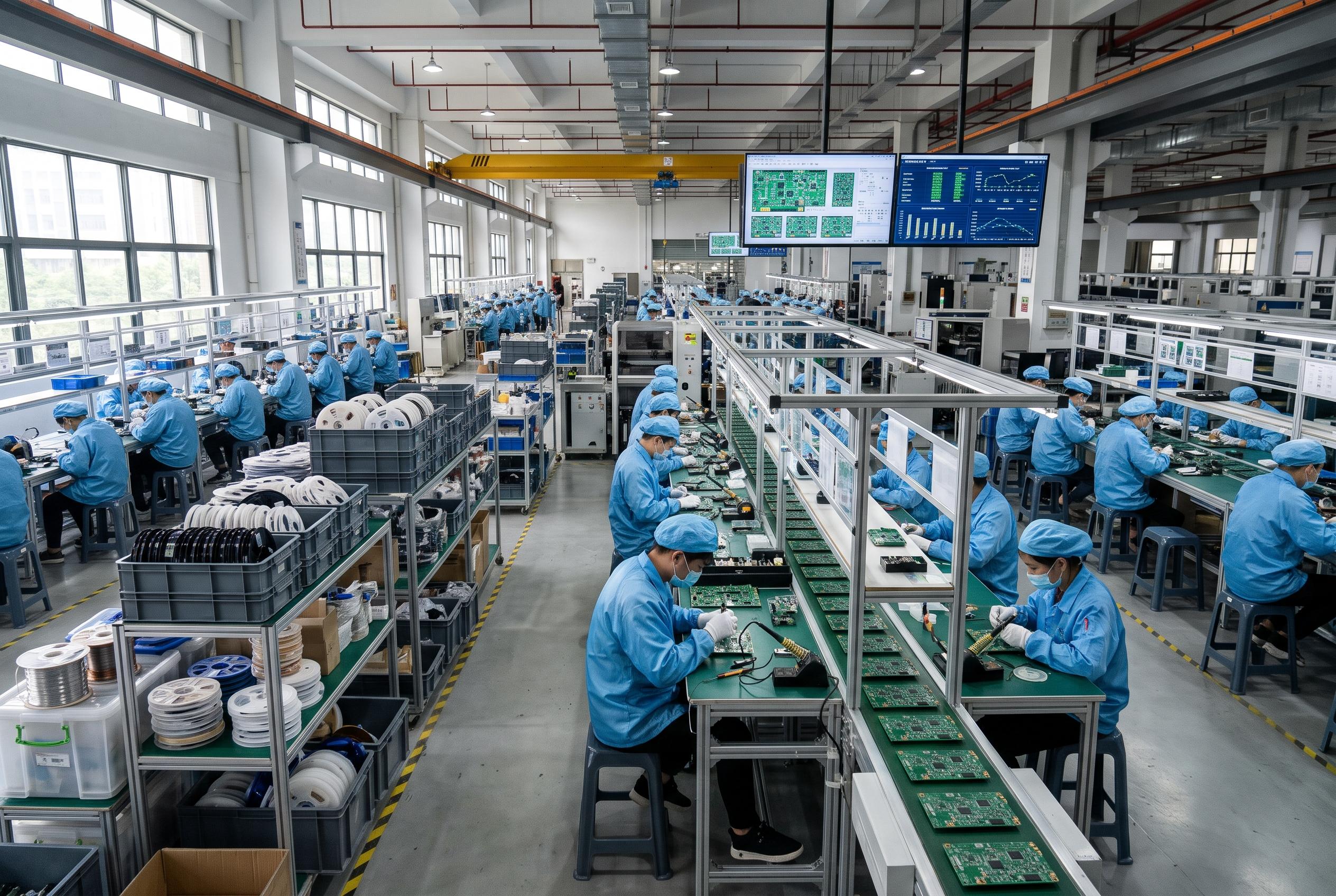
Manufacturers are facing a new pressure point in the AI boom: printed circuit boards and chip substrates. As data centers absorb more high-end components, supplies are tightening worldwide, raising concerns about pricier motherboards, delayed product launches, and tougher buying decisions for PC shoppers.
AI hardware is creating a new supply squeeze
The AI boom is no longer just a story about scarce memory and expensive graphics processors. Printed circuit boards, the layered foundations that connect electronic components, are also becoming a hot commodity. Industry coverage points to rising prices and tighter availability as manufacturers compete for capacity.
That pressure is especially awkward for PC makers. Demand for conventional computers may be soft, but a weaker market doesn't automatically free up the right kind of production. AI servers often require far more advanced boards, with greater layer counts and stricter manufacturing requirements, according to All About Circuits coverage.
Why motherboards could get more expensive
A motherboard may look like a flat slab inside a PC, but its construction is anything but simple. It can contain multiple conductive layers, dense routing, specialized materials, and carefully controlled manufacturing processes. When those inputs become harder to secure, costs can travel quickly through the supply chain.
The impact could show up in several ways. Manufacturers might pay more for boards, hold back new models, or pass higher costs along through retail pricing. PCBA industry guidance also points to longer lead times for conventional boards, a particularly unwelcome development for buyers who assume mainstream hardware should be easy to source.
AI servers are competing with everyday electronics
Board suppliers have a straightforward commercial reason to prioritize AI infrastructure: customers building data centers are often willing to pay premium prices. That can encourage factories to shift equipment and labor toward server hardware, even while traditional electronics companies still need dependable supply.
The result could reach beyond desktop PCs and laptops. Consumer electronics, industrial equipment, and vehicles all depend on circuit boards, while cars are adding more electronics through electrification and digital features. Industry reporting has described this as a broader contest for manufacturing capacity, not merely a temporary PC problem.
Chip substrates are under pressure, too
The squeeze also affects chip substrates, which sit beneath processors and other semiconductor packages. They perform a different job from a motherboard, but both are essential links between silicon and the wider system. As AI accelerators become more powerful and complex, their packaging needs grow along with them.
That matters because chip substrates aren't easily swapped for simpler alternatives. Their production requires specialized materials, precision equipment, and qualified suppliers. Reports from Golem and other technology outlets have connected AI infrastructure demand with significant price pressure across the board market, while geopolitical uncertainty adds another layer of risk.
Could raw materials become the next bottleneck?
The supply chain may not stop at finished boards. Advanced PCBs depend on copper, laminates, resins, and chemical treatments, and more sophisticated designs tend to demand tighter specifications. If board makers expand output quickly, suppliers of those ingredients could face their own capacity limits.
For shoppers, this doesn't necessarily mean every PC will become dramatically more expensive overnight. It does suggest a bumpier market, with more variation between brands, regions, and product categories. A practical move is to compare complete systems and replacement parts early, check warranty terms, and avoid assuming that a familiar motherboard will remain at today's price.
What PC buyers should do next
If you're planning a build, track the motherboard, storage, and memory together rather than focusing only on the processor or graphics card. A cheap CPU deal can lose its appeal if the compatible board is suddenly scarce. Retailers may also bundle parts or adjust pricing as inventory changes, so flexibility can pay off.
For a routine upgrade, buying immediately isn't always necessary. But if your current system is failing, or you need a specific platform for work, ordering well ahead of a deadline is sensible. As WinFuture and supply-chain reports indicate, the most frustrating outcome may be less about one spectacular price jump and more about limited choice at the moment you need a part.
PCB shortages are becoming a quiet but important test of how far the AI boom can stretch the electronics supply chain.
Disclaimer: This article may have been created with AI assistance and reviewed by our editorial team. It is provided for general informational purposes only. Readers should verify information independently before relying on this content.
