
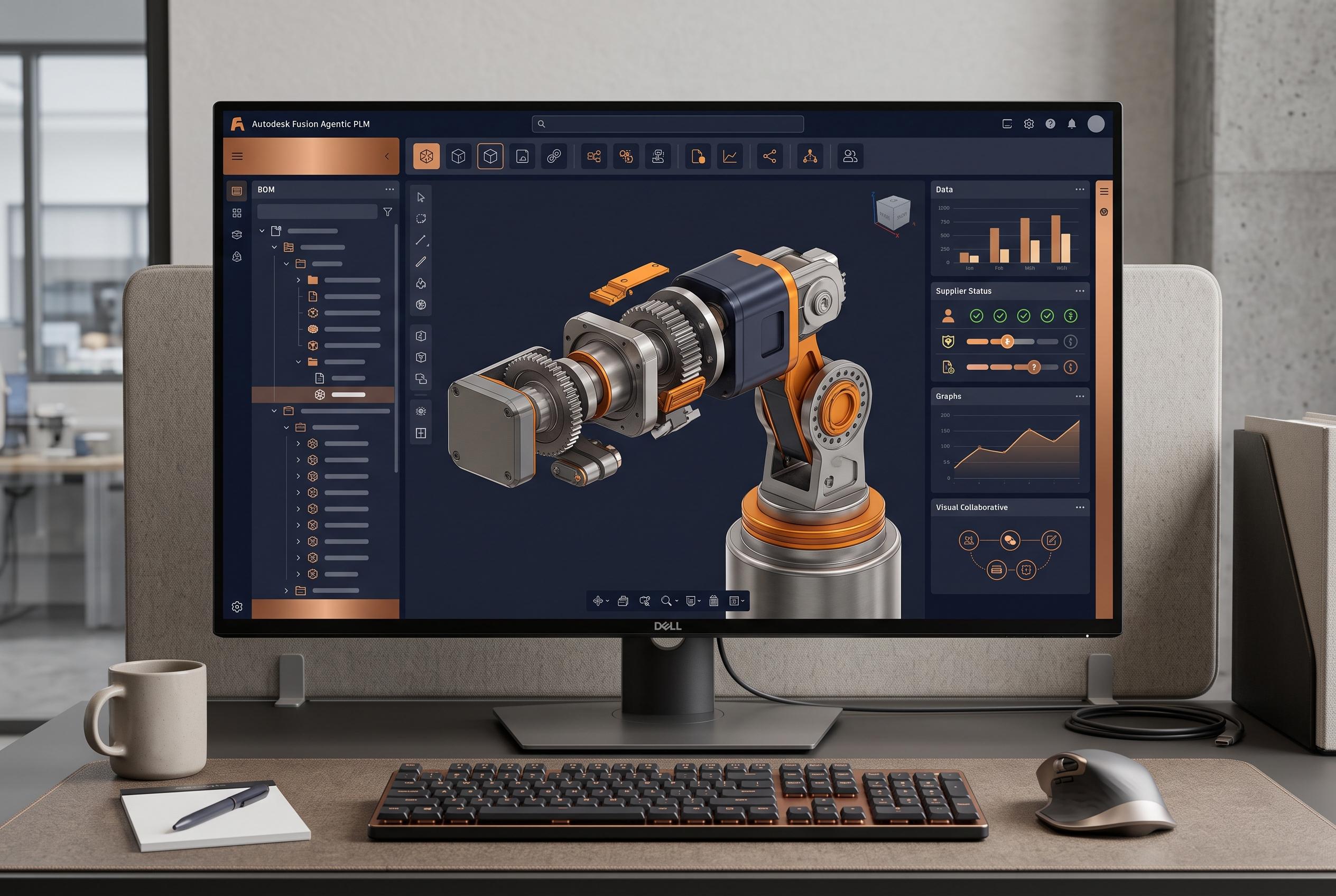
Product teams are watching Autodesk Fusion’s agentic PLM direction after AU 2026, where the company showed a canvas-based way to investigate supplier issues, product data, and engineering decisions together. The promise is practical: start with a real problem, then build the formal lifecycle process around it instead of forcing teams into rigid workflows first.
PLM may finally begin with the problem
The most interesting part of Autodesk’s agentic PLM pitch isn’t the word “agentic.” It’s the proposed starting point.
Instead of opening with a discussion about fields, workflows, and approval stages, a team could begin with something tangible. A supplier changes pricing, an alternative component appears, or an engineer spots a design concern. That immediate pressure gives people a reason to participate, which is often more convincing than another system rollout meeting.
Autodesk’s Fusion sessions have emphasized AI-supported work and connected product information, while industry coverage has highlighted the company’s broader move from chat-style tools toward agentic ecosystems. The direction feels sensible. People rarely want to “use PLM” for its own sake; they want to resolve an issue without losing the trail of decisions along the way.
A canvas could give early investigations room to breathe
The proposed canvas is designed as a shared space for assembling the pieces of a product question. A supplier message might sit alongside specifications, product records, and invited colleagues. That makes the early investigation feel closer to real teamwork and less like filling out a form.
That flexibility matters because early discussions are messy by nature. An engineer may suggest a substitute, then reject it after discovering a fit problem. Purchasing may clarify that a quoted lead time applies only to a different order quantity. Those details can disappear in email, even though they explain why the final decision made sense.
Autodesk’s PLM materials describe a broader effort to connect product development, manufacturing information, and controlled lifecycle work. The opportunity is to preserve the useful context without pretending every thought deserves to become an official record. The best canvas would keep exploration lightweight while still making the important evidence easy to recover later.
The Assistant needs clear boundaries
Autodesk Assistant could help gather information, answer questions, prepare next steps, and coordinate work across Fusion environments. That support may save time, particularly when teams are searching through large collections of product data or trying to understand the effect of a proposed change.
But convenience shouldn’t blur responsibility. An Assistant’s recommendation is not the same as an engineer’s decision, and a suggested replacement is not an approved change. Those transitions need to be visible, especially when a decision affects safety, compliance, cost, or a released design.
Autodesk has positioned agentic capabilities as part of the evolution of Fusion Manage, with governed records, rules, permissions, and human approvals underneath the experience. Autodesk’s AI announcements also distinguish between tools that are available now and capabilities still being developed. That distinction matters, so buyers should treat the agentic PLM scenarios as a direction to evaluate rather than a finished product promise.
Why this could improve PLM adoption
A problem-first approach could widen the circle of people who engage with lifecycle work. A buyer might join because a supplier issue needs resolving. An engineer might contribute because a substitute affects the design. A project manager could participate because the change threatens a delivery date.
That’s a more natural invitation than asking everyone to learn the company’s PLM architecture before they can contribute. Autodesk’s Fusion workflow announcements point toward AI-supported processes that adapt to how teams work, while its product-team messaging focuses on helping groups connect design and manufacturing decisions more effectively.
The challenge is keeping the work intact when informal investigation becomes formal governance. If a discussion turns into a change request, the supporting files, questions, and rejected options should remain linked. Otherwise, teams may gain an easier starting point only to face the same reconstruction work later.
The data foundation will decide whether it works
A polished canvas can make collaboration look effortless, but the underlying data still has to be trustworthy. Product teams need to know whether the Assistant is examining the latest design, an approved configuration, a released bill of materials, or an older imported file.
That question becomes especially important as Autodesk brings Fusion BOM, Fusion Manage, Vault, and other engineering sources into its wider strategy. Autodesk’s PLM solution materials emphasize connected product information and controlled processes, but real organizations often have data spread across several systems and locations.
The next test is therefore less about whether teams can start a conversation. It’s whether they can carry that conversation into an approved change without losing the source files, product relationships, or reasoning behind the decision. If Autodesk can make that journey feel seamless and trustworthy, agentic PLM may become useful long before every process has been perfectly mapped.
The idea is promising, but the data trail will determine whether it earns trust.
Explore the approach with a close eye on governance, source data, and the handoff from investigation to approval.
Disclaimer: This article may have been created with AI assistance and reviewed by our editorial team. It is provided for general informational purposes only. Readers should verify information independently before relying on this content.
