
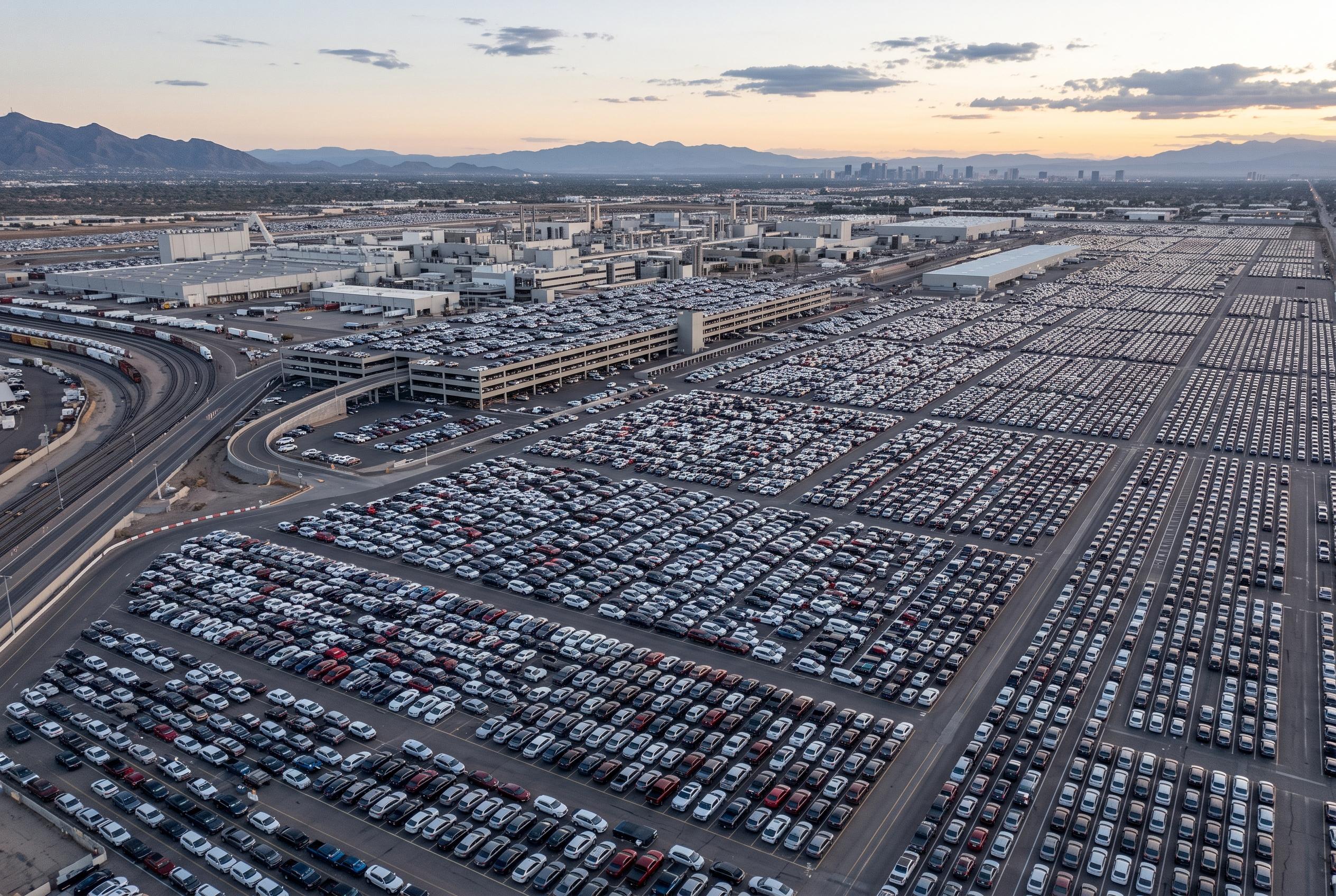
China’s car exports are accelerating toward a landmark 10 million vehicles in 2026, powered increasingly by electric models rather than low-cost petrol cars. The shift matters far beyond headline numbers: Chinese manufacturers are now competing on batteries, software, supply chains, pricing and overseas factories, while tariffs and shrinking tax incentives put that new global confidence to the test.
The 10 million milestone is suddenly close
China’s automotive export story has shifted from hopeful prediction to near certainty. According to figures reported by People’s Daily, Chinese manufacturers exported 8.205 million vehicles during the first nine months of 2026, leaving less than 1.8 million units to reach the 10 million mark.
That sounds formidable until the monthly pace is considered. Exports topped one million vehicles in each of the four months from June through September, with September alone reaching 1.053 million. At that rate, the annual target looks less like a dramatic final sprint and more like a line already coming into view.
The broader trend is just as striking. China exported 5.859 million vehicles in 2024 and 7.098 million in 2025, according to industry figures cited by China Economic Net. The latest jump suggests the country is no longer merely expanding its lead in global vehicle shipments; it's changing what those shipments contain.
Electric cars are changing the export playbook
New-energy vehicles accounted for 4.006 million exports in the first three quarters, up 1.3 times from the same period a year earlier, according to First Financial. That makes electric and plug-in models central to the export boom rather than a fashionable side category.
This is important because the competitive argument is moving beyond sticker price. Chinese manufacturers have spent years refining batteries, charging systems, driver-assistance software and vehicle electronics in an intensely competitive domestic market. Now those features are travelling with the cars.
Industry observers describe this as a move from simple value-for-money competition to a broader systems advantage. In practical terms, a buyer may be comparing not just range and price, but also software updates, cabin technology, charging convenience and how quickly a brand can provide service.
Tariffs haven't erased the cost advantage
European trade barriers have made Chinese electric cars more expensive to sell, but they haven't removed the underlying manufacturing gap. A study by consultancy AlixPartners estimated that producing an electric vehicle in China costs about $20,000, compared with roughly $31,000 for a similar European model.
That difference reflects dense supplier networks, large production volumes and extensive in-house development. It also explains why higher tariffs haven't completely stopped Chinese brands gaining ground. Dataforce figures cited by 36Kr showed Chinese passenger-car sales in Europe reached 913,000 units during the first eight months of the year, up 111%, while market share rose from 5.2% to 9.9%.
The momentum is visible in individual markets, too. In September, Chery's Jaecoo 7 reportedly topped the UK sales table, while BYD's Sea Lion 7 became one of the strongest-selling electric models outside Tesla's Model 3 and Model Y. China also overtook Japan as Australia's largest source of new vehicles in February, according to China News Service.
From shipping cars to building an overseas base
The next stage of China's car export strategy is more ambitious than loading vehicles onto ships. Chinese companies are increasingly exporting their wider industrial ecosystem, including batteries, parts, research and production capacity.
CATL began production at its Debrecen battery plant in Hungary in September, with planned capacity of 100 gigawatt-hours. BYD has also invested in dedicated vehicle shipping, with its Zhengzhou roll-on, roll-off vessel carrying around 5,000 cars on a route from Shanghai to Australia, according to China Economic Net.
Manufacturing is following the market. Leapmotor has started production at a plant in Zaragoza, Spain, while Xpeng's Indonesian factory is already operating. Changan is targeting European production as early as 2027, and other Chinese brands are preparing launches and certification programmes across the continent.
That shift matters because local factories can reduce shipping costs, soften tariff exposure and make a brand feel less like an outsider. As one industry official noted, China still trails established exporting powers such as Japan in overseas local production. Selling a car abroad is one achievement; becoming part of the local automotive landscape is another.
The export boom comes with new pressure
China's export surge is partly cushioning a softer domestic market. Domestic vehicle production and sales both fell 4.5% in the first nine months, according to First Financial, creating an unusual split: a cooler home market alongside very warm overseas demand.
But the easy-growth phase may be ending. From April 2027, the export tax rebate for new-energy vehicles is scheduled to fall from 13% to 9%. Analysts say that reduction will hurt low-margin models most, especially those whose export profits depend heavily on tax support rather than product strength.
New overseas rules will add another layer of discipline. Guidelines issued by Chinese authorities call for pricing based on costs and caution against repeated, sharp price changes in foreign markets. Meanwhile, negotiations with Europe over hybrid vehicle exports show that access will increasingly depend on quotas, agreements and compliance as well as consumer demand.
The result is a useful test for the industry. If Chinese brands can keep growing while subsidies fade, tariffs remain high and overseas factories take time to reach full capacity, their global position will look much more durable. If not, the 10 million mark may prove to be a spectacular peak rather than a stable new floor.
The real target lies beyond the headline
Reaching 10 million exports would be a remarkable milestone, but it won't settle the bigger question: can Chinese automakers become long-term global brands? The answer will depend on dealerships, repairs, regulatory know-how, local jobs, customer trust and whether overseas buyers see these vehicles as dependable choices rather than clever bargains.
For now, the direction is unmistakable. China's car industry has moved from exporting spare capacity to exporting technology, capital and industrial know-how. The next chapter won't be about how many vehicles leave Chinese ports. It'll be about how deeply those brands take root once they arrive.
Disclaimer: This article may have been created with AI assistance and reviewed by our editorial team. It is provided for general informational purposes only. Readers should verify information independently before relying on this content.
