
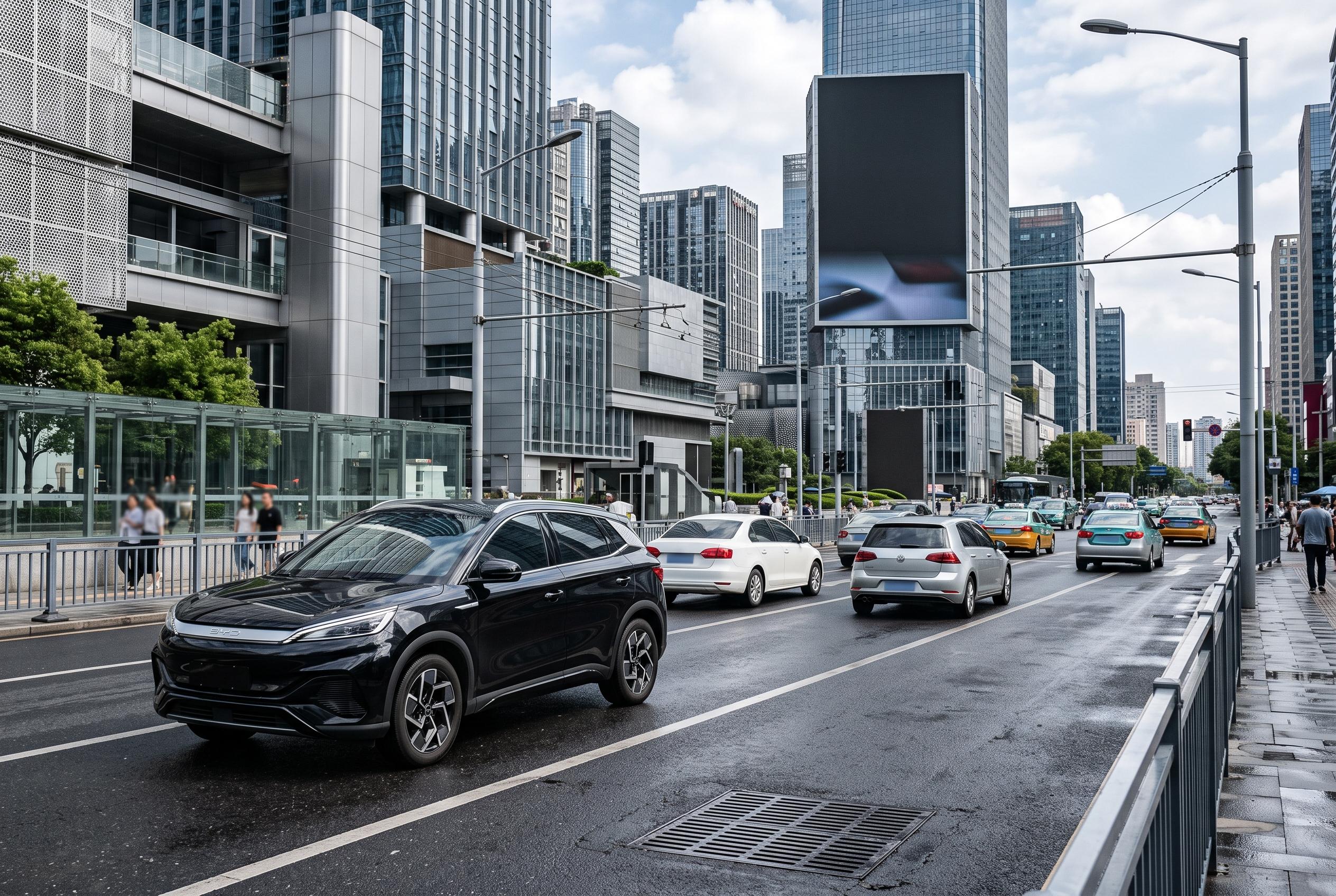
China is proposing stricter safety checks for big infotainment screens, flexible displays, reclining seats, illuminated bodywork, and hidden door handles. The draft matters to drivers because it could slow the rush toward futuristic interiors, putting reliable controls and crash protection ahead of flashy design.
The touchscreen arms race is meeting a safety check
China's proposed car design rules arrive as automakers compete to make cabins feel more like lounges, cinemas, and smart-home interiors. Huge central displays can look sleek and futuristic, but they can also turn a simple task into a hunt through menus, especially on a bumpy road.
The draft, released by several Chinese government agencies, would require manufacturers to assess how large screens, infotainment systems, and advanced head-up displays affect driving safety. It also calls for testing in harsh conditions and evaluating what happens when displays are damaged in a collision, according to Reuters and China's Ministry of Industry and Information Technology.
That doesn't mean every large screen is about to disappear. The real message is more practical: visual drama won't be enough if a system distracts drivers, fails in extreme temperatures, or becomes dangerous after an impact.
Why flexible car displays are drawing a hard line
Flexible screens have been one of the industry's most attention-grabbing ideas. Suppliers have demonstrated panels that slide out of a narrow dashboard opening or bend around cabin surfaces, creating a cleaner, more adaptable interior.
But a screen that works beautifully in a showroom has a tougher life inside a car. It must cope with heat, cold, vibration, repeated movement, and sudden impact. WhichCar reported that China's proposal specifically identifies folding and flexible displays as designs that shouldn't be used in vehicles. Livemint also highlighted the proposed restriction as one of the draft's most notable provisions.
There’s a useful distinction here. The rule isn't simply anti-technology; it reflects the difference between proving that a component can be manufactured and proving that it can remain dependable for years in a moving vehicle. Your dashboard may look like a concept car, but it still needs to behave like safety equipment when things go wrong.
Buttons are making a quiet comeback
The proposal would require physical controls for essential functions, including headlights, windscreen wipers, and defrosters. Those functions are often needed quickly, sometimes in poor visibility, so forcing drivers to open a touchscreen menu could add an unnecessary moment of uncertainty.
This is where the debate over touchscreens becomes more than a matter of personal taste. A smooth glass panel is easy to wipe clean and can simplify a dashboard, but physical controls provide tactile feedback. Drivers can find a familiar switch without taking their eyes fully off the road, which is rather harder to do with a flat icon that changes position or sits behind several menu layers.
China's draft therefore focuses on interaction as well as screen size. A smaller display can still be distracting if it buries important features, while a larger one may be manageable if its interface is clear and its most urgent controls remain immediately available.
Reclining seats and glowing bodywork face scrutiny too
The proposed rules extend well beyond displays. So-called zero-gravity seats, swivelling seats, and flat-bed functions would need safeguards to prevent use while the car is moving. Manufacturers would also have to consider locking strength, structural durability, and crash performance.
That approach makes sense, particularly as electric vehicles create more open cabin space and encourage lounge-style seating. A seat that feels wonderfully soft and relaxing when parked isn't automatically safe when the vehicle is travelling at speed. The draft would push companies to separate comfort features from driving positions more clearly.
Exterior lighting is also under review. Systems that show custom images, messages, or animated effects could confuse other road users if they interfere with brake lights, indicators, or the basic visual language of traffic. Authorities want these systems assessed for their effect on surrounding drivers, not judged only on whether they look stylish.
Hidden handles could become a serious approval hurdle
Completely concealed door handles are another target. They can create a clean, flush-sided profile, but they raise obvious questions when a vehicle loses power or is involved in a crash.
China already has mandatory door-handle safety standards scheduled to begin on January 1, 2027. Those requirements focus on whether doors can still be opened in difficult conditions, including after an electrical failure or collision. The new proposal would connect those concerns more directly to the approval process for new models.
From that date, applications for covered vehicles would need extra information about novel design features, supporting tests, and verification documents. Incomplete testing or unreliable paperwork could block approval, Reuters reported. For automakers, that could mean the end of treating unusual design as a late-stage styling decision; every clever feature may need a safety case before it reaches production.
What this means for the next generation of cars
The draft is a reminder that automotive design is shifting from novelty to accountability. Large screens, hidden handles, lounge seats, and animated lighting may help a vehicle stand out, but they also create new failure points and new ways to distract people.
Manufacturers still have plenty of room to innovate. They’ll simply need to show that the technology works in the messy real world, where roads are rough, weather changes, passengers move around, and drivers sometimes need a control immediately.
For shoppers, the lesson is refreshingly simple: when comparing a high-tech cabin, try the features while seated in the driving position. Check whether the wipers, lights, demister, and door releases are easy to operate without searching. A futuristic interior is appealing, but confidence behind the wheel is the feature most drivers will notice every day.
It's a small shift from showroom spectacle toward safer, more usable car design.
Disclaimer: This article may have been created with AI assistance and reviewed by our editorial team. It is provided for general informational purposes only. Readers should verify information independently before relying on this content.
