
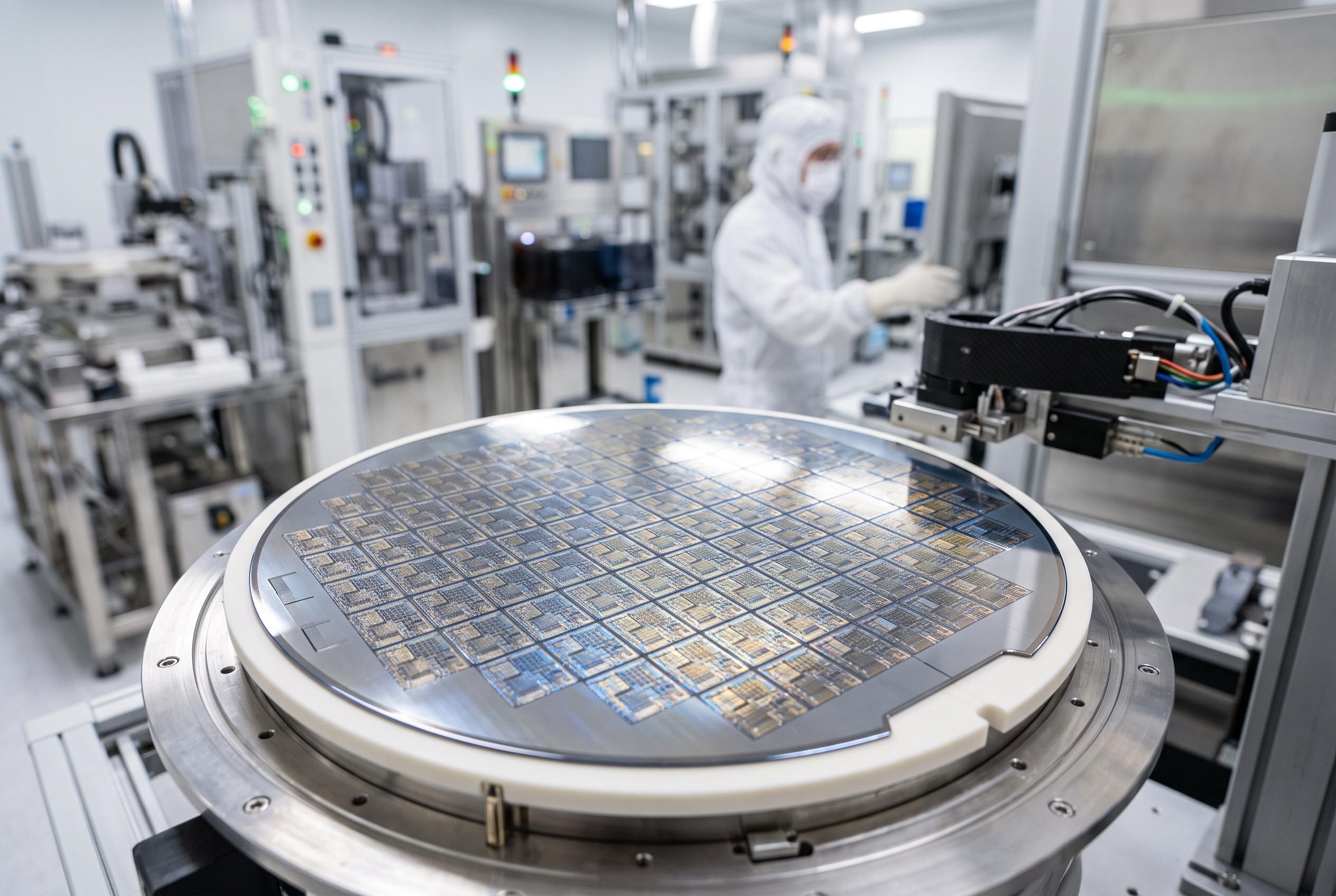
China accelerates its integrated push into high-value sectors like semiconductors, electric vehicles, and biotech, forcing South Korea to rethink its strategic advantages amidst rising global and regional competition.
China’s expansion into advanced industries is prompting increased attention in South Korea, where semiconductors, automobiles and biotech remain major parts of the economy. A Korean semiconductor scholar said that at a VLSI symposium in Kyoto last June, a professor from Beijing University repeatedly asked him about hybrid bonding technology, illustrating Chinese interest in advanced chip technologies.
China is developing its semiconductor ecosystem across design, foundry, memory and key equipment at the same time, rather than following the sequential development path associated with the United States, Taiwan, South Korea and Europe. This approach is supporting efforts to increase domestic semiconductor capabilities and reduce reliance on overseas suppliers.
The market data indicate that Chinese semiconductor companies have increased their shares in several segments. CXMT, which held a 1% DRAM share in 2022, reached 7.6% in the first quarter of this year, making it the world's fourth-largest DRAM supplier. In NAND flash, YMTC increased its share from 3% in 2022 to 16.2% this year, ranking third globally. In foundry services, SMIC held a 5.1% share, compared with Samsung Electronics' 6.5%.
China's semiconductor development is also being supported by technology and talent acquisition. There have been reported cases involving the transfer of around 600 DRAM process technologies from workers in the domestic memory industry. Such transfers could reduce the time required for technology development and process optimization and potentially increase competition in products such as high-bandwidth memory (HBM).
A similar trend is evident in electric vehicles. According to the International Energy Agency and EV Volumes, Chinese EV makers exceeded a 50% market share this year for the first time in third markets outside China, the United States and Europe. In markets including Israel, Singapore, Thailand, Mexico, Brazil, Indonesia and Malaysia, Chinese EVs have reached shares of around 80%.
Chinese automakers are also expanding overseas manufacturing capacity. BYD, Changan and GWM have been building or acquiring local production facilities in Latin America, Southeast Asia and, more recently, Europe.
Biotech is also seeing increased activity from Chinese companies. Chinese AI drug developer Insilico Medicine signed a research and licensing agreement with Eli Lilly this year worth up to $2.75 billion, including $115 million upfront. It previously signed agreements worth up to $550 million with Stemline and up to $888 million with Servier. JP Morgan reported that the upfront share of Chinese-developed drug assets in major global pharmaceutical licensing deals increased from 4% in 2021 to 68% in the first half of this year.
Industry officials identify semiconductors, automobiles and biotech as sectors in which China's expanding capabilities are affecting South Korean companies. These industries also account for a significant portion of South Korea's economy and exports. The Bank of Korea said semiconductors contributed 55% of first-quarter growth this year, while the Industry Ministry reported that semiconductors, automobiles and biotech together accounted for more than 50% of exports in July.
A senior industry figure described semiconductors as important to economic growth, automobiles as important to employment and biotech as a potential source of future growth. The expansion of Chinese capabilities across these sectors is therefore creating competitive considerations for South Korean industries.
The development is characterized not only by the pace of expansion but also by its breadth. Previous industrial development models often involved moving from lower-value assembly toward higher-value activities in separate stages. China's current approach involves developing electronics, advanced manufacturing and mobile-related ecosystems in parallel. As a result, competition increasingly extends across sourcing, production scale, standards and the transition from research to mass manufacturing.
For South Korea, the competitive environment extends beyond memory semiconductors to foundry services, equipment, materials and related supply chains. Semiconductor manufacturing involves interconnected suppliers, customers and research capabilities, meaning changes in one area can affect other parts of the ecosystem. Companies may therefore face changes in capital allocation, partnership strategies and manufacturing investment decisions as competition increases.
The automotive sector is experiencing similar changes. The expansion of Chinese EV makers in third markets indicates that competition is extending beyond domestic markets and established markets in North America and Europe. Emerging markets and rapidly developing urban centers are becoming important destinations for Chinese EV products, where factors such as price, software features and charging compatibility influence purchasing decisions. Automakers and suppliers consequently face changes in pricing, sourcing and logistics requirements.
Overseas manufacturing is also affecting automotive supply chains. When Chinese automakers establish facilities in Latin America, Southeast Asia or Europe, local production can reduce transportation distances, limit some tariff exposure and improve responsiveness to regional demand. It can also change the movement of parts, batteries and electronics across borders. Suppliers of metals, plastics, semiconductors and battery components may therefore need to adjust procurement arrangements and compliance processes as production networks change.
Biotech is undergoing a similar expansion in international activity. Chinese AI-based drug development companies are increasingly participating in global licensing and research partnerships. Drug discovery relies on data, computing resources and collaboration among research teams in multiple countries. Companies combining AI-based modeling with licensing and development partnerships can participate in global drug-development networks at earlier stages. For pharmaceutical companies, China is therefore both a source of potential competitors and a source of technologies and drug candidates.
The effects of these industries also extend into consumer markets. Semiconductors, EVs and biotech influence products and services used in everyday life, including mobile devices, vehicles, medical treatments and digital services. As Chinese companies expand into higher-value segments, competition could affect product availability, pricing, technology development and market offerings across these categories.
For policymakers, the developments indicate that competitiveness across individual sectors is connected to research capabilities, talent, supply-chain resilience and commercialization. Semiconductors, automobiles and biotech each require significant investment and specialized expertise, while their supply chains involve domestic and international partners. South Korea's industrial policy therefore includes considerations related to talent development, strategic investment and international cooperation.
At the corporate level, companies operating in these sectors are also evaluating supply-chain and market exposure. Supplier diversification, logistics capacity and visibility into regional demand can affect companies operating across electronics, automotive and biotech markets. In electronics, sourcing and production delays can affect product cycles, while automotive and biotech companies face similarly long development cycles and substantial capital requirements.
China's expansion is therefore already affecting industrial competition across several sectors relevant to South Korea. South Korea continues to maintain established capabilities in semiconductors, automobiles and biotech, while Chinese companies are increasing their presence across related technologies, manufacturing networks and international markets. The developments are increasing the importance of competitiveness in semiconductors, electronics, logistics, automotive manufacturing and biotech.
Takeaways:
- - China is advancing across the semiconductor stack at once, not step by step.
- - EV competition is shifting into third markets and local manufacturing.
- - Biotech is becoming more global, faster, and more partnership-driven.
- - For South Korea, the challenge spans growth, jobs, and future industrial engines.
- - Strong sourcing, logistics, and innovation execution will matter more than ever.
FAQ: Q: Why is China’s industrial rise a concern for South Korea? A: Because it is pressuring South Korea’s most important export and growth sectors at the same time.
Q: Which industries are most exposed? A: Semiconductors, automobiles, and biotech.
Q: Why do third markets matter in EV competition? A: They show where companies are gaining share outside their home base and major mature regions.
Q: What should companies watch most closely? A: Supply chain resilience, sourcing strategy, talent, and speed of commercialization.
Disclaimer: This article may have been created with AI assistance and reviewed by our editorial team. It is provided for general informational purposes only. Readers should verify information independently before relying on this content.
