
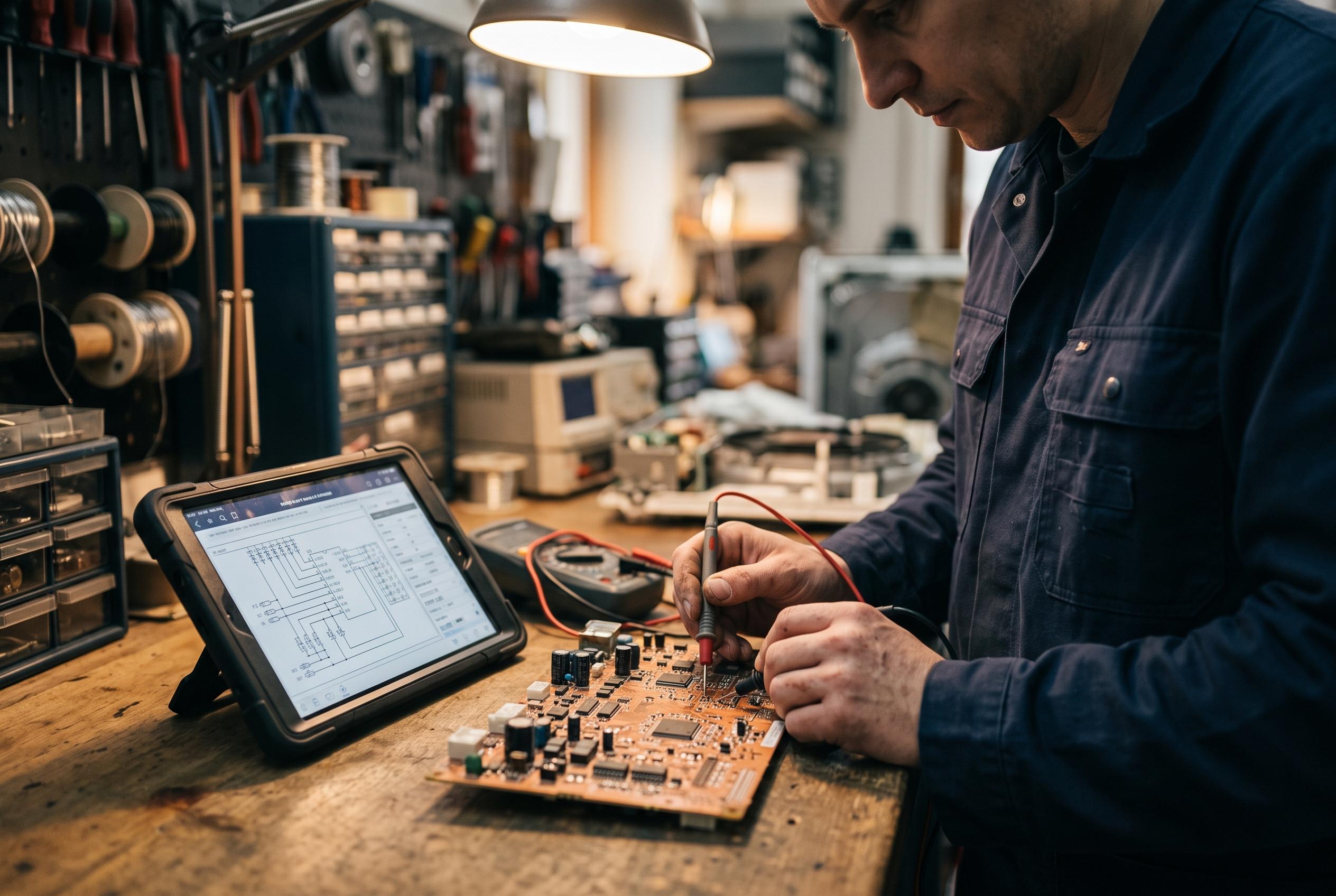
Independent repairers across Europe are finding that legal access to service manuals, wiring diagrams, and diagnostic details can be surprisingly difficult to obtain. The problem matters because EU right-to-repair rules are meant to make appliance repairs more practical, affordable, and competitive, yet paperwork, cautious manufacturers, and missing online tools are leaving technicians stuck.
Repair information is becoming harder to find
For an independent technician, a washing machine can look deceptively familiar: a metal cabinet, a few hoses, a control board, and a fault code blinking with quiet insistence. The real challenge often begins after the cover comes off, when the information needed to diagnose the problem is nowhere to be found.
A Belgian appliance repairer with years of experience says manufacturers have become more reluctant to share service manuals and error-code details. According to Right to Repair Europe, this is happening even though professional repairers who meet registration, competence, and insurance requirements should be able to access relevant information under EU Ecodesign rules.
That creates an awkward gap between policy and practice. The rules may promise a route to repair, but a technician can still spend weeks chasing documents that should be part of the job. Industry analysis has also highlighted concerns about how consistently the EU's repair obligations are being implemented.
Why the paperwork can turn into a brick wall
Manufacturers commonly argue that detailed repair information must be restricted to authorised networks. Their reasons usually include safety, training, liability, and the risk of incorrect repairs. Those concerns sound reasonable at first, particularly when appliances contain mains electricity, heating elements, pressurised systems, or increasingly complex electronics.
The trouble is that broad refusals can collide with the rules themselves. EU policy discussions have increasingly recognised that repairers need practical technical information, not simply a parts catalogue or a general troubleshooting page. The Council of the European Union's work on right-to-repair legislation reflects a wider push to make repairs more accessible beyond manufacturer-controlled channels.
In practice, internal caution can be just as damaging as an outright refusal. A customer-care employee may avoid releasing a document, a technical department may require another approval, and a company platform may display different information depending on the user's account. The result feels less like a clear repair pathway and more like a maze with a missing signpost.
Selling parts isn't the same as supporting repairs
One especially revealing problem is the split between parts access and information access. Some technicians can enter a manufacturer's parts marketplace and order the right component, but the accompanying service-information section may be unavailable. That's rather like selling someone a replacement car tyre while hiding the wheel brace.
This matters because modern appliance repairs often depend on more than swapping a visibly broken part. A technician may need wiring diagrams, diagnostic sequences, software procedures, calibration instructions, or details about compatible components. Without those tools, a repair can take longer, cost more, or become impossible to justify for the customer.
Guidance aimed at repair professionals makes the practical point clear: access to reliable technical information is central to safe, efficient work. It also helps independent businesses compete with large authorised networks, which is one of the broader goals behind Europe's repair agenda.
The wider right-to-repair push is gathering pace
The European Union's repair debate has moved well beyond campaign slogans. Policymakers have been working to encourage longer product lifespans, reduce waste, and give consumers more meaningful alternatives to replacement. The proposed and negotiated measures cover issues such as repair obligations, consumer information, and access to repair services.
But legislation only changes everyday life when companies implement it consistently. A rule that exists on paper won't help much if a technician can't obtain the necessary manual, if an online portal omits key tabs, or if promises of access quietly disappear into an inbox.
Campaign groups are therefore calling for stronger enforcement and clearer ways to report failures. Compliance platforms and reporting forms can give repairers a route to document recurring problems, while regulators can use aggregated evidence to identify patterns rather than treating every complaint as an isolated annoyance.
What repairers and customers can do now
Professional repairers facing access problems should keep a careful record of requests, dates, replies, missing documents, and account restrictions. Screenshots and written explanations can make a complaint much stronger than a vague report that information was unavailable. Repair-focused organisations offer reporting routes for technicians who want to share their experiences confidentially.
Customers can help by asking whether a repair business has access to the documentation and parts it needs before approving expensive work. It also pays to request a clear diagnosis, a written estimate, and an explanation of whether the repair is supported by the manufacturer or handled independently.
The outlook is still unsettled, but the direction is important. If Europe's repair rules are backed by usable information, they could help keep appliances running for longer. If access remains inconsistent, independent technicians and households will continue paying the price in time, money, and perfectly repairable machines.
A right to repair only works when the information arrives with it.
Disclaimer: This article may have been created with AI assistance and reviewed by our editorial team. It is provided for general informational purposes only. Readers should verify information independently before relying on this content.
