
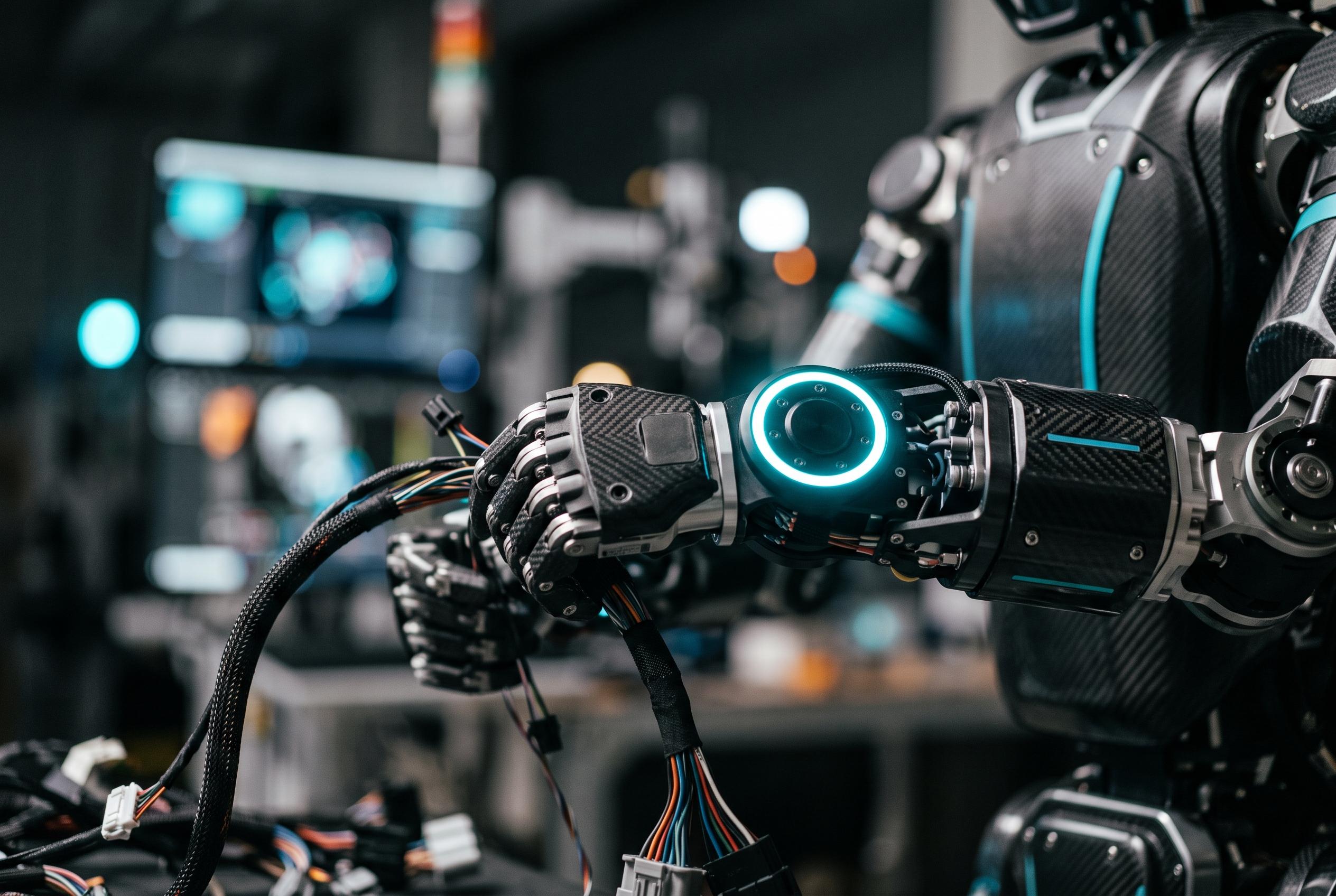
Hyundai and Boston Dynamics are turning a Georgia facility into a training ground for Atlas humanoid robots, with the ambitious goal of preparing machines for production work at scale. The centre matters because robot deployment often stalls not at the hardware stage, but during the slow, complex process of teaching machines how to work safely and reliably.
Hyundai’s humanoid robot plan moves beyond the demo floor
The most important detail isn't the sleek shape of Atlas or the excitement surrounding humanoid machines. It's the training pipeline behind them. A robot may look impressive walking, lifting, or balancing, but production work demands repeatable movements, careful handling, and quick responses when something changes.
Hyundai and Boston Dynamics are betting that artificial intelligence can make that preparation faster. According to Boston Dynamics, the Georgia centre will help develop manufacturing applications and build the skills needed for broader deployment across Hyundai facilities.
That shift is significant. Factory robots have traditionally been built for narrow, controlled jobs, while humanoids are being positioned as more flexible machines that could work around environments designed for people. The promise is appealing, although the practical details will determine whether the technology earns its place on the production line.
Why AI training is the real manufacturing challenge
Teaching a robot to perform one movement is relatively simple compared with teaching it to cope with thousands of small variations. Components may arrive at slightly different angles, tools can shift, and people may move through the same workspace. In a busy plant, a reliable robot needs more than strong motors and good balance.
The Robotics Metaplant Applications Center is intended to address that problem by combining robot testing, application development, and AI-based training. Industry coverage from The Robotics Media describes the facility as part of a wider effort to prepare Atlas for Hyundai's manufacturing needs.
This is where the quiet, repetitive work happens: gathering data, refining behaviours, checking safety, and repeating tasks until the machine's performance is dependable. It may not look as dramatic as a robot climbing stairs, but it's the kind of work that decides whether humanoids become useful tools or expensive curiosities.
What Atlas could do inside Hyundai factories
The companies have not reduced the plan to one headline task. Instead, Atlas is being developed for a broad range of production applications, giving Hyundai room to test where a humanoid design offers a genuine advantage.
A human-shaped machine could potentially handle workstations, move materials, support assembly, or operate in areas that already accommodate human workers. Reports from Robotic Firms suggest the new centre will help identify and refine those use cases before wider rollout.
That flexibility is the selling point, but it also creates a demanding test. A robot that can perform several jobs may need more sophisticated software, stronger safeguards, and careful coordination with workers. The best applications will probably be those where Atlas can take on repetitive or physically tiring duties without forcing a factory to be rebuilt around it.
The 25,000-robot goal raises the stakes
Hyundai's eventual target of 25,000 humanoid robots gives the project unusual scale. It signals that the company isn't treating Atlas as a small experimental programme, but as a possible part of its future manufacturing strategy.
That number also makes the training challenge much harder. A handful of pilot machines can be supervised closely, while thousands require consistent software, maintenance, worker training, and safety procedures. ITechPost reported that the new testing effort is tied to preparing humanoid robots for use across Hyundai's manufacturing operations.
For shoppers and workers watching the robotics boom, the distinction matters. A big deployment target doesn't guarantee immediate factory change, but it does show how quickly major manufacturers are moving from curiosity to planning. The next few years will reveal whether the economics can match the ambition.
Georgia becomes a proving ground for factory robots
The centre's location gives Hyundai and Boston Dynamics a practical advantage: they can develop technology close to the manufacturing environments where it may eventually be used. Instead of relying solely on laboratory trials, engineers can test robots against the messier demands of real production.
Humanoid Guide reported that the facility will support Atlas training at Hyundai's metaplant, connecting development work with the company's wider factory plans. That proximity should make it easier to spot problems early, whether they involve navigation, task timing, safety, or the simple fact that factory floors are rarely as tidy as a presentation video.
The outlook is promising, but measured. AI training could become the key that unlocks useful humanoid robots, yet reliability will matter more than spectacle. If Atlas can perform dull, difficult jobs safely and consistently, the technology may finally begin to feel less like science fiction and more like another tool on the factory floor.
It's a small-looking step with enormous implications for the future of manufacturing.
Disclaimer: This article may have been created with AI assistance and reviewed by our editorial team. It is provided for general informational purposes only. Readers should verify information independently before relying on this content.
