
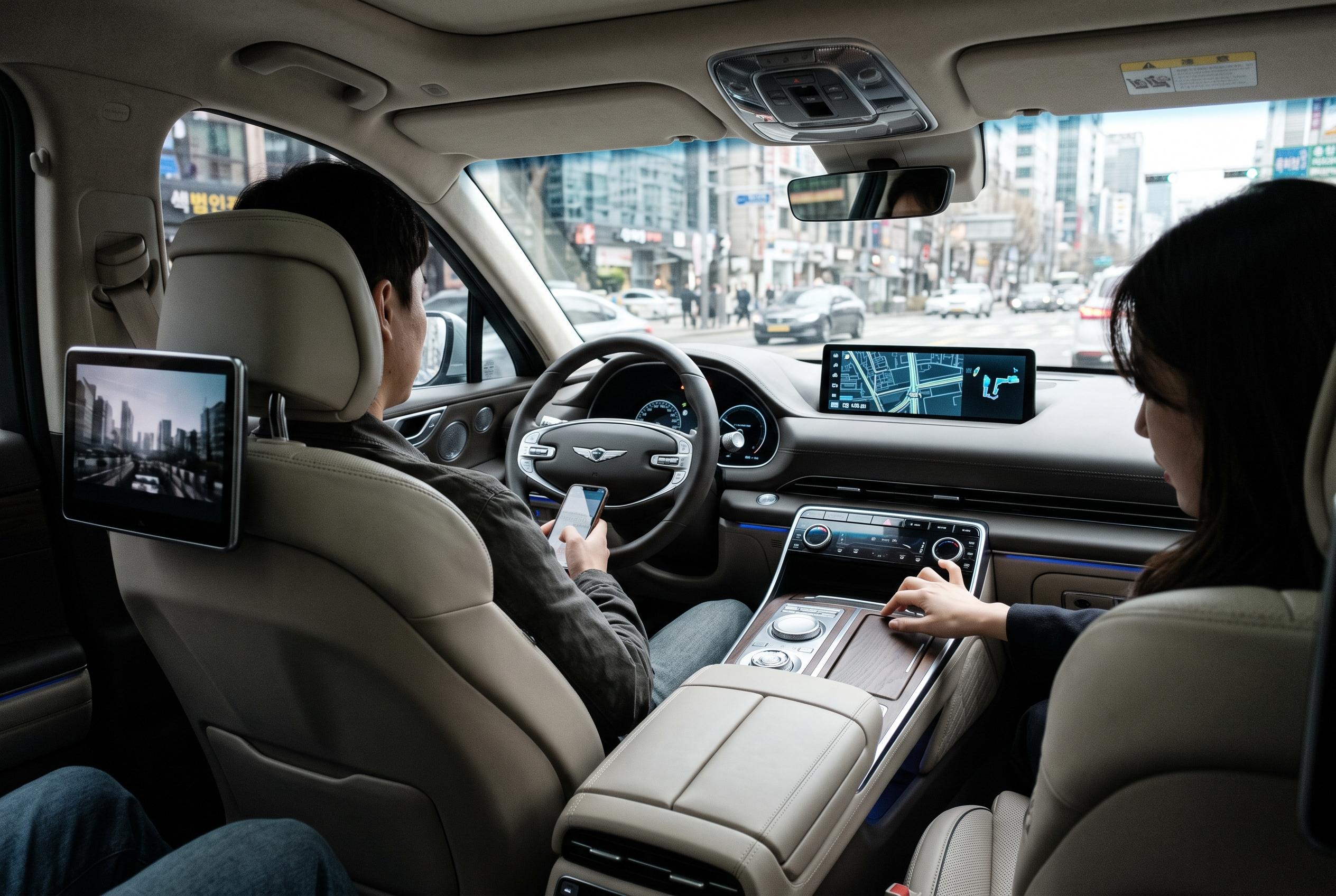
Genesis is turning its first full-size flagship SUV into a rolling digital lounge, with LG supplying six connected cabin systems for the GV90. The package combines a clever pop-up display, streaming services, rear-seat entertainment and safety-certified communications hardware, giving drivers and passengers more ways to control, watch and connect while parked or on the move.
The GV90's dashboard has a neat disappearing act
The headline feature is a 24.6-inch central information display that changes shape and position depending on what the vehicle is doing. While driving, the visible area measures 23.6 inches and combines key functions with the instrument cluster, creating a wide, clean view rather than a stack of separate screens.
Once the vehicle is stationary, the panel rises by 90 millimetres and reveals its full size. It's a small piece of theatre, but there's a practical point too: drivers get a focused layout on the road, while passengers can enjoy a larger canvas when the SUV is parked. According to LG, it's the first variable pop-up display fitted to a Genesis model.
The approach reflects a broader luxury-car trend toward screens that feel integrated rather than simply bolted onto the dashboard. A polished cabin shouldn't look like an electronics showroom, and this system appears designed to keep the visual experience sleek and calm. Industry coverage from Ecommerce News Asia highlights the display as part of LG's wider six-system supply deal.
One cockpit, from navigation to streaming
The GV90's main infotainment system acts as the digital command centre. It combines the cluster, audio, video, navigation and head-up display, while supporting Hyundai Motor Group's Pleos Connect software and the Gleo AI voice assistant.
LG's Automotive Content Platform adds the more leisurely side of the experience. Depending on market availability, passengers can access Netflix, Disney+, YouTube, TVING, Baby Shark World for Kids, Haystack News and LG Channels. Zoom, Rakuten TV and HappyKids are also planned for selected regions.
That mix makes most sense when the vehicle is parked or when rear passengers are using the system. Nobody needs another reason to watch a show while driving, but a quiet streaming setup could make charging stops, airport waits and long family journeys feel less tedious. Reuters has reported on the auto industry's increasing interest in connected entertainment and passenger-focused digital services.
Rear passengers get their own screen
The back seat isn't being treated as an afterthought. LG's second-generation connected-car Rear Cockpit system includes a 13.2-inch touch-sensitive OLED panel, giving passengers access to the same content ecosystem as those in front.
A shared platform should make the cabin feel more consistent, especially when passengers want to move between vehicle controls and entertainment. The OLED panel also brings the rich contrast and crisp appearance shoppers generally expect from premium consumer electronics, although the real test will be how intuitive it feels on a moving journey.
There are signs that luxury SUVs are becoming less like traditional cars and more like private lounges. For families, that could mean easier content access; for business passengers, it could mean a more comfortable way to stay occupied between meetings. AutoTech analysis has noted that rear-seat screens are increasingly being tied to broader vehicle software rather than operating as isolated entertainment units.
The small console screen may be the everyday hero
Not every useful feature needs to be enormous. An eight-inch console touchscreen handles climate, doors, seats, lighting, media and massage settings, with haptic feedback designed to make taps feel more deliberate.
It also supports over-the-air updates, which means the system can potentially gain improvements without requiring a workshop visit. That's increasingly important as vehicles become software platforms, though owners will still want basic controls to remain easy to find when the road gets busy.
For shoppers comparing premium SUVs, this is a detail worth checking. A huge central display may grab attention, but a well-placed secondary controller can make daily use less fiddly. Consumer technology coverage from Digital Trends has pointed to this shift toward distributed cabin controls, where different screens handle different jobs.
The serious hardware behind the polished experience
The GV90's entertainment features depend on a less glamorous but crucial component: LG's CCU 2.0 central communication unit. It connects key electronic control units with external networks, supporting remote vehicle functions and software updates.
LG says the unit has TÜV Rheinland certification for ASIL-D compliance under ISO 26262, the highest automotive safety integrity level in that framework. That doesn't make the cabin invulnerable, but it shows the communications architecture is being treated as safety-critical hardware rather than just a convenient data link.
The bigger story is LG's expanding role in vehicles. The company is no longer supplying only screens; it's combining displays, infotainment, content delivery and communications hardware into one cabin package. For Genesis, that creates a high-profile showcase in its first full-size flagship SUV. For passengers, the payoff should be simple: fewer disconnected systems and a cabin that feels more coherent.
Disclaimer: This article may have been created with AI assistance and reviewed by our editorial team. It is provided for general informational purposes only. Readers should verify information independently before relying on this content.
