
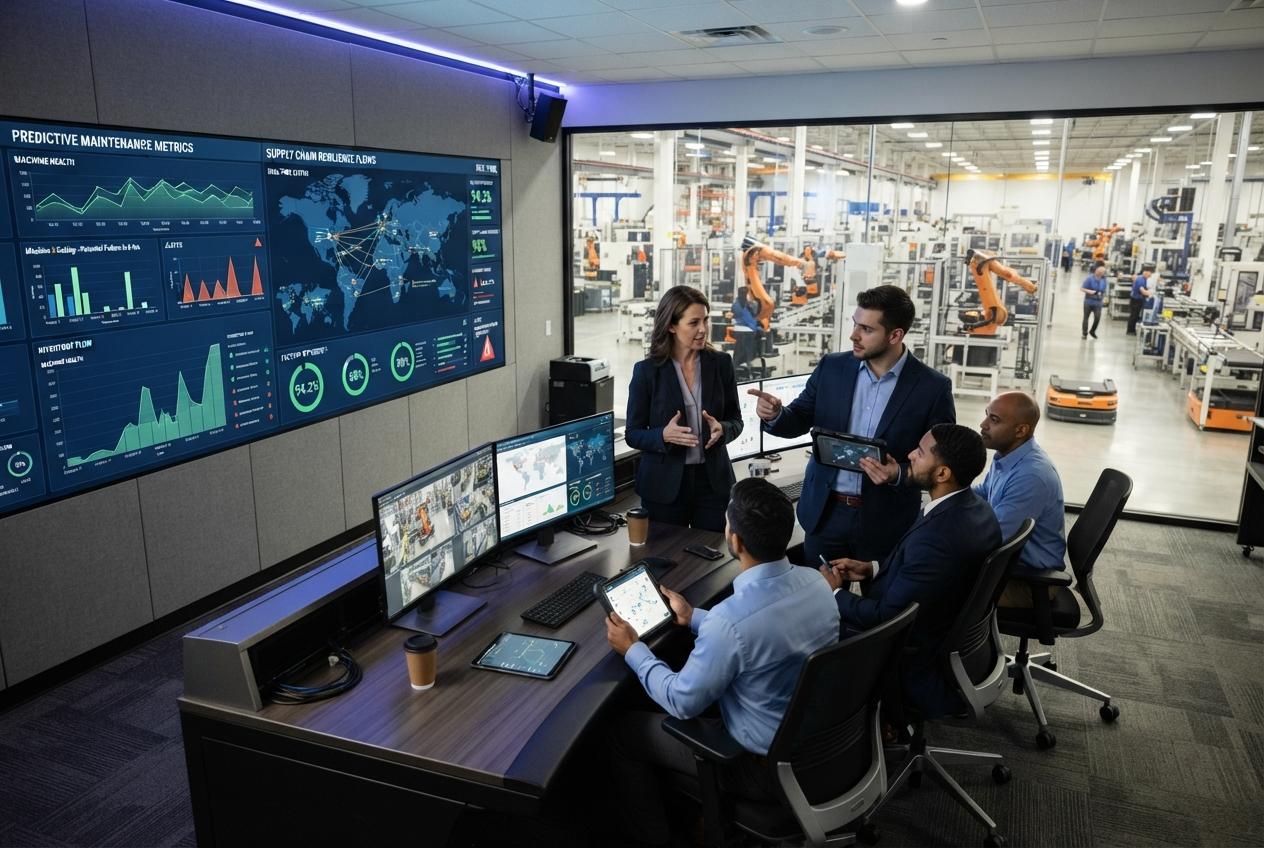
- Manufacturing shifts focus from automation to data flow for operational efficiency
- Real-time data movement enhances predictive maintenance and supply chain resilience
- Direct interconnections and mobile tools are transforming factory connectivity and decision-making
Manufacturing’s New Competitive Edge: Why Data Movement Is Becoming as Vital as Moving Parts
In manufacturing, the next breakthrough may not come from a new machine on the line, but from how quickly the right data can move between people, platforms, and partners. As factories become more connected, leaders are realizing that fast, reliable data movement is now just as important as sourcing materials, coordinating logistics, or keeping electronics components flowing through production. In other words, the race to improve output is no longer only about automation on the floor, it is also about building a smarter digital pathway that can support mobile decision-making, tighter visibility, and faster action across the entire operation.
In today’s manufacturing world, it’s often not the factory floor that’s the main bottleneck, it’s more often about the path that data takes to get there. As CIO.com points out, the next step in industry digitalization isn’t just about gathering more data; it’s really about how that data moves around. Because, let’s be honest, even the best analytics are pretty useless if telemetry, alerts, or machine info show up too late to make a difference in production. And that reality is only becoming more obvious as automation spreads across the globe, with millions of robots producing a relentless stream of factory data that’s now tightly linked to the daily output. Basically, the speed and dependability of data flow are no longer just behind-the-scenes issues, they’re now a core part of manufacturing's operational backbone.
That’s why network design, surprisingly enough, is starting to take a more central role in manufacturing strategies. Tools like predictive maintenance and digital twins only work as well as the data feeding into them. If that data gets delayed, rerouted, or forced through long, unpredictable routes on the internet, the usefulness of these systems drops fast. Microsoft even describes connected data chains as a key foundation for making supply chains more resilient. They highlight how real-time information improves forecasting, supplier coordination, and overall visibility across operations. The message seems pretty clear: manufacturers are now treating data architecture just like , if not more than , their production setup, not as some separate tech layer.
What makes this shift especially important is that manufacturing data is no longer confined to one site, one system, or one team. Today, a single production order may depend on information from sensors, enterprise planning software, warehouse systems, supplier portals, quality control dashboards, and even mobile applications used by supervisors on the move. If any one of those links is slow or inconsistent, the entire operation can feel the effect. That is why many manufacturers are starting to think less about isolated software tools and more about the end-to-end movement of information as a strategic capability. In practical terms, that means data is being managed with the same discipline once reserved for physical materials: sourced carefully, checked for quality, routed efficiently, and delivered exactly where it is needed.
This is also where the conversation starts to look very familiar to anyone who works in sourcing or logistics. A strong supply chain depends on timing, trust, and transparency, and the same is now true for data. If a factory cannot confirm the status of a shipment, the availability of a component, or the condition of a machine in time, then planning decisions can quickly become guesses instead of informed actions. The same logic applies to electronics manufacturing, where tight tolerances, fast changeovers, and highly complex component dependencies make reliable information especially valuable. Whether the issue is a delayed part, a quality concern, or a disruption at a supplier site, the ability to move information quickly can mean the difference between a smooth production run and an expensive delay.
That’s also part of why direct interconnection is gaining more attention. Instead of relying on the internet routes that often add complexity, delays, or inconsistency, many businesses are exploring dedicated exchange models. These connect companies, cloud providers, network operators, and AI services more directly. The benefits are pretty practical: fewer handoffs, lower latency, stronger resilience, and better control over production-critical information. For manufacturers and their suppliers, the idea behind Industry 5.0 is less about fancy machinery or sci-fi tech and more about making sure the right information gets to the right system fast enough, because, let’s face it, timing is everything when it comes to output, planning, and keeping everyone on the same page.
There is also a broader lifestyle dimension to this transformation, even if it does not always get described that way. Manufacturing has traditionally been seen as an environment of heavy equipment, fixed schedules, and rigid hierarchies, but the modern industrial workplace is becoming more mobile, more responsive, and more data-driven. Supervisors may review production status on tablets, maintenance teams may receive alerts on phones, and managers may make decisions while traveling between facilities. That shift makes connectivity feel less like a back-office utility and more like the nervous system of the business. Just as consumers expect mobile access in everyday life, manufacturers increasingly expect mobile access to the information that keeps factories running.
The role of analytics changes as well once data movement becomes a priority. Many companies already collect enormous volumes of machine, quality, and operational data, but collection alone does not create value. The value comes from being able to move that data into the right context quickly enough to support action. A predictive maintenance platform, for example, may identify a failure pattern, but if that insight reaches the maintenance team too late, the issue may already have interrupted production. Similarly, a digital twin can only remain useful if it reflects what is happening in real time, not what happened several hours ago. In this sense, faster data movement does not replace analytics, it makes analytics relevant.
Another important benefit is resilience. When manufacturers build direct, dependable links for data exchange, they reduce exposure to avoidable disruption. That matters not just during major crises, but in everyday operations where small delays can become costly. A late update from a supplier, a missed quality alert, or a delayed inventory refresh can ripple through the production schedule and affect downstream commitments. Stronger data pathways help organizations respond sooner, coordinate better, and maintain confidence in their plans. For leaders balancing productivity, customer expectations, and cost pressure, that resilience is no longer a nice-to-have. It is a competitive requirement.
The same principle applies across the extended ecosystem around manufacturing. Suppliers need clear signals. Logistics partners need timely updates. Cloud platforms need reliable inputs. AI tools need current information to make useful recommendations. Each of these parties contributes to the larger operational picture, and each depends on data that can move without unnecessary friction. That is why the future of manufacturing will likely reward companies that think beyond isolated technology investments and instead design information flows with the same care they apply to production lines, procurement strategies, and shipping networks.
Ultimately, the industry is moving toward a world where data movement is a form of operational performance. Manufacturers that can source information quickly, route it intelligently, and deliver it to decision-makers and systems in real time will have an advantage that goes beyond simple efficiency. They will be better positioned to reduce waste, improve quality, strengthen logistics coordination, and respond to market changes with more confidence. In a sector where every second can matter, the companies that treat data like a critical production asset may be the ones best prepared for what comes next.
Frequently Asked Questions
Why is data movement so important in manufacturing? Because production decisions depend on timely information. If data arrives late, teams may miss opportunities to act.
How does this affect sourcing and logistics? Fast data flow improves supplier coordination, shipment visibility, inventory planning, and response to disruptions.
What role do mobile tools play? Mobile access helps teams monitor operations and respond quickly from anywhere, improving speed and flexibility.
Is this only relevant for large factories? No. Manufacturers of many sizes can benefit from better data movement, especially when operations are highly connected.
What is the main takeaway? Modern manufacturing needs both strong production systems and strong data pathways to stay competitive.
Source Reference Map
Inspired by headline at: [1]
Sources by paragraph: - Paragraph 1: [1] - Paragraph 2: [1], [3], [4] - Paragraph 3: [2], [5], [6], [7] - Paragraph 4: [1], [3], [6]
