
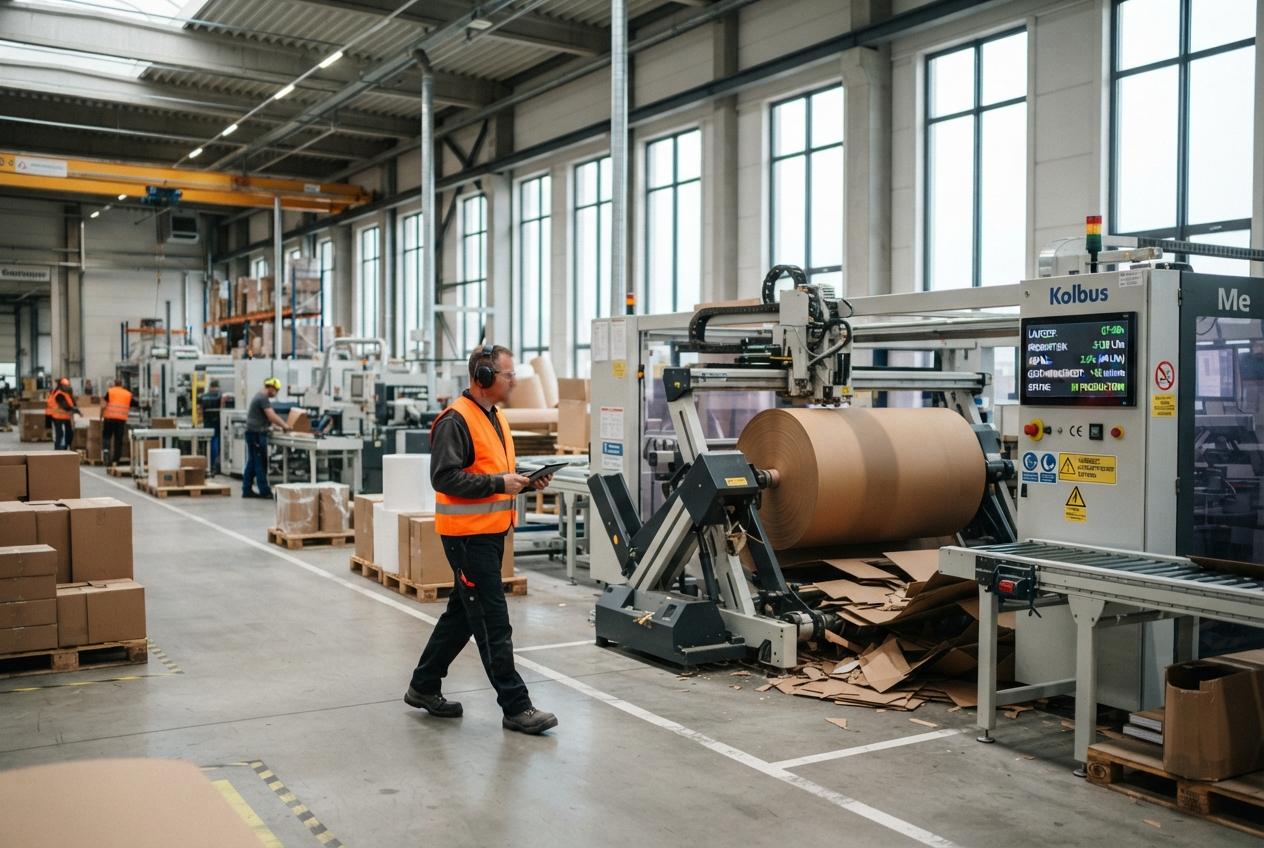
As raw material prices stay volatile and environmental goals tighten, packaging plants are leveraging real-time data, predictive maintenance, and precise materials to minimize waste and align with sustainability targets, signaling a strategic shift in industry standards.
Packaging manufacturers are under growing pressure to treat material scrap as more than an accepted cost of production. According to Sustainable Business Magazine, scrap has become harder to ignore as raw material prices remain volatile and sustainability goals tighten, pushing plants to look at waste as an operational problem that can be measured and reduced rather than simply absorbed into overhead.
The causes are usually ordinary but costly in combination. Symestic says scrap can come from defective parts, setup losses and material waste during cutting, while Sustainable Business Magazine notes that inconsistent inputs, machine settings, deferred maintenance and human error often overlap on the same line. Even in well-run plants, scrap of roughly 1% to 3% of output can still translate into a meaningful amount of lost material when production volumes are high.
That has led more manufacturers toward systems that give them a clearer view of what is happening in real time. Railes says its packaging-focused manufacturing execution system is designed to track material and product flow from raw intake to shipment, helping plants spot discrepancies earlier. MachineCDN makes a similar case for industrial internet of things tools, arguing that live monitoring of process conditions can catch drift before it turns into defects. The practical value, in both cases, is earlier intervention.
Maintenance strategy is another important lever. Sustainable Business Magazine says that machines running slightly out of calibration often do not fail dramatically; instead, they create a slow stream of rejects that only becomes visible after the fact. More advanced maintenance schedules, including condition-based and predictive approaches, are helping manufacturers identify those problems sooner. In packaging equipment specifically, Paxiom says precision engineering, sensor systems and intelligent automation can reduce waste by preventing fills, seals or other operations from happening under faulty conditions.
Material selection also matters. Bekum says its packaging technologies are aimed at lowering material use through more precise extrusion and multilayer production, while ULMA Packaging points to thinner films, optimized volumes and reduced scrap as ways to cut both waste and environmental impact. Taken together, the industry’s shift is less about one breakthrough than about standardization: tighter controls, better traceability and more consistent materials. The result is a production model that wastes less, costs less to run and is easier to align with sustainability targets.
Source Reference Map
Inspired by headline at: [1]
Sources by paragraph: - Paragraph 1: [2], [1] - Paragraph 2: [3], [1] - Paragraph 3: [2], [5] - Paragraph 4: [1], [7] - Paragraph 5: [4], [6], [1]
