
MediaTek is betting that the next generation of smartphones will feel less like apps and more like assistants. At India Mobile Congress 2026, Managing Director Anku Jain outlined the company’s plans for the Dimensity 9600 Pro, agentic AI, slimmer 2nm chips, and a broader push into cars, data centers, wearables, and connected devices.
MediaTek’s 2nm smartphone chip puts AI centre stage
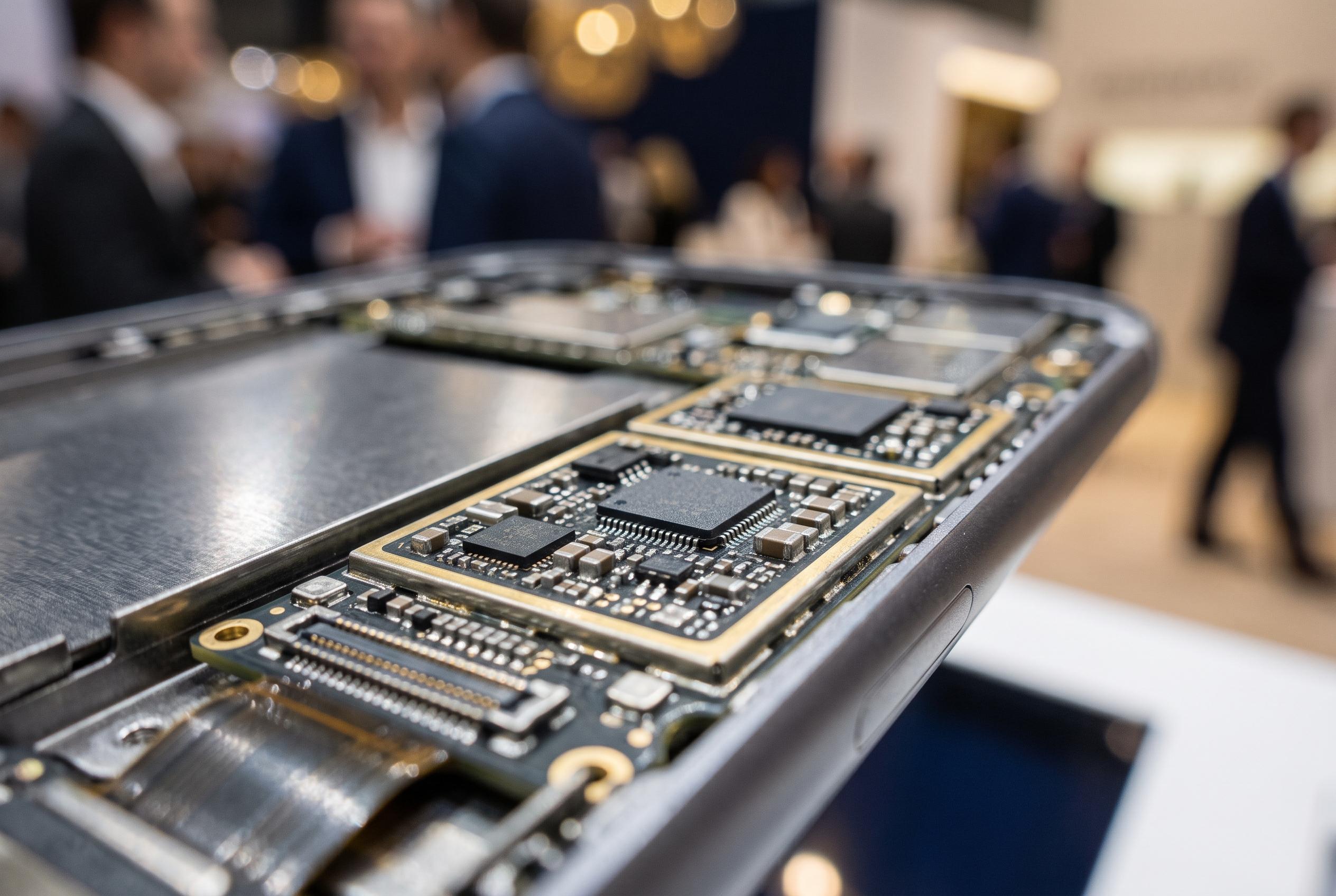
The biggest shift is happening inside the phone, where AI is moving from a headline feature to a core part of the processor. According to Android Central, MediaTek’s Dimensity 9600 Pro is built around a 2nm manufacturing process and focuses heavily on faster, more efficient AI workloads.
That smaller process matters because smartphone makers are constantly juggling speed, heat, and battery drain. A powerful AI tool is less appealing if it leaves the phone warm and gasping for power by lunchtime. MediaTek’s approach is to use dedicated neural processing units, including a dual-NPU design, so AI tasks can be handled more efficiently than they would be on a general-purpose processor alone.
For shoppers, the benefit may not arrive as one dramatic feature. Instead, it could show up in quicker photo editing, smoother voice tools, more capable translation, and assistants that respond with less waiting.
Agentic AI could make phones feel more helpful
The phrase "agentic AI" sounds grand, but the idea is fairly practical. Rather than simply answering a prompt, an agentic system can interpret a request, plan several steps, and act across different services or applications.
MediaTek has positioned its edge-to-cloud technology around that broader shift. In its Computex announcement, the company described a future in which AI workloads move between devices, local networks, and cloud infrastructure depending on the task. That could let a phone handle simple or sensitive requests locally while sending heavier jobs elsewhere.
The appeal is obvious. A phone that can quietly organise a trip, sort photos, draft a message, or coordinate several actions could feel more useful than one that merely generates text. But the experience will depend on software partners, permissions, and how clearly users can see what the assistant is doing. Nobody wants an overenthusiastic digital helper making decisions behind the scenes.
Why flagship phones still matter to MediaTek
Jain’s comments also underline an important market reality: premium smartphones remain a proving ground for new chip technology. Flagship devices give manufacturers room to showcase advanced cameras, displays, connectivity, and AI features before those capabilities spread to more affordable models.
That explains why MediaTek is putting so much attention on its top-tier Dimensity platform. Android Central’s report on the Dimensity 9600 Pro points to a chip designed not just for faster benchmarks, but for the increasingly mixed workload of modern phones, where gaming, imaging, connectivity, and generative AI all compete for power.
For buyers comparing premium phones, the processor name alone shouldn't decide the purchase. Look for independent battery tests, sustained performance results, software support, and the actual AI tools a handset offers. A shiny specification is nice, but a phone that stays cool and reliable is nicer.
Smartphones won't disappear, but their companions are multiplying
Could AI wearables or smart glasses eventually replace the smartphone? The more likely answer is that they'll work alongside it for a long time. Glasses can provide quick visual information, earbuds can handle voice interactions, and watches are convenient for health and notifications, but phones still offer the largest screen, broadest software support, and easiest way to manage complex tasks.
MediaTek’s wider portfolio reflects that connected-device future. The company has highlighted technologies for smart vehicles, industrial equipment, homes, and edge devices, while earlier work with Meta’s Llama 2 focused on bringing generative AI to hardware closer to the user.
That points to a world where computing is distributed rather than concentrated in one gadget. Your phone may remain the hub, but more of the surrounding objects will have their own processors, sensors, and AI abilities.
Cars, data centers, and IoT broaden the chipmaker’s reach
MediaTek’s ambitions extend well beyond handsets. The company’s automotive announcements have focused on intelligent cockpit platforms that bring advanced displays, connectivity, voice controls, and driver-facing experiences into vehicles. Its Dimensity Auto platforms are part of that push toward software-defined cars.
Meanwhile, the Genio 700 platform shows how the company is targeting industrial and smart-home products. These devices need dependable local processing, especially when connectivity is limited or a response must happen quickly. In a factory, car, or security system, a delayed command can be more than annoying.
Data centers and cloud computing add another major opportunity, particularly as AI demand keeps rising. The challenge will be competing in a market dominated by established accelerator and server-chip specialists. Still, MediaTek’s edge-to-cloud strategy gives it a useful angle: the company can connect the small processors in everyday devices with the larger systems that support them.
The result is an ambitious transition from smartphone chip supplier to broader computing platform company. Whether consumers notice the brand more often may depend less on logos and more on whether these technologies make devices feel quicker, quieter, and genuinely more helpful.
MediaTek is betting that the future of AI will be everywhere, not just in the cloud.
Disclaimer: This article may have been created with AI assistance and reviewed by our editorial team. It is provided for general informational purposes only. Readers should verify information independently before relying on this content.
