
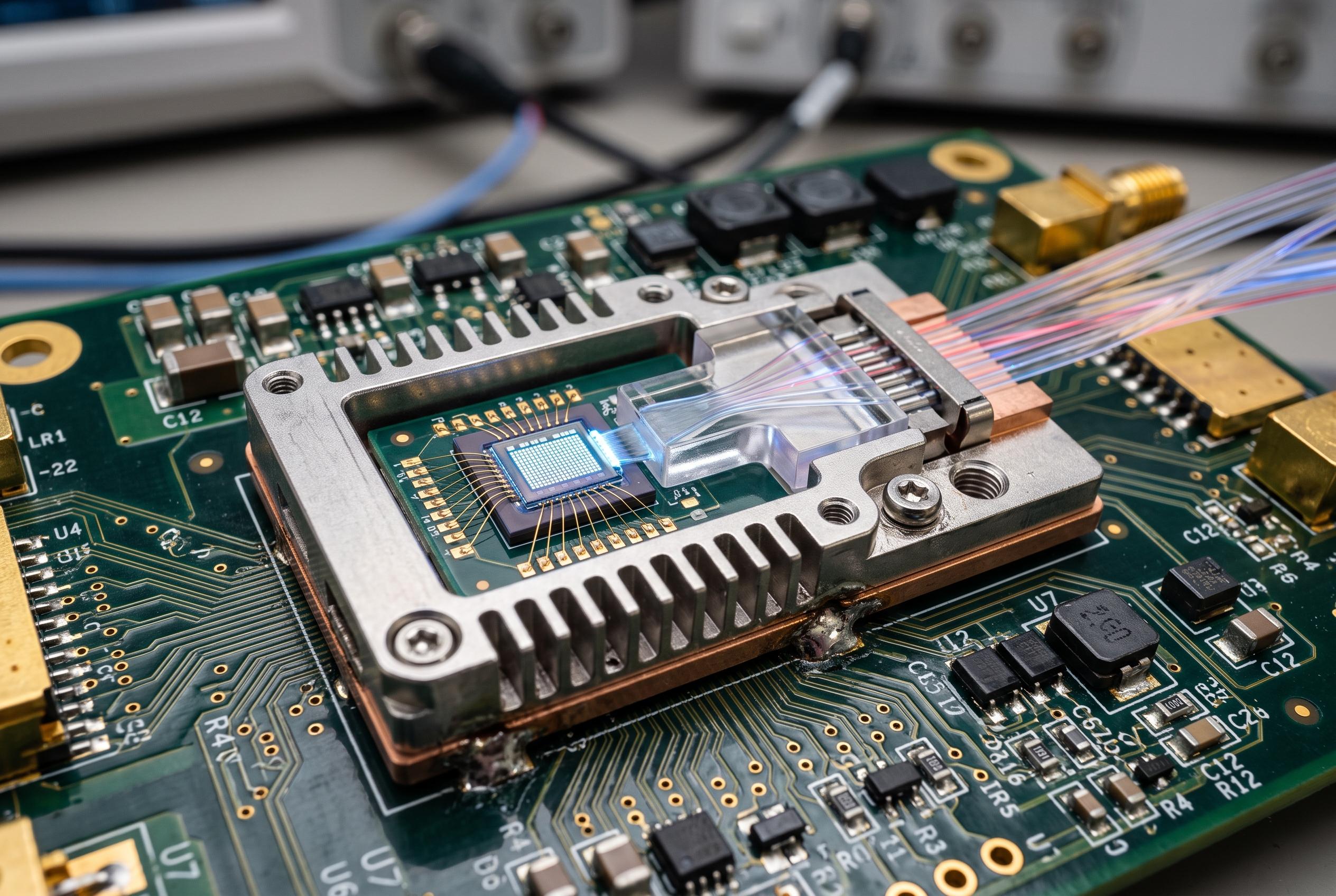
MicroLED is finding its clearest commercial path in AR glasses, while a newer opportunity is emerging inside AI data centres. Analysts say the market is splitting into three distinct families, with silicon-based displays and optical links gaining momentum as large, costly TVs and smartwatches struggle to scale.
MicroLED's Big-Screen Dream Has Hit a Wall
MicroLED once looked like the next great living-room upgrade. The picture quality is striking, with bright highlights, deep contrast, and no backlight haze, but the manufacturing process has proved stubbornly expensive. According to Compound Semiconductor, the technology's path from premium displays to wider commercial use has been slowed by transfer, assembly, and yield challenges.
That has left the large-display branch of the market in an awkward place. Samsung helped keep premium microLED televisions visible, while Apple pushed interest in microLED watches, but volumes remain tiny compared with conventional OLED products. The result is a technology that can look spectacular in a showroom yet remains difficult to produce economically at scale.
Apple's cancellation of a major watch programme in 2024 further unsettled the supply chain, affecting partners including ams OSRAM, Kulicke & Soffa, and LG Display. MicroLED TVs and watches aren't disappearing, but they increasingly look like specialist products rather than the industry's main growth engine.
AR Glasses Offer a More Natural Fit
AR is where microLED currently makes the strongest commercial case. Tiny silicon-based panels can deliver high brightness from a compact engine, an important advantage when a display has to remain visible outdoors without turning a pair of glasses into a heavy, power-hungry gadget.
Yole expects the AR microLED display-engine market to reach roughly $2.5 billion by 2031, with LED-on-silicon volumes growing rapidly between 2025 and 2031. MicroLED-info has also highlighted AR, automotive systems, and other emerging uses as major contributors to the technology's longer-term expansion.
China is already the most active market. Several smart-glasses makers there are using microLED displays with pixel pitches in the low-micron range, while broader US adoption is expected to arrive later. The timing could accelerate as second- and third-generation smart glasses become slimmer, brighter, and more useful rather than merely clever-looking.
Smart Glasses Are Turning Displays Into Wearable Interfaces
The appeal of AR eyewear is changing. Early products often felt like technology demonstrations, but AI assistants, translation tools, cameras, and hands-free information are giving smart glasses a more practical reason to exist. That broader interest creates room for better display engines, even if consumers remain selective about wearing cameras and screens on their faces.
The first major AR wave is expected to rely heavily on RGB three-panel designs. Over time, manufacturers may move toward single-panel RGB approaches, which could shift more value from packaging specialists to the companies making the microdisplays themselves. Laser Focus World describes this movement as part of a wider pivot from conventional display applications toward photonics and optical systems.
Of course, better hardware alone won't guarantee mass adoption. Comfort, battery life, privacy, prescription compatibility, and social acceptance may matter just as much as brightness. Your eyes may appreciate a dazzling display, but your nose, ears, and patience still have a vote.
AI Data Centres Create a Second MicroLED Front
The newest opportunity is less visible but potentially enormous: optical communication inside AI data centres. As computing systems exchange ever larger volumes of data, operators are looking for ways to increase bandwidth while reducing the energy spent moving information between chips and packages.
Today, many optical interconnects rely on lasers. MicroLEDs could offer an alternative for very short distances, particularly links under one metre. Laser Focus World reports that this short-reach territory represents a huge share of AI data-centre bandwidth, making it a tempting target for a technology that can potentially combine compact size, speed, and lower power consumption.
Photonics.com has pointed to the growing importance of photonics packaging as AI infrastructure expands. Meanwhile, Tom's Hardware has reported that Microsoft expects to commercialise microLED data-centre cables by late 2027. That doesn't mean every server rack will suddenly glow with microLEDs, but it shows the idea has moved beyond laboratory speculation.
The Real Test Is Cost, Not Curiosity
MicroLED has no shortage of impressive specifications. The harder question is whether manufacturers can build reliable systems cheaply and consistently enough for customers to deploy them in large numbers. In AR, that means making glasses people want to wear every day. In data centres, it means proving that microLED links can meet demanding reliability, thermal, and service requirements.
The wider fibre market shows why the pressure is building. Tom's Hardware has reported that AI data centres are consuming fibre-optic cable at a pace that is challenging suppliers, adding urgency to alternative approaches and higher-density connections. Still, a new optical architecture has to earn its place against mature lasers and copper links, not just outperform them on a presentation slide.
The market's centre of gravity is therefore shifting from glamorous televisions to more specialised silicon platforms. AR looks like the nearer-term volume story, while optical interconnects could become the more surprising growth engine if the architecture and economics fall into place.
MicroLED's next chapter may be less about what viewers see and more about the data moving behind the scenes.
Disclaimer: This article may have been created with AI assistance and reviewed by our editorial team. It is provided for general informational purposes only. Readers should verify information independently before relying on this content.
