
Engineers at the University of California San Diego have developed a fluorine-free battery binder that works with water instead of toxic solvents. The promising material matches conventional performance while making electrodes easier to manufacture and separate during recycling, a useful step as demand for lithium-ion batteries keeps climbing.
A tiny battery ingredient with an outsized impact
The binder may sound like a minor detail, but it plays a crucial role inside a lithium-ion battery. This glue-like material holds electrode powders together and helps attach them to thin metal foils before the layers are stacked or rolled into cells.
According to the Nature Communications study, the new water-soluble battery binder produced cells with performance comparable to those made using conventional fluorinated materials. That matters because a small change in the manufacturing recipe could ripple through factories, recycling plants, and the environmental footprint of future batteries.
Why conventional binders are difficult to handle
Traditional lithium-ion batteries often rely on fluorine-containing binders because they create durable, even electrode coatings. The catch is that these binders generally need toxic organic solvents, followed by energy-intensive drying and solvent-recovery steps.
Recycling brings another headache. Fluorinated residues can cling stubbornly to electrode materials, forcing recyclers to use high temperatures or aggressive chemicals. Research discussed across materials-science publications has increasingly focused on removing those barriers without weakening battery performance.
The new formula swaps harsh chemistry for water
The UC San Diego team combined polyacrylic acid with carboxymethyl cellulose, a plant-derived polymer commonly used in food and paper products. Citric acid then links the two materials into a stronger network, giving the binder a useful mix of flexibility, adhesion, and durability.
Instead of dissolving the ingredients in a hazardous solvent, manufacturers can process the mixture in water. That could mean fewer toxic inputs, less solvent handling, and potentially lower energy demand, although commercial factories will still need to test drying speed, coating consistency, and long-term production costs.
Recycling could become a much simpler soak
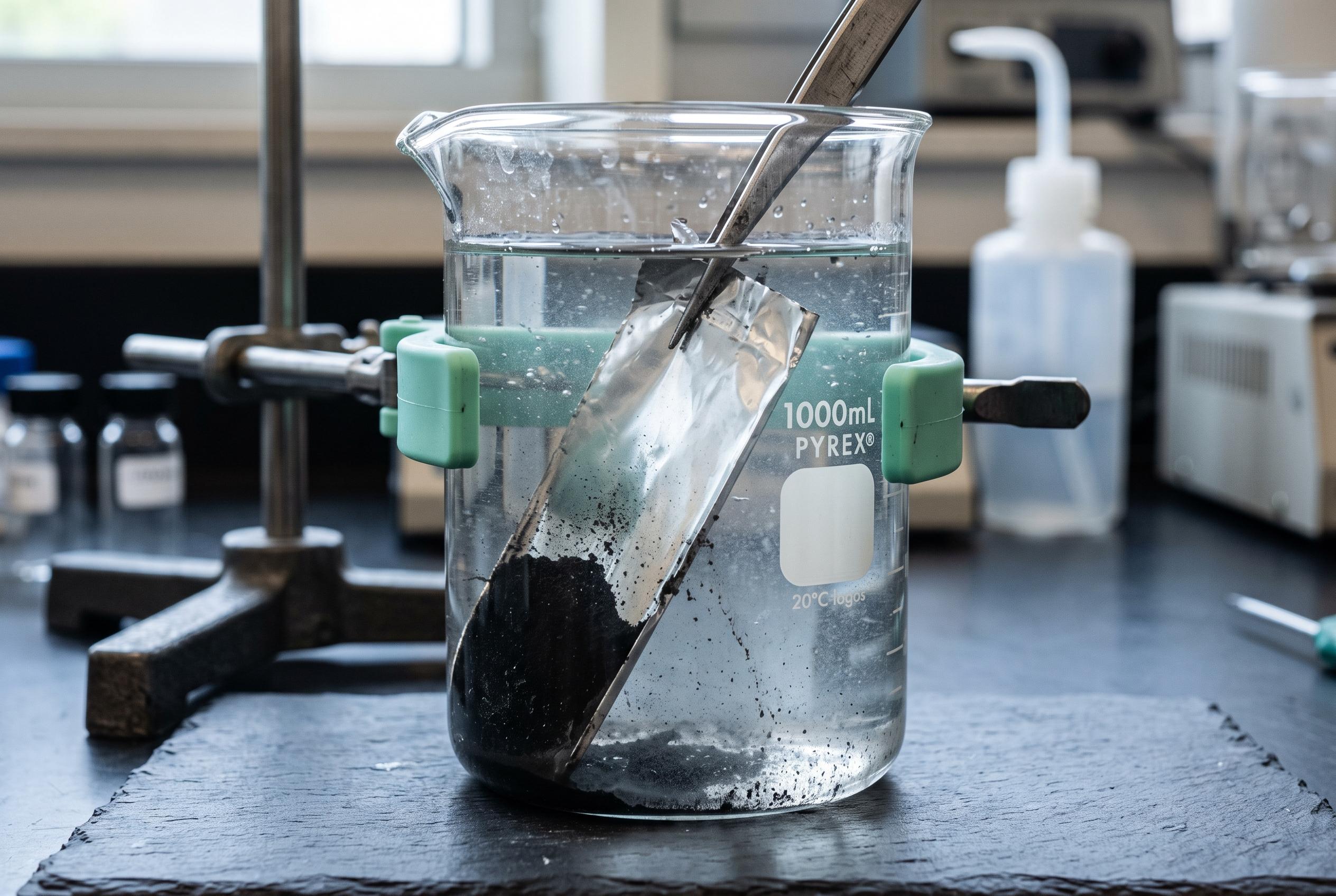
The most striking advantage appears at the end of a battery's life. Researchers were able to disassemble cells and soak the electrodes in water, dissolving the binder so the active coating separated from its metal foil.
That clean separation is important for direct recycling, which aims to restore electrode materials rather than breaking them down completely into basic chemicals. According to the reported results, recovered materials were used to make new batteries that performed comparably with cells made from conventionally processed materials.
Performance held up across several battery types
The binder worked with lithium iron phosphate cathodes, nickel-rich cathodes, graphite anodes, and silicon anodes. Test cells also retained their capacity over hundreds to thousands of charging cycles, suggesting the material isn't merely an eco-friendly compromise.
That versatility will be closely watched. Battery makers use different chemistries for electric vehicles, grid storage, laptops, and other devices, so a binder that works across several electrode types has a better chance of finding a practical role. Still, moving from laboratory cells to large-format commercial batteries is a substantial step, not a paperwork exercise.
What happens before cleaner batteries reach shoppers?
The researchers are now working on scaling production and tailoring the binder for different battery chemistries. Industry partnerships will be essential, since manufacturers will want proof that the material can run through existing coating equipment quickly and consistently.
For consumers, the change won't be visible at first. There won't be a new label or a different charging routine, but cleaner production and easier recycling could quietly reduce the waste associated with devices and electric vehicles. It feels like the kind of behind-the-scenes improvement that matters more with every battery we add to daily life.
A water-based binder won't solve battery recycling alone, but it could remove one stubborn obstacle.
Disclaimer: This article may have been created with AI assistance and reviewed by our editorial team. It is provided for general informational purposes only. Readers should verify information independently before relying on this content.
