
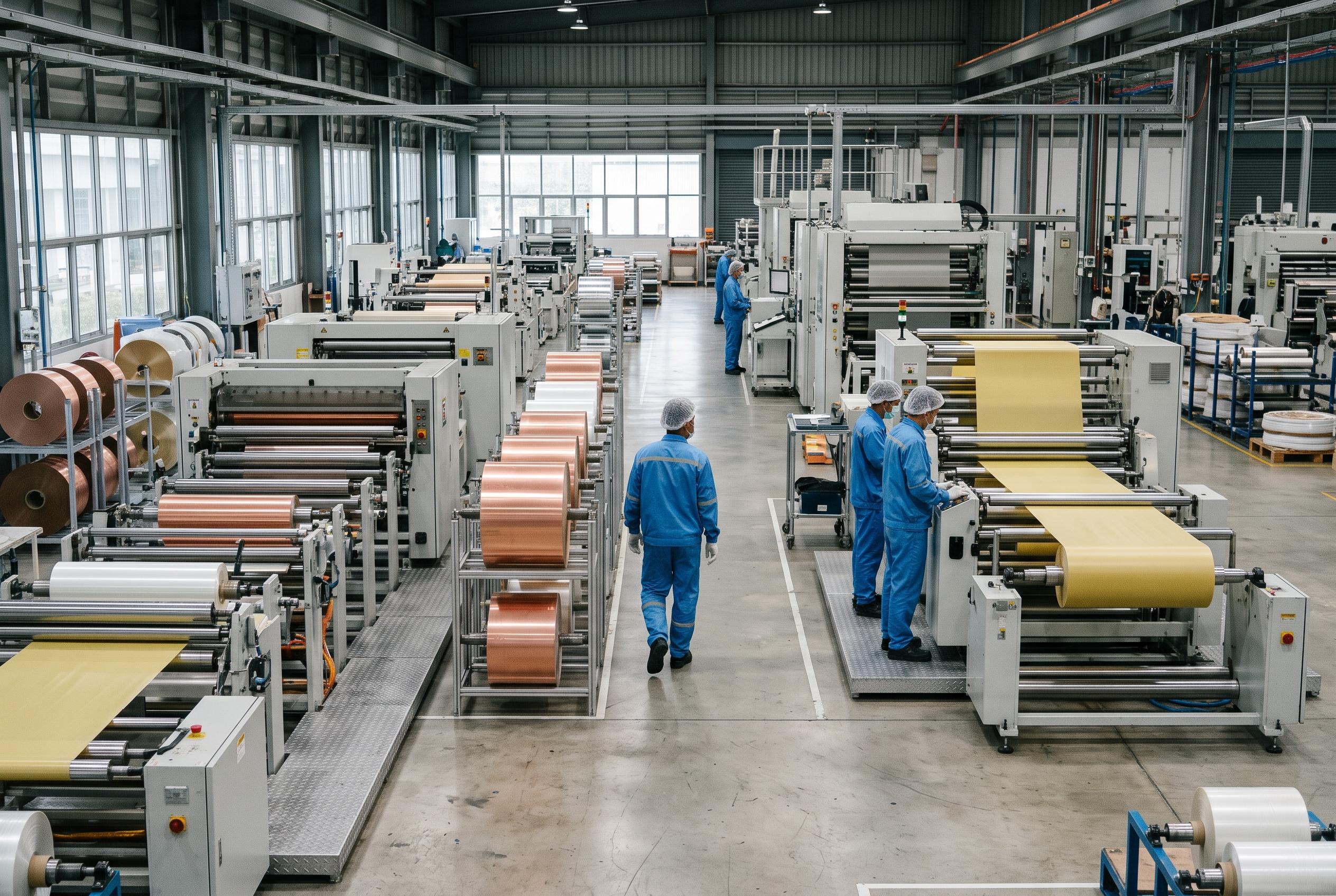
Panasonic Industry is expanding production of materials used in AI servers and data centers, with new capacity planned in Japan, China, Thailand and Indonesia. The investment totals about 92 billion yen, or roughly $600 million, and pairs factory expansion with a new research facility. It’s a major bet on the hardware quietly powering the generative AI boom.
AI infrastructure needs more than chips
The rush to build AI data centers depends on a lot more than powerful processors. Servers also need circuit-board materials that can handle fast, high-volume data traffic, along with components that help keep power delivery stable.
Panasonic Industry plans to increase production of both. The company is expanding its MEGTRON circuit-board materials and SP-Cap conductive polymer capacitors, which are used in AI servers and other data-center equipment, according to Panasonic’s announcement and industry coverage.
Where Panasonic plans to put the money
The largest portion of the investment, about 67 billion yen, is earmarked for MEGTRON production at Panasonic plants in Suzhou, China, and Ayutthaya, Thailand. These high-performance materials are designed to support the high-speed, high-capacity communications AI servers require.
Another 17 billion yen will go toward increasing SP-Cap production at facilities in Uji, Japan, and Batam, Indonesia. The remaining 8 billion yen is for a new research and development facility at the company's Yokkaichi South plant in Mie, Japan. Together, the planned investments add up to about 92 billion yen.
Capacitors help keep server power steady
AI servers draw substantial power, and the components around their GPUs need to support stable delivery. Panasonic says its SP-Cap capacitors are used in GPU power circuits, making expanded production a practical part of the data-center build-out, not just a bet on a buzzword.
MEGTRON materials address a different but equally important need: keeping data moving quickly through server circuit boards. In other words, one product family supports the flow of information, while the other helps manage the flow of power.
Why the new research facility matters
The Yokkaichi South facility is intended to strengthen research into next-generation materials for semiconductor packaging. That work looks beyond the immediate push to supply AI servers and toward materials that could support future semiconductor technologies.
It's a useful reminder that an AI investment story isn't always about a new chip or a flashy data center. The less visible materials inside that infrastructure can matter just as much, and developing them takes time.
A capacity push with a longer view
The expansion addresses rising demand while giving Panasonic room to advance its materials technology, according to the company. Its spread across several countries also shows how manufacturers are building capacity across multiple sites to serve a market growing faster than any single product category.
For data-center operators, added capacity could help strengthen supply of components used in AI systems. For the rest of us, it’s a behind-the-scenes development: the next wave of AI may depend as much on reliable circuit materials and power components as on the processors everyone talks about.
A smarter AI build-out starts with the materials that keep the machines moving.
Disclaimer: This article may have been created with AI assistance and reviewed by our editorial team. It is provided for general informational purposes only. Readers should verify information independently before relying on this content.
