
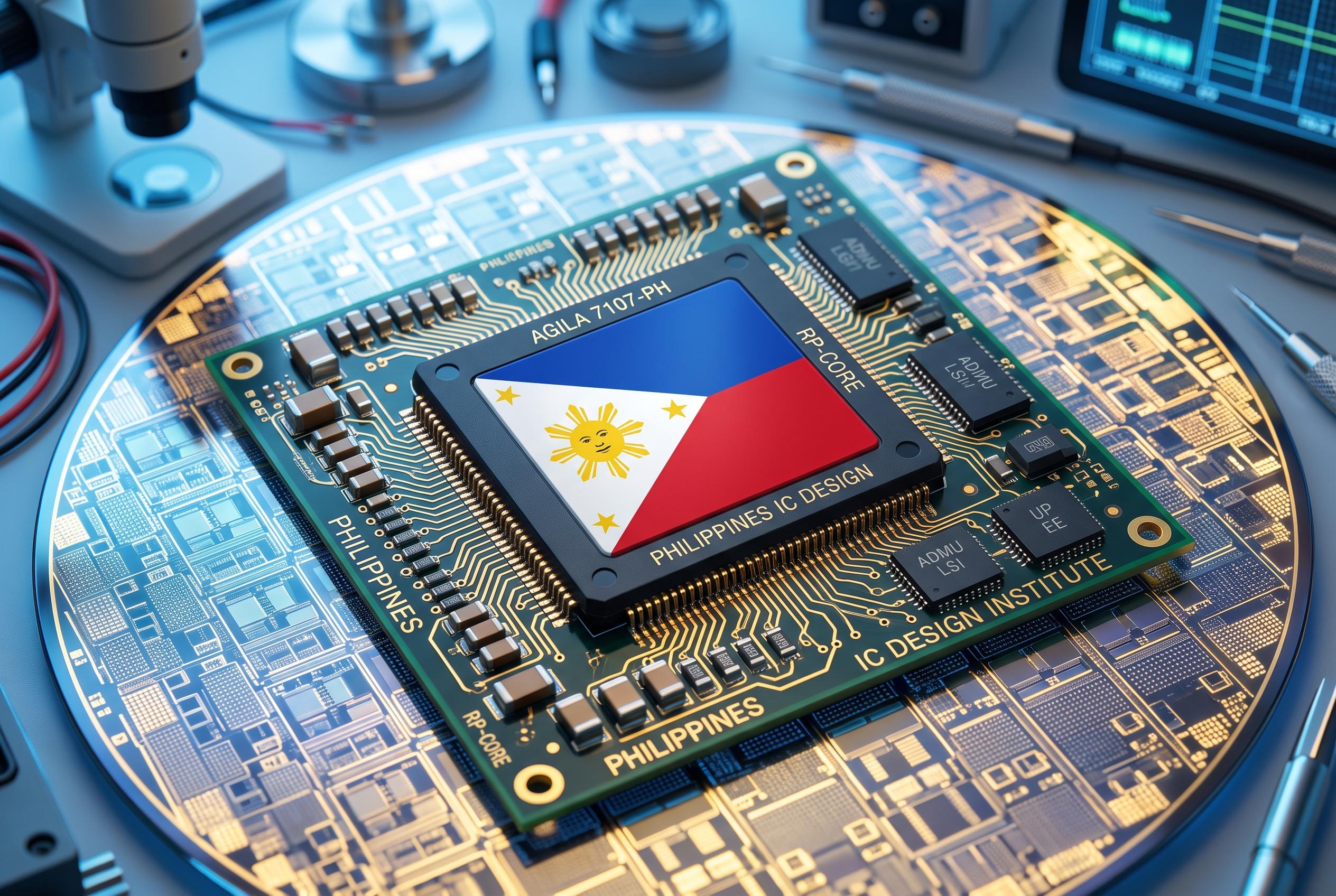
- The Philippines explores establishing an IC design hub in Metro Manila as part of Pax Silica.
- The new hub aims to focus on design, engineering, and software services, complementing Clark's manufacturing plans.
- Details such as location, partners, and investment are still being discussed, signaling a distributed approach to the tech supply chain.
The Philippines may establish an integrated circuit (IC) design hub in Metro Manila under the Pax Silica partnership, adding a new component to the country’s plans to build an advanced technology ecosystem.
Trade Undersecretary and Board of Investments (BOI) managing head Ceferino Rodolfo revealed the possible Metro Manila project during the Department of Trade and Industry’s budget briefing at the House of Representatives on August 24. He said the government had recently been in talks with a local government unit in the National Capital Region about an IC design national hub.
The possible Metro Manila hub shows that the Philippines’ Pax Silica plans are not limited to the proposed advanced manufacturing project in New Clark City. While the Clark project is being positioned around advanced manufacturing, a separate Metro Manila facility could focus on IC design and the more service-oriented side of the semiconductor industry.
The proposed site already has 13 existing IC hub sites, four of which are Filipino companies, according to Rodolfo. He described the planned development as “more service oriented.” Rodolfo also said the project would involve another partner within the Pax Silica partnership rather than the United States, although he declined to identify the country.
The Philippines joined the Pax Silica partnership as part of efforts to strengthen its position in the semiconductor and AI technology supply chain. The partnership covers a wider ecosystem, from critical minerals and advanced manufacturing to data centers and software supporting AI computing.
The bigger picture: The proposed Metro Manila IC design hub is separate from the project being developed in New Clark City.
Rodolfo clarified during the House hearing that Pax Silica is a partnership rather than a single project. The New Clark City development is only one of several projects being pursued by the Philippines under the broader initiative.
The government has designated a roughly 1,620-hectare site in New Clark City, Capas, Tarlac for an advanced manufacturing hub. However, DTI said the Clark project will focus on manufacturing equipment that will eventually be used in AI data centers, rather than hosting the AI data centers themselves.
Potential AI data centers could instead be developed in other locations with more suitable access to electricity and water.
Between the lines: The distinction is important because Pax Silica has often been discussed in connection with the proposed AI and advanced manufacturing development in New Clark City.
The DTI’s latest clarification suggests that the Philippines is considering a distributed approach to the technology supply chain rather than putting every component of the ecosystem in a single location.
New Clark City could handle advanced manufacturing, while Metro Manila could potentially host an IC design hub. Other locations could eventually be considered for data centers or other parts of the supply chain depending on infrastructure requirements.
The Metro Manila proposal could also build on an existing concentration of IC-related companies in the area. Rodolfo’s reference to 13 existing IC hub sites indicates that the proposed hub would not be starting from an entirely new semiconductor ecosystem.
IC design is the engineering and development work involved in creating the architecture and specifications of integrated circuits. A hub focused on this area could therefore create opportunities in engineering, design, research, software, testing, and other technical services connected to semiconductor development.
The proposal could also strengthen Metro Manila’s role in the country’s technology sector while allowing manufacturing activities to be developed elsewhere. However, the government has yet to identify the Metro Manila city, the foreign partner involved, the project’s investment value, timeline, or specific companies expected to participate. These details remain undisclosed as discussions continue.
The government is expected to continue discussions with the Metro Manila local government and the unidentified Pax Silica partner before providing more details about the proposed IC design hub. At the same time, the New Clark City project remains focused on advanced manufacturing. DTI said the private developer for that project would be responsible for infrastructure requirements such as roads, power, and securing and reusing water, rather than relying on public funding for those requirements.
The government is also considering other locations for components of the broader AI and semiconductor ecosystem, particularly facilities that require significant power and water resources.
If the plan moves forward, the Metro Manila IC design hub could become an important node in the Philippines’ electronics strategy. A distributed model may help the country balance sourcing, logistics, and infrastructure needs across different sites, while also supporting mobile device supply chains, software development, and other lifestyle technology services that depend on semiconductor innovation.
That approach could also make it easier for the Philippines to attract companies that want to locate design, testing, or support functions near existing talent pools and business services. In practical terms, separating design from manufacturing may give policymakers more flexibility as they assess electricity, water, transport, and land availability for each part of the ecosystem.
Takeaways:
- - Pax Silica in the Philippines is shaping up as a multi-site strategy, not just one project.
- - New Clark City is being positioned for advanced manufacturing, while Metro Manila may host IC design.
- - The proposed hub could support engineering, research, software, and testing jobs.
- - Infrastructure needs will likely determine where future AI and semiconductor facilities go.
Disclaimer: This article may have been created with AI assistance and reviewed by our editorial team. It is provided for general informational purposes only. Readers should verify information independently before relying on this content.
