
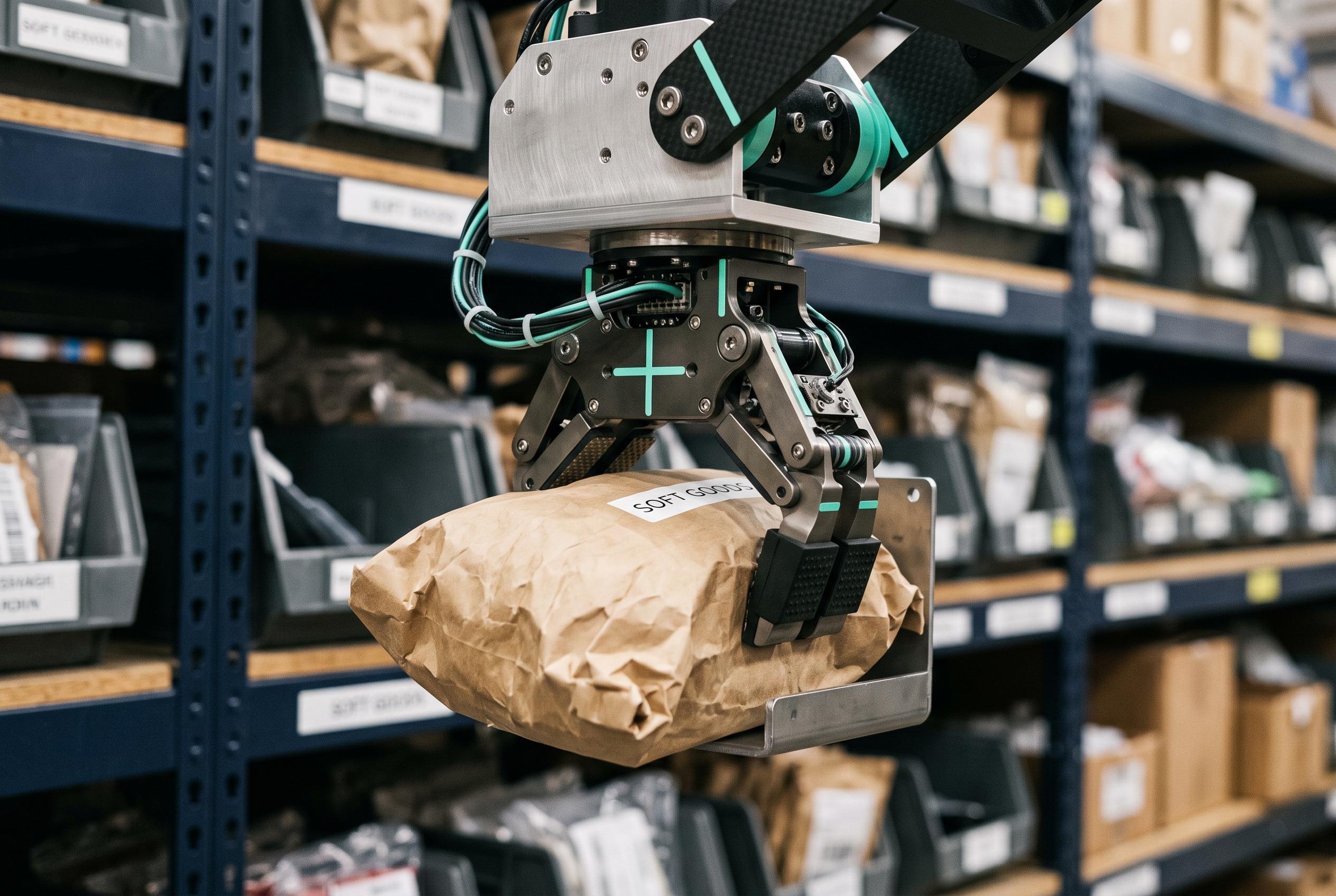
Warehouses are moving beyond screen-based software as physical AI gives robots eyes, sensors, and a steadier grip on real-world work. The shift matters for retailers, logistics teams, and shoppers because machines may soon handle a wider mix of unpredictable products, not just neatly arranged boxes.
Robots Are Learning to Deal With Reality
The biggest change is simple to picture: a robot can now look at an object, assess its position, and decide how to handle it. Cameras and sensors give machines a richer view of shelves, bins, packaging, and the occasional item that refuses to behave.
That could make physical AI especially useful in modern fulfilment centers, where product ranges are broad and inventory rarely stays perfectly organised. TechRadar Pro has noted that the real challenge begins after an initial pilot, when systems must prove they can perform reliably outside carefully controlled demonstrations.
Why the Sim-to-Real Gap Matters
Much of a robot's training can happen in virtual environments, where developers can repeat scenarios without slowing down a live warehouse. The difficulty comes when those lessons meet scuffed floors, shifting parcels, poor lighting, and products the system hasn't encountered before.
Companies working in this area are building simulation and training tools designed to prepare robots for those messy details. Platforms such as Pixoft and Trekion.ai reflect the broader push toward software that connects AI decision-making with physical operations, rather than leaving intelligence trapped behind a dashboard.
Unpredictable Products Are the Real Test
Automating a conveyor belt is one thing. Picking up a soft package, recognising an unfamiliar shape, or placing a fragile product without damaging it is considerably harder. That's where physical AI could offer a meaningful advantage over fixed automation, which tends to perform best when every item follows the same pattern.
The wider robotics ecosystem is also exploring tools for embodied systems, from intelligent movement to deployment and integration. Moving Atoms, Anvil, and Brio.dev are examples of companies working in a market increasingly focused on helping machines operate in dynamic environments, not merely repeat one scripted motion.
What This Means for Warehouse Jobs
Physical AI won't instantly replace every warehouse role, but it could change which tasks people perform. Repetitive lifting, sorting, and movement may become more automated, while demand grows for technicians, robot supervisors, safety specialists, and staff who manage exceptions.
That transition could be particularly important for smaller operators. If automation becomes easier to deploy and less dependent on highly specialised infrastructure, more businesses may gain access to warehouse robotics. The practical question won't just be whether a robot can work, but whether it can be installed, maintained, and adjusted without creating a new layer of complexity.
Adoption Will Depend on Reliability
A polished demonstration is encouraging, but warehouses run for long hours under commercial pressure. Operators will want proof that robots can keep pace, recover from mistakes, and work safely alongside people before making major investments.
For now, physical AI looks less like a sudden switch and more like a gradual rewrite of warehouse operations. The most successful systems are likely to be the ones that quietly handle awkward, repetitive work while giving human teams better tools and clearer control.
Physical AI is bringing warehouse automation closer to the real world, one unpredictable parcel at a time.
