
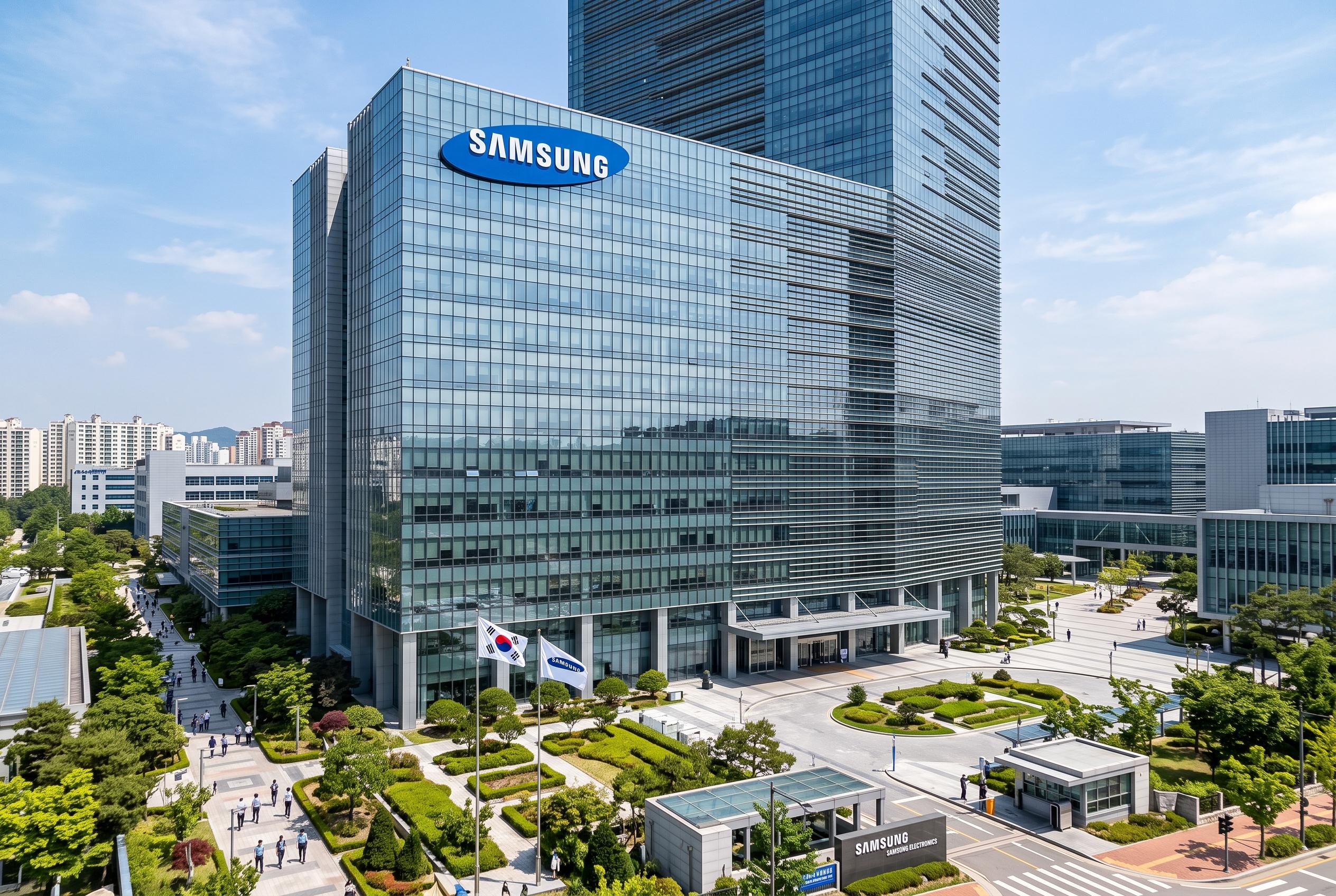
- Samsung plans to return up to $79.52 billion in 2026, the largest ever by a Korean company
- The package includes dividends, share buybacks and potential cancellations
- The move aims to bolster investor confidence while competing in AI-driven memory chips
Samsung Electronics has announced a shareholder return plan for 2026, a move that marks a notable week for shareholder returns among South Korea’s chip giants following SK Hynix’s share buyback. Based on CNBC reports, Samsung expects shareholder returns to total between 90 trillion won and 110 trillion won, or about $65.1 billion to $79.52 billion.
The company said the package includes around 30 trillion won ($21.6 billion) in cash dividends in the third quarter, including its regular quarterly dividend. Samsung said details of the payout will be finalized at a board meeting in late October, while the remaining shareholder returns will be decided at a board meeting in late January 2027, with a combination of cash dividends, share buybacks and cancellations under consideration. Samsung described the plan as “the largest ever by a Korean company.”
The move comes as Samsung tries to catch up with local rival SK Hynix in high-bandwidth memory chips used in AI systems. Samsung’s stock is up around 135 percent year-to-date. Friday’s announcement follows Samsung’s 2024-2026 shareholder return program, under which the company pledged to return 50 percent of free cash flow generated between 2024 and 2026 while maintaining annual regular dividends of 9.8 trillion won ($7.1 billion).
In a corporate value enhancement plan released in March, Samsung said it paid 20.9 trillion won ($15.1 billion) in cash dividends in 2024 and 2025 and spent 8.4 trillion won ($6.1 billion) on share repurchases for cancellation.
For investors, the headline number matters, but the structure matters too. A large dividend commitment signals confidence in cash generation, while buybacks and cancellations can support earnings per share and potentially improve capital efficiency. In a sector as cyclical as electronics, that balance often becomes a key signal to the market: management is trying to reward shareholders without losing sight of the need to keep investing in technology, capacity and supply chains.
That is especially relevant in the current AI-driven memory cycle. High-bandwidth memory has become one of the most closely watched areas in electronics and mobile computing because it sits at the center of AI accelerators, advanced data centers, and next-generation devices. For Samsung, the shareholder return plan is not just about distributing cash; it also reflects the company’s effort to show that it can compete aggressively while still maintaining a disciplined capital framework.
The timing also highlights how shareholder returns can shape sentiment across the broader sourcing and logistics ecosystem. Major chip makers affect equipment orders, materials sourcing and global logistics networks, from semiconductor fabrication inputs to packaging and transport. When a company like Samsung signals a strong cash position and a willingness to commit capital to returns, suppliers and partners may interpret that as evidence of durable demand conditions, even if the industry remains exposed to pricing swings and rapid technology transitions.
At the same time, the market will likely watch whether the company’s return program changes its investment posture. Large shareholder returns can be welcomed by investors, but in electronics, underinvestment can quickly become costly. The sector depends on heavy research and development, steady process improvements and long-term sourcing strategies for advanced components. Samsung’s challenge is to sustain shareholder confidence while continuing to compete in memory, foundry and consumer electronics categories where execution matters at every stage.
The comparison with SK Hynix also matters. South Korea’s chip sector has become a focal point for global investors seeking exposure to AI infrastructure. As memory demand strengthens, the two companies are increasingly judged not only on production volumes and technology roadmaps but also on how they manage cash. In that sense, the recent announcements underscore a broader theme: capital returns are becoming part of the competitive playbook, not just a side note for earnings reports.
For ordinary investors, the question is whether the plan changes the long-term story. A large return program can support valuation, but it does not replace product execution. Samsung still has to prove it can win in HBM, maintain strength in conventional memory, and navigate the broader electronics cycle, including mobile demand, consumer spending and manufacturing costs. If the company succeeds, the return plan may be seen as a reward for strength. If it struggles, the cash distributions may be viewed as a defensive move to keep shareholders engaged.
The announcement also reflects a wider trend in Asia’s large-cap technology names: a more explicit focus on shareholder-friendly policies. Companies that once prioritized expansion above all else are increasingly being measured on total capital return, transparency, and balance sheet discipline. That shift matters to institutional investors and retail holders alike, particularly in markets where electronics and semiconductor stocks can be volatile and highly sensitive to expectations.
From a lifestyle perspective, the effects can be indirect but meaningful. Chip leaders influence the cost and availability of phones, tablets, laptops, smart appliances, and connected devices. When a company like Samsung strengthens its financial narrative, it can help reinforce confidence across the consumer electronics chain, even though the relationship between shareholder payouts and end-user pricing is not immediate. Still, the scale of the announcement shows how deeply intertwined corporate finance and product ecosystems have become.
Samsung’s 2026 plan also suggests a continued emphasis on capital allocation as a strategic tool. The company is not only competing on technology; it is also competing on how effectively it converts operational performance into shareholder value. In a high-stakes market where sourcing decisions, logistics resilience and innovation cycles all move quickly, that can be just as important as any single product launch.
Ultimately, the message from Samsung is straightforward: it expects to generate enough cash to make one of the largest shareholder return commitments ever announced by a Korean company, while still investing in its future. For the market, the next milestones will be the October board meeting, the January 2027 decision on remaining returns, and any signs that the company’s AI memory push is translating into stronger operational momentum.
Takeaways:
- - Samsung’s return plan is one of the largest ever announced by a Korean company.
- - The package combines dividends, share buybacks, and possible cancellations.
- - The announcement highlights Samsung’s push to strengthen investor confidence while competing in AI memory.
- - Investors will watch whether cash returns affect long-term investment in electronics and semiconductor leadership.
- - The broader impact extends to sourcing, logistics, and the mobile device ecosystem tied to chip demand.
FAQ: Q: What did Samsung announce? A: A 2026 shareholder return plan expected to total 90 trillion won to 110 trillion won.
Q: What is included in the plan? A: Around 30 trillion won in third-quarter cash dividends, with more returns to be decided later.
Q: Why is this significant? A: Samsung called it the largest ever by a Korean company and it comes during an intense AI memory race.
Q: Does this affect Samsung’s business strategy? A: It suggests strong capital discipline, but the company still needs to invest in technology and competition.
Disclaimer: This article may have been created with AI assistance and reviewed by our editorial team. It is provided for general informational purposes only. Readers should verify information independently before relying on this content.
