
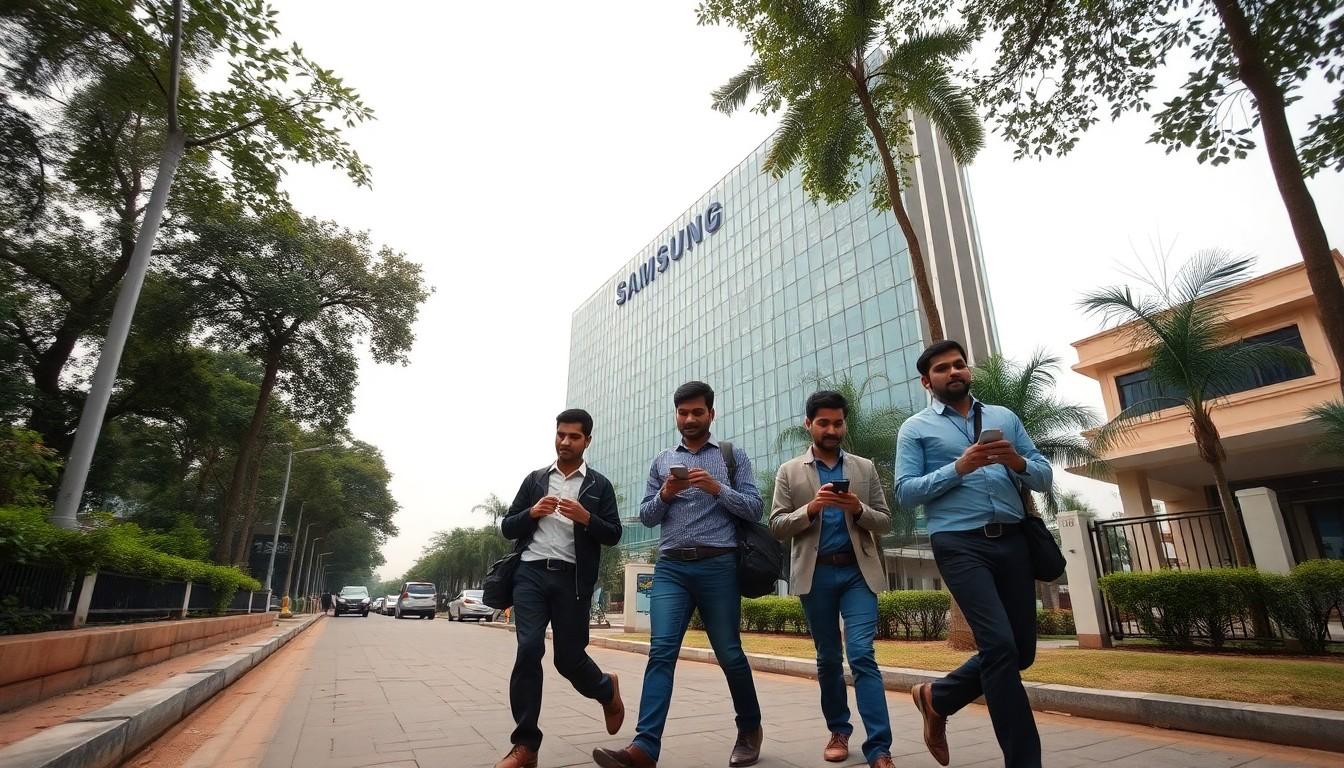
- Samsung has asked 80 to 100 executives to leave from TV and home appliance divisions.
- Cuts may include up to 25 percent of sales and marketing staff, including outsourced workers.
- The company is delaying layoffs in its mobile division, hoping for a festive demand boost.
Samsung India has started layoffs in its television and home appliance divisions, with roughly 80 to 100 executives asked to leave so far, as the company tries to safeguard its margins amid a tougher consumer market. Several Indian outlets have reported that these cuts are being rolled out in phases, and for now, they mainly focus outside the smartphone segment.
The decision seems to be a strategic move as Samsung attempts to balance cost containment with hopes of a demand uptick during Diwali. The company still considers its mobile division as the area most likely to benefit from a festive-season sales boost, so smartphones haven't been included in this round of cuts. This approach implies that Samsung is distinguishing between business units under immediate cost and demand pressure and those, like mobile, which remain key to its strategy in India.
The layoffs target specific groups rather than being across the board, but they go beyond just junior staff. The Economic Times mentioned that director-level executives, team leads at headquarters, branch managers, and area managers are affected. Similarly, reports from India Today and Digit indicated that as much as 25 percent of Samsung’s sales and marketing personnel within the electronics side could be impacted.
This estimate also covers off-roll workers, those hired through staffing agencies, which suggests that Samsung is evaluating the total cost of its channel coverage, not just employee wages. In consumer electronics, sales teams often comprise a mix of full-time employees, regional managers, distributor-focused teams, and outsourced staff. Restructuring involving these groups might influence how Samsung manages sourcing, distribution, logistics, and retail support throughout India.
Therefore, these reported cuts probably do more than just cut office headcount; they may reflect a review of how Samsung organizes its route to market, including management layers, regional team sizes, and the costs tied to maintaining coverage in various territories.
Moneycontrol provided some additional details, explaining that the layoffs are happening in small daily groups, and some employees have been asked to leave immediately, without serving notice. The severance package reportedly includes three months' salary plus an extra month for each year of service.
The same report estimates Samsung’s domestic electronics sales team at about 550 to 600 executives, excluding the larger smartphone sales force. Even a few hundred layoffs could significantly impact how Samsung supports retail partners, coordinates regional sales, and handles product distribution.
For channel partners, these changes can matter quite a bit. Sales teams typically coordinate inventory, maintain retailer relationships, plan promotional activities, and ensure goods are properly placed. A reduced team might lead to shifts in territory assignments or account coverage, though, to be sure, the reports don’t say exactly how Samsung plans to redesign those functions.
Broader pressures weighing on Samsung’s consumer electronics unit
The reasons behind these layoffs aren’t just limited to one product segment. Reports from Economic Times, India Today, and Digit highlight that rising memory chip prices, more than doubling in some cases, along with a weakening rupee, sluggish demand, and increasing raw material costs, are all contributing to margin squeeze.
These factors impact electronics manufacturers in multiple ways. For instance, higher component costs chip away at profit per item. A weaker rupee raises the local cost of imported parts. Meanwhile, softer demand makes it harder to pass those cost increases onto consumers, especially in hotly contested categories like TVs, refrigerators, and other appliances.
While the current layoffs are concentrated in consumer electronics, many reports point out that margin pressure has been especially apparent in Samsung’s core smartphone business, which remains a major part of its operations in India. That’s crucial because these layoffs aren’t just about sluggish TV or appliance sales; they appear to be a broader effort to combat rising costs and slower sales volumes.
This distinction is quite important for suppliers and logistics providers. You see, a company can still see sales growth but struggle to keep margins profitable if input costs rise faster than prices or volume. When that happens, firms often review their staffing, regional operations, and sales support, trying to protect margins, basically.
For Samsung, the current moves suggest that the television and appliance sectors are being examined first, while the mobile division, despite also feeling pressure on margins, is being given a bit more breathing room because of its scale and the hope that Diwali might bring an uptick in demand.
Even with strong financial results, restructuring remains on the table
What’s particularly interesting is that these layoffs come after a year of solid financial growth. Both India Today and Moneycontrol reported that Samsung India’s revenue for FY25 was around Rs 1.1 lakh crore, up 12 percent over the previous year, and net profit surged by 38 percent, reaching Rs 11,287 crore.
India Today mentioned that home appliances account for roughly 11 percent of the total sales, making them the second-largest category after smartphones. This fact highlights that a company can still be growing overall, even as certain segments face mounting pressure from costs, competition, or shifts in consumer preferences, prompting restructuring.
For suppliers and channel partners, this situation reflects a familiar situation: a business might continue to grow overall but still prune divisions or roles where margins are shrinking or demand is slowing. It’s not necessarily a sign that a product line no longer matters; instead, it’s about adjusting operational structures to current market realities.
Furthermore, this kind of recalibration might influence future sourcing and distribution strategies. If Samsung decides some regions need fewer management layers or that certain sales functions could be merged, it could reshape how regional teams work with distributors, retailers, and service networks. The reports don’t detail whether changes to relationships with suppliers or sourcing plans are in the pipeline, though.
Why the mobile business remains outside this round of cuts
Samsung is quite cautious about its smartphone segment, which explains why this first round of layoffs stops short of the company's biggest business. Mint reported that Samsung held around a 16.4 percent market share for smartphones in India in the second quarter of 2026, second only to other competitors, according to IDC and Counterpoint Research.
An executive told Mint, “There will be no immediate job cuts in the mobile division since it’s core to our business and we expect sales to pick up during Diwali. But that could change later.” Basically, they’re holding off on making cuts until after seeing how demand plays out during the upcoming festival season.
This language suggests smartphones aren’t permanently off the table; rather, Samsung’s protecting its mobile team in the short term while waiting to see if festive-season sales give a boost. Since mobile sales are so vital to Samsung’s India operations, the company wants to avoid messing with that segment right now, especially ahead of potential demand recovery.
Looking ahead, the upcoming period will probably be critical for the mobile channel. If sales do rebound strongly, Samsung might decide not to change anything. But if demand remains subdued, they could revisit staffing and sales coverage for this division later on. The reports don’t confirm whether layoffs are definitely planned for the mobile side, only that it’s under consideration.
Regional restructuring and changes to the route-to-market
There are also signs that Samsung is refining its structure. Moneycontrol reported that branches in Ranchi and Patna, Delhi and Gurugram, as well as Punjab and Chandigarh, might be consolidated.
Such consolidations hint that Samsung might be looking at its geographic footprint and how teams are organized regionally. Combining branches could reduce redundancies in management and administrative costs, though, of course, the reports don’t detail the full operational impact of these moves.
They also mentioned a possible second phase of layoffs after Diwali if sales don’t pick up. Similarly, the Free Press Journal noted that while smartphones are safe for now, later reductions could target sales teams.
Together, these signs point to Samsung reevaluating its route-to-market strategies, like management layers, regional coverage, and how it supports retail outlets, especially in categories where profit margins are under pressure. Such reviews might also influence how the company works with distributors, manages logistics, and supports retail channels.
It’s worth noting that since off-roll workers are included in the estimates, this review likely extends beyond just direct employees, possibly looking at support from staffing agencies and outsourced personnel too.
What do these restructuring moves mean for the broader market?
Samsung has not officially announced the details of its restructuring plan, and the circulating reports lack an official statement from the company. So, while the scale and broad direction are somewhat clear, the full internal picture remains unseen.
Nonetheless, what’s evident from the reports is this: the layoffs are mainly happening in televisions and home appliances, are being carefully phased, and are part of a wider effort to absorb cost shocks without disturbing the mobile unit prematurely, that is, before the festive season.
For other players, manufacturers, distributors, staffing agencies, the main takeaway is that the organization of sales support, territory design, and staffing levels in those divisions might stay in flux through the rest of 2026. It also underscores how challenging it is for electronics firms to manage rising input costs, currency swings, and unpredictable consumer demand simultaneously.
The financial results show it’s possible for a company to grow and make some cuts at the same time. Samsung India’s revenue and profits increased in FY25 even as they pared back roles in certain parts of their electronics business. This highlights that margins, operating efficiency, and cost structure are often just as important, or even more so, than overall sales figures when it comes to decisions about workforce and logistics.
Main Takeaways
- - Samsung India reportedly asked around 80 to 100 executives to leave from its TV and home appliance sectors.
- - The layoffs could potentially encompass up to 25 percent of the electronics sales and marketing staff, including off-roll workers.
- - For now, smartphones are left untouched, as Samsung expects a possible demand boost during Diwali.
- - Rising memory chip prices, a weaker rupee, sluggish demand, and rising raw materials are all putting pressure on margins.
- - A second phase of reductions might happen after Diwali if sales don’t pick back up.
- - Despite strong financials, revenue of Rs 1.1 lakh crore and net profit of Rs 11,287 crore in FY25, Samsung is still restructuring selectively.
- - Industry players like suppliers, distributors, and staffing firms should keep an eye on possible changes in regional management, sourcing, logistics, and sales support into late 2026.
Disclaimer: This article may have been created with AI assistance and reviewed by our editorial team. It is provided for general informational purposes only. Readers should verify information independently before relying on this content.
Sources:
