
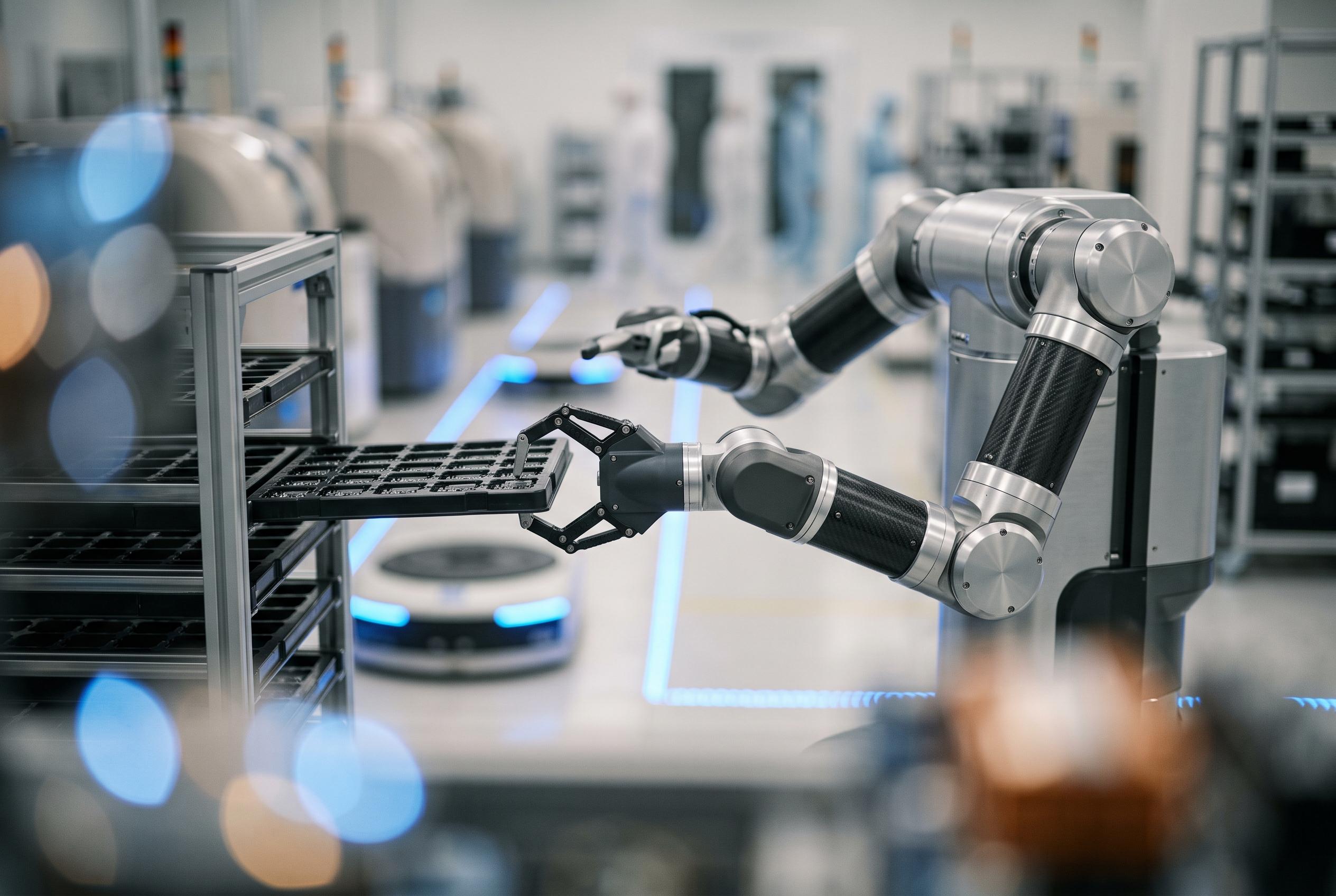
SFA and Rainbow Robotics are joining forces in South Korea to advance AI autonomous manufacturing, combining factory software and logistics expertise with precision robot hardware. The partnership aims to speed up unmanned production and warehouse operations, while opening new opportunities in the expanding global industrial robotics market.
Essential Takeaways
- - Two-part technology push: SFA brings intelligent manufacturing and logistics software, while Rainbow Robotics contributes robot hardware and control systems.
- - Unmanned factories in focus: SFA wants to bring fully autonomous operations forward from its 2030 target.
- - Broader robot lineup: The companies are looking at applications including transport, storage, sorting, loading and unloading, vision, and dual-arm mobile robots.
- - Commercial upside: Rainbow Robotics could gain wider access to SFA’s manufacturing customers and equipment network.
- - AI needs physical precision: Software can coordinate a factory, but capable robots must still handle delicate, unpredictable tasks on the floor.
A software-and-hardware partnership with a clear goal
The most important detail is the combination itself. SFA specializes in the digital layer that coordinates manufacturing and intelligent logistics, while Rainbow Robotics supplies high-performance robots and precise motion control. Together, the companies want to make factories and distribution sites work with less direct human intervention.
That matters because industrial automation is moving beyond simple repetitive movements. According to Rainbow Robotics’ AI robotics materials, modern systems increasingly depend on perception, decision-making, and coordinated motion, not just pre-programmed routines. The result should feel less like an isolated machine and more like a connected workforce of robots.
Why fully unmanned factories remain difficult
A production line can be highly automated and still rely on people for exceptions, maintenance, inspection, and awkward physical tasks. Boxes shift, materials arrive imperfectly, and real workplaces rarely behave as neatly as a demonstration video. That is where better sensing, vision, and flexible robot control become especially valuable.
SFA says it's developing technologies across the logistics chain, including movement, storage, sorting, robotic vision, human-like hands, dual-arm mobile robots, and loading equipment. Rainbow Robotics’ product range includes collaborative and industrial platforms, giving the partnership more room to match robot capabilities with different factory environments.
Dual-arm robots and vision could expand the use cases
The companies are also pursuing technology that can handle more nuanced work. Rainbow Robotics previously announced a three-way development agreement with Schaeffler and the Korea Electronics Technology Institute for an AI mobile dual-arm robot, a project that highlights the industry's interest in robots capable of working across changing industrial settings.
Dual-arm designs are appealing because they can stabilize, grasp, and manipulate objects in ways a single arm may struggle to manage. Add machine vision and mobile movement, and the robot can potentially perform tasks closer to human workstations rather than remaining fixed beside one machine. That's a significant step, although reliability and safety will determine how quickly such systems move from trials into daily use.
SFA offers a route into more customer sites
For Rainbow Robotics, the partnership could be as much about distribution as engineering. SFA’s manufacturing equipment business and customer relationships may help place Rainbow’s robots in more production and logistics environments, including operations that need integrated equipment rather than a standalone robotic arm.
The model fits a broader market shift. Companies increasingly want automation partners that can provide the robot, software, integration, and ongoing support in one package. Rainbow Robotics has also been expanding its collaborative robotics portfolio internationally, with E-Tech Group announcing a US portfolio expansion that could help broaden the company’s reach beyond Korea.
What customers should watch next
The immediate test will be practical: which joint systems reach pilot sites, how quickly they can be installed, and whether they deliver measurable gains in uptime, safety, and labor efficiency. A polished robot is impressive, but the real value appears when it can keep working quietly through a full shift without constant human correction.
SFA is aiming to strengthen its position in AI autonomous manufacturing and global robotic logistics. If the two companies can connect intelligent orchestration with dependable physical handling, their partnership could help move factories from partial automation toward genuinely flexible, low-touch operations. For workers and operators, the best outcome won't be a flashy machine, but a safer workplace with fewer tedious tasks.
It's a small step on paper, but a potentially important one for factories that want to run smarter and with fewer manual handoffs.
Disclaimer: This article may have been created with AI assistance and reviewed by our editorial team. It is provided for general informational purposes only. Readers should verify information independently before relying on this content.
