
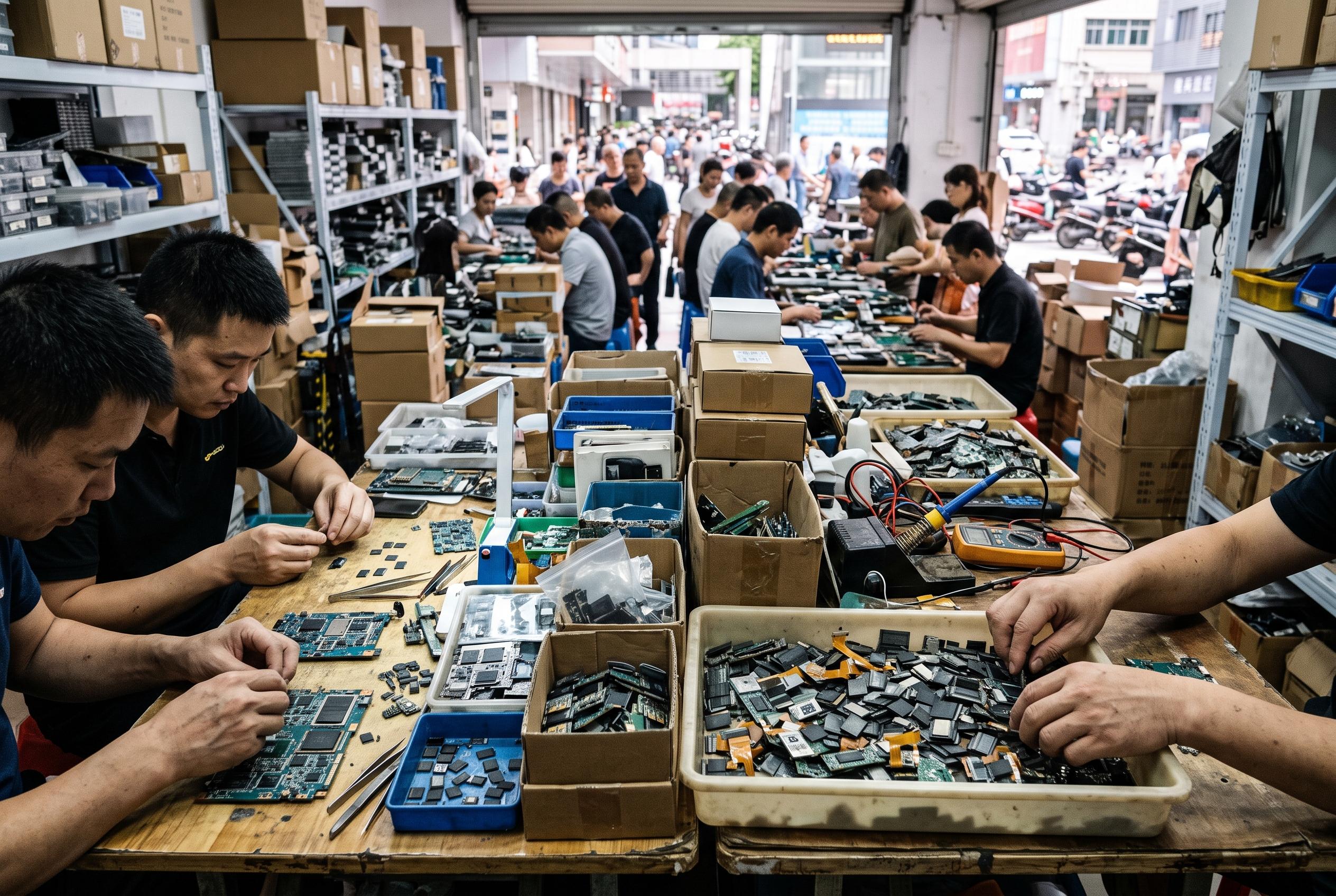
Smartphone makers are turning to recycled DRAM as soaring memory costs squeeze budgets across the industry. Chinese brands are reportedly testing five- to six-year-old chips from used phones, hoping to keep entry-level models affordable and production moving. The approach could save money, but it also raises fresh questions about testing, reliability, and what buyers can expect from a bargain handset.
Smartphone makers are searching for savings
The most striking part of this story isn't that old memory still works. It's that memory has become expensive enough for manufacturers to consider recovering it from used phones in the first place.
According to Gizchina, some Chinese smartphone brands are examining DRAM chips that have already spent years inside older devices. Those components can be removed, tested, and fitted to newer circuit boards, a fiddly process that may still cost less than buying fresh memory in today's overheated market.
That pressure is spreading well beyond phones. Tom's Hardware reported that memory pricing has drawn unusually sharp criticism, while separate industry coverage has warned that rising DRAM costs could push smartphone prices higher. For shoppers, the result may be familiar: fewer cheap options, higher prices, or both.
Why five-year-old memory is suddenly attractive
DRAM doesn't become useless simply because a calendar page has turned. If a chip has operated within normal limits and passes electrical and compatibility checks, it may still perform its basic job inside a new handset.
The appeal is especially obvious for entry-level models, where every component affects the final price. TrendForce reported that Chinese phone makers are considering salvaged memory as per-unit component costs rise, giving manufacturers another lever to pull when new supply is scarce or uncomfortably expensive.
Still, this isn't a magic trick. Recovered chips need to be sorted, cleaned, tested, and matched with new hardware. A phone assembled with carefully screened memory could work normally, but inconsistent sourcing or weak quality control could lead to crashes, reduced stability, or disappointing long-term performance.
Huaqiangbei shows how the reuse economy works
China's Huaqiangbei electronics district has long been associated with repairs, parts trading, and device refurbishment. Its dense network of buyers and sellers makes it a natural place to recover components from unwanted phones and redirect them into new products.
That ecosystem is becoming more important as manufacturers look beyond traditional supply chains. Used memory can be sourced from discarded or damaged devices, then graded according to condition. It's a little like buying vintage camera gear: the age matters less than the inspection, provenance, and care taken before resale.
The same principle is appearing in PCs. Tom's Hardware has reported that used DDR4 chips are being reused in newer memory products, while TechRadar Pro described Meta's plans to repurpose large quantities of older DDR4 memory with CXL technology. The wider message is clear: in a tight market, yesterday's hardware is no longer automatically scrap.
Will recycled DRAM affect everyday phone use?
For most buyers, memory quality will matter more than its age. A properly tested chip should let a phone open apps, keep processes in memory, and handle ordinary tasks much as expected. The catch is that shoppers usually won't know whether a handset contains new or salvaged DRAM.
That makes the buying basics more important. Check the phone's warranty, software-support promise, return policy, and real-world reviews rather than focusing only on the RAM figure printed on the box. If you're comparing budget phones, stable performance and dependable updates are usually more valuable than a slightly larger memory number.
Also watch for clues in independent testing. Sudden app reloads, random freezes, overheating, or inconsistent multitasking may point to broader optimization problems, although they can't automatically be blamed on recycled memory. Your phone doesn't need showroom-new silicon to feel smooth, but it does need components that have been selected and integrated properly.
Higher memory prices could reshape phone shopping
The recycled-DRAM push is part of a bigger industry squeeze, fueled by demand from artificial intelligence systems and constrained memory supply. Gizchina noted that older DRAM has become unusually valuable, with some memory costing more by area than much newer chip technology. That's a remarkable reversal for a component many people rarely think about.
PC makers have responded by locking in supply through long-term agreements. TrendForce and Tom's Hardware have both highlighted the scramble for dependable memory, while TechRadar Pro's reporting shows that large technology companies are exploring creative ways to extend the life of older stock.
For smartphone shoppers, this could mean a more complicated budget market. Recycled memory may help keep some phones available and prices under control, but it won't solve every supply problem. In the end, careful testing will decide whether this is smart circular manufacturing or simply a short-term patch.
A well-tested older chip can be perfectly practical. A poorly screened one can make a cheap phone feel expensive very quickly.
Disclaimer: This article may have been created with AI assistance and reviewed by our editorial team. It is provided for general informational purposes only. Readers should verify information independently before relying on this content.
