
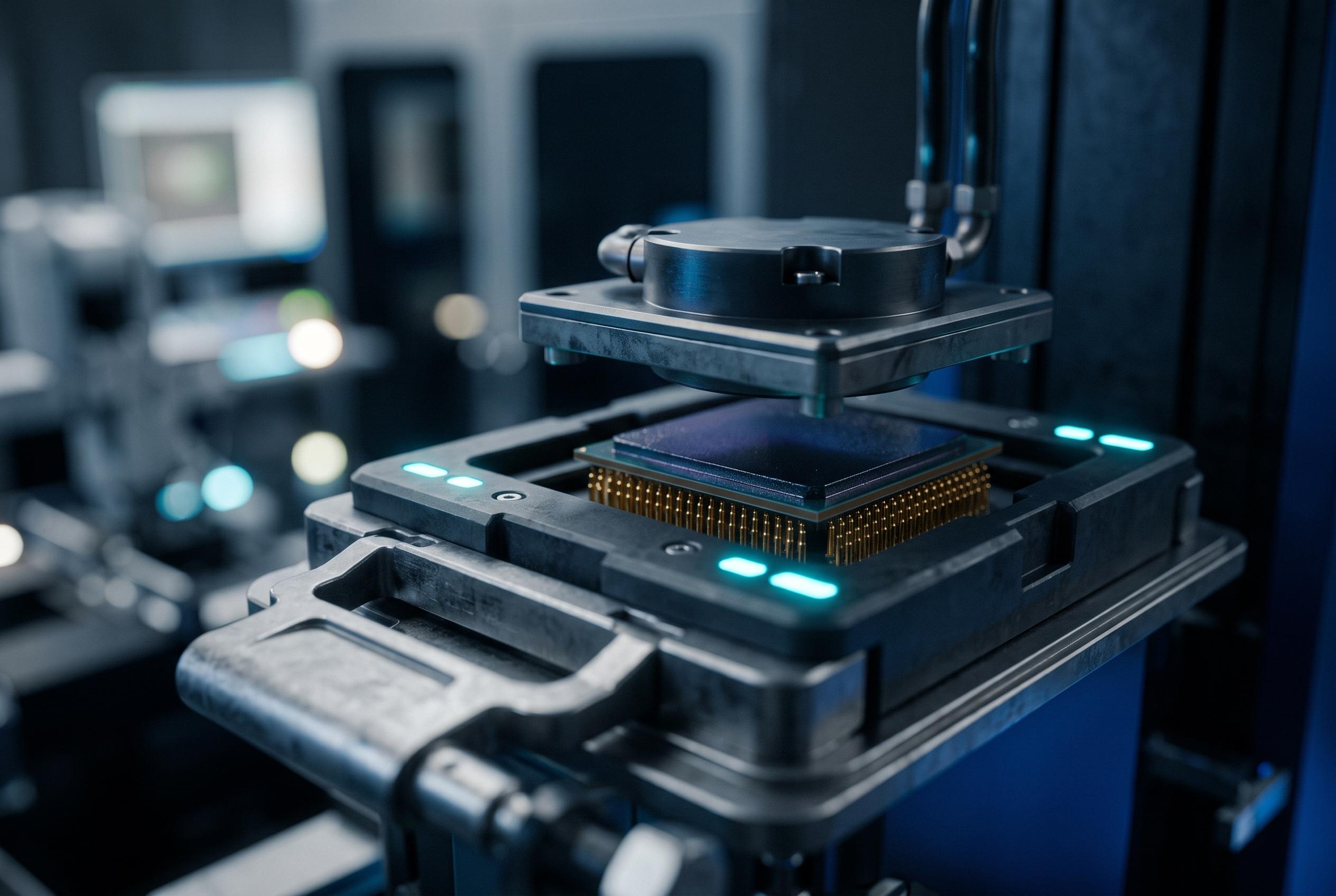
Teradyne is targeting a growing headache in AI hardware: how to test extremely powerful chips without relying solely on sprawling oven banks. Its Titan HP platform combines system-level testing with device-specific thermal stress, giving manufacturers a more flexible way to check reliability before costly accelerators reach data centers.
AI chips are becoming reliability-critical hardware
A failed AI accelerator isn't just a bad component. In a deployed server rack, it can disrupt expensive computing capacity, delay services, and create a very awkward repair bill. That's helping push AI and cloud-infrastructure silicon toward reliability expectations once associated mainly with automotive electronics.
Teradyne's answer is an enhanced burn-in system for its Titan HP platform. According to the company's investor release, the system is production-ready and already deployed, giving manufacturers a way to combine reliability stress with system-level testing rather than treating them as entirely separate steps.
The practical appeal is easy to understand. Instead of putting devices through a generic heat cycle and checking them later, engineers can stress each part while it performs a more representative workload. It feels less like warming up a sample in an oven and more like putting the chip through a demanding rehearsal.
Why conventional burn-in is under pressure
Traditional burn-in typically places devices in dedicated ovens held at a controlled air temperature for hours. That approach remains useful, but it can become cumbersome when newer accelerators draw substantial power and release large amounts of heat.
Teradyne's Titan HP uses per-device thermal control, allowing each test site to target the device's junction temperature. The company says the system also provides high power delivery at the individual-device level, which matters when a single AI chip can challenge the electrical and cooling limits of older test flows.
This shift arrives as manufacturers and outsourced semiconductor assembly and test providers face tighter constraints on capital, factory space, and handling capacity. Industry coverage from StreetInsider and TMCnet describes the platform as a response to the changing requirements of advanced AI and data-center devices.
Each test slot works on its own schedule
One of Titan HP's more practical features is its asynchronous slot architecture. Each position can load and test independently, so a lengthy stress run on one device doesn't automatically leave the other slots sitting idle.
That matters on a production floor, where small inefficiencies multiply quickly. Technicians can also service individual sites while the wider system continues operating, according to Teradyne's product information and coverage from iConnect007.
For manufacturers, the benefit isn't only speed. More independent control can mean better use of equipment, fewer unnecessary pauses, and a clearer view of where a problem is occurring. In a high-volume environment, that kind of quiet efficiency is often more valuable than a flashy headline specification.
A single record could make failure analysis easier
Titan HP is designed to support both system-level test and reliability testing. For reliability work, Teradyne says each device can carry its full stress-and-test history in one record.
That traceability could help engineers connect a later failure with the conditions the device experienced earlier. It may also simplify conversations between chip designers, packaging teams, test houses, and data-center customers, particularly when a component has passed through several testing stages.
The software layer is part of the pitch, too. Programs run through Teradyne's Atlas platform, which supports importing existing programs, creating new ones, and moving them across other Teradyne system-level test systems, according to the company's product materials.
What this means for future AI hardware
The broader message is that AI chip testing is becoming a moving target. As accelerators grow more powerful, a test platform needs to handle not just higher performance but also greater heat, current, and reliability risk.
Teradyne says its per-device power roadmap is intended to follow the requirements of future AI accelerators. That could give customers a way to extend an existing testing strategy instead of replacing the whole approach every time chip power rises.
For manufacturers choosing a high-power AI chip burn-in system, the sensible questions are straightforward: Can each device be controlled independently? Does the system capture useful stress history? Can it reuse current test programs? And will its power and thermal capacity still look comfortable a few product generations from now?
AI hardware may be moving at remarkable speed, but reliability testing can't afford to be an afterthought. Teradyne's approach reflects a market learning that expensive chips need a more realistic, more traceable workout before they enter the rack.
It's a small-looking change in test flow that could make a big difference to confidence in the data center.
Disclaimer: This article may have been created with AI assistance and reviewed by our editorial team. It is provided for general informational purposes only. Readers should verify information independently before relying on this content.
