


Part 1. Why DTG Printing Matters for Small Businesses
Direct-to-Garment (DTG) printing has transformed the custom apparel industry, providing small businesses with a cost-effective solution for low-volume orders. With 68% of consumers willing to pay more for personalized products as per Statista, choosing the right DTG printer can give you a significant competitive edge.
Finding DTG Printer Suppliers on Global Sources

Are you aware of how sellers on platforms like Amazon, Temu, Wish, eBay, Shein, and Walmart find suppliers for their products?
When it comes to major purchases, sellers often establish long-term strategic partnerships with manufacturers while also looking for trusted wholesalers at trade shows. In this digital age, finding verified suppliers through reputable online B2B platforms has become a common and effective practice.
One standout B2B platform is Global Sources. For over 50 years, Global Sources has been one of the largest facilitators of Business-to-Business (B2B) trade, earning a reputation as a reliable and safe sourcing platform.
With an impressive track record, Global Sources has served over 10 million registered buyers and users worldwide, including 97 of the world's top 100 retailers. It caters to online sellers across various platforms, providing access to a diverse array of trusted suppliers from countries like China, Vietnam, South Korea, and India.
Part 2. Top 10 DTG Printers for Small Businesses (2025 Edition)
Curated based on print quality, ROI, and SME adaptability
1. Epson SureColor F2100
- Price: $18,000–$22,000
- Standout Feature: 1440 x 1440 DPI PrecisionCore® printhead for photorealistic details.
- Best For: Businesses requiring museum-grade prints on light/dark fabrics.
- Innovation Point: AI-driven color calibration for 99% Pantone® accuracy.
See OEM and private label suppliers offering similar products best for beginners:

Manufacturer Wifi RF-TS1 Mobile App DTG Printer A3 Direct To Garment for Light Color T- shirt

Cheap DTG T-shirt Printer A3 Size 33*60cm Multicolor Digital Direct To Garment Printing Machine Tshirt DTG Printer Machine
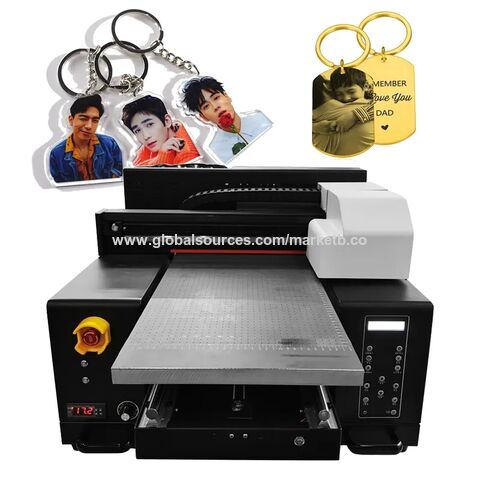
Metal Card A3 LED UV Flatbed Printer UV DTG Printer Machine Pet Film Transfer Crystal Gilding Label Sticker Printing Machines
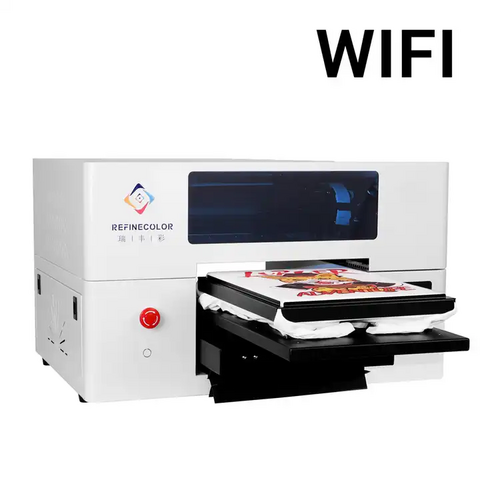
Digital inkjet DTG T-shirt printer for printing textiles of A3 size
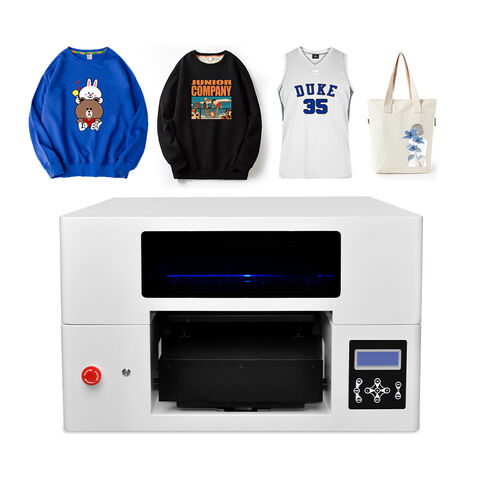
Cheap A3 Size 33*60cm Multicolor Digital DTG T-shirt Printer Direct To Textile Printing
2. Brother GTX Pro 6
- Price: $16,000–$20,000
- Standout Feature: Dual-printhead system capable of printing 15 shirts/hour.
- Best For: High-speed production without compromising quality on dark fabrics.
- Innovation Point: “Smart Cure” technology reduces drying time by 40%.
3. Ricoh Ri 1000
- Price: $14,500–$18,000
- Standout Feature: Modular design for easy upgrades, such as adding a 10-color ink system.
- Best For: Scalable operations planning to expand into hoodies or tote bags.
- Innovation Point: Cloud-based remote monitoring via Ricoh’s SmartHQ platform.
4. DTG Cube 5S
- Price: $12,000–$15,000
- Standout Feature: Built-in automatic pretreatment system.
- Best For: Startups seeking a “plug-and-play” solution.
- Innovation Point: Self-cleaning nozzles minimize downtime.
5. Kornit Breeze Pro
- Price: $20,000–$25,000
- Standout Feature: Waterless printing technology.
- Best For: Eco-conscious brands aiming for zero wastewater.
- Innovation Point: UV-resistant inks with a 10-year fade guarantee.
6. Anajet Sprint 2500
- Price: $8,000–$10,000
- Standout Feature: Compact size, fits in 25 sq. ft. spaces.
- Best For: Home-based businesses or pop-up shops.
- Innovation Point: “InkSave” mode cuts ink costs by 30%.
7. M&R Langston XD
- Price: $22,000–$28,000
- Standout Feature: Hybrid DTG + screen printing capabilities.
- Best For: Brands combining limited-edition screen prints with on-demand DTG.
- Innovation Point: Dual-mode ink system (water-based + plastisol).
8. ColDesi Avalanche MP5
- Price: $13,000–$16,000
- Standout Feature: Wi-Fi Direct for wireless printing from mobile devices.
- Best For: Designers needing instant print approvals via smartphones.
- Innovation Point: NFC-enabled ink cartridges for automated tracking.
9. Epson F3070
- Price: $25,000–$30,000
- Standout Feature: Dual-pallet system capable of printing 25 shirts/hour.
- Best For: High-volume shops with tight deadlines.
- Innovation Point: Predictive maintenance alerts via Epson Connect.
10. DTG Mini 4
- Price: $5,000–$7,000
- Standout Feature: Lowest entry cost in the DTG market.
- Best For: Hobbyists transitioning to commercial printing.
- Innovation Point: Plug-in templates for Shopify and Etsy integration.
Part 3. 5 Critical Factors When Buying a DTG Printer
(With Weighted Decision Matrix)
| Factor | Weight | Key Considerations |
|---|---|---|
| 1. Total Cost | 25% | - Initial investment vs. ink costs (0.35−0.35−0.60 per print) - Warranty coverage duration |
| 2. Print Quality | 30% | - Minimum resolution 1200x1200 DPI - White ink opacity levels (≥92%) |
| 3. Maintenance | 20% | - Automatic head cleaning cycles - Nozzle check frequency |
| 4. Software | 15% | - RIP software compatibility - Color management tools |
| 5. Throughput | 10% | - Optimal: 30-50 shirts/hour for small batches |
Source: 2024 DTG Industry Benchmark Report
Part 4. Must-Have Technical Features Breakdown
A. Ink System Innovations
- Dual-Pump White Ink: Prevents sedimentation (critical for >20hr/week operations)
- CMYK+WG/W Configuration: Enables neon/metallic effects
B. Smart Calibration Tools
- Automatic media thickness detection
- Humidity compensation sensors
C. Eco Mode Advancements
- Water-based ink systems reducing wastewater by 60% vs. traditional models
Part 5. Strategic Applications & Profit Margins
| Application | Avg. Order Size | Profit Margin | Technical Requirement |
|---|---|---|---|
| Event Merchandise | 50–200 units | 45–60% | Fast drying (<90s cure) |
| Premium Athleisure | 20–100 units | 55–75% | Stretch fabric compatibility |
| Limited Editions | 10–50 units | 65-85% | High-definition gradients |
Part 6. FAQs
What is the best DTG brand?
When it comes to Direct-to-Garment (DTG) printing, the best brand often depends on your specific business needs, budget, and production requirements. Several brands consistently rank among the top due to their innovation, reliability, and quality.
Epson is widely regarded as one of the best DTG brands. Their models, such as the Epson SureColor F2270 and F1070, deliver exceptional print quality, durability, and ease of use. Epson’s printers are known for their advanced PrecisionCore technology, which ensures high-resolution prints and consistent performance.
Brother is another leading brand, with its GTX Pro series particularly favored among small businesses. Their printers are celebrated for their speed, low maintenance, and ability to handle high production volumes without compromising quality.
Kornit is ideal for businesses focused on eco-friendly printing. Their printers, like the Kornit Breeze, integrate pre-treatment systems and use water-based inks, making them a sustainable choice. Kornit’s machines are also versatile, capable of printing on a wide range of fabrics.
Ricoh offers more affordable options, such as the Ri 1000 and Ri 6000, which are perfect for startups and small businesses. These printers are user-friendly, compact, and produce high-quality prints, making them a great entry point into the DTG market.
Ultimately, the "best" brand depends on your business goals. If you prioritize eco-friendliness, Kornit is a top choice. For affordability and ease of use, Ricoh is excellent. For high-quality, professional-grade printing, Epson and Brother are industry leaders. Researching your specific needs and testing the printers before purchase can help you make the best decision.
Is a DTG business profitable?
Yes, a DTG business can be highly profitable, especially with the growing demand for custom apparel. DTG printing allows businesses to offer personalized, on-demand designs, which are increasingly popular among consumers looking for unique, custom-made clothing.
One of the key advantages of DTG printing is its low setup cost compared to traditional screen printing. You don’t need to create screens or manage a large inventory, as DTG enables on-demand printing. This reduces initial investments and minimizes waste, making the business more cost-efficient.
Profit margins in a DTG business can vary depending on factors like pricing, volume, and operational efficiency. Typically, a custom-printed T-shirt can be sold for $20 to $50, while production costs (including ink, labor, and the garment) range from $5 to $15. This leaves room for a healthy profit margin, especially for small batches or unique designs.
Additionally, DTG printing supports a wide range of products, from T-shirts and hoodies to tote bags and hats. This versatility allows businesses to expand their product offerings and cater to different customer segments, increasing revenue potential.
Profitability also depends on effective marketing and customer acquisition. Leveraging online platforms like Etsy, Shopify, or social media can help reach a broader audience. Building a strong brand identity and offering excellent customer service further enhance profitability.
While the initial investment in a DTG printer can be significant (ranging from $10,000 to $30,000), the return on investment can be substantial if the business is managed efficiently. With the right strategy, a DTG business can thrive in today’s competitive market.
Is DTG or DTF better quality?
Both Direct-to-Garment (DTG) and Direct-to-Film (DTF) printing have their strengths, and the "better quality" option depends on the application and material.
DTG printing is known for its ability to produce high-resolution, vibrant, and detailed prints, especially on cotton fabrics. It excels in creating soft, breathable designs that integrate seamlessly with the garment. DTG is ideal for intricate artwork, gradients, and photographic images, as it uses water-based inks that absorb into the fabric. The result is a soft finish that feels like part of the garment, rather than sitting on top of it.
DTG has limitations when it comes to fabric types. It works best on 100% cotton or cotton blends and may not perform as well on synthetic materials like polyester. In addition, DTG requires pre-treatment for dark garments, which can add time and cost to the process.
DTF printing, on the other hand, offers greater versatility in terms of fabric compatibility. It can print on a wide range of materials, including cotton, polyester, and even leather. DTF designs are printed on a film and then heat-transferred onto the garment, creating a durable layer on top of the fabric. While DTF prints are vibrant and long-lasting, they can feel slightly thicker or less breathable compared to DTG.
In summary, DTG is better for high-quality, soft finishes on cotton garments, while DTF is ideal for versatility and durability across various fabrics. The choice depends on your specific needs—if quality and softness are priorities, DTG is the way to go. For broader fabric compatibility, DTF is a better option.
Is DTG cheaper than screen printing?
The cost comparison between Direct-to-Garment (DTG) and screen printing depends on factors like order size, setup costs, and production requirements.
DTG printing is generally cheaper for small orders or one-off designs as it doesn’t require screens or stencils, which are costly and time-consuming to create in screen printing. With DTG, you can print directly onto garments, making it ideal for on-demand or personalized items. The per-unit cost of DTG can be higher due to the cost of ink and slower printing speeds.
For example, printing a single custom T-shirt with DTG might cost $5 to $15, depending on the design and garment. In contrast, screen printing requires a significant upfront investment in creating screens, which can cost $20 to $50 per color. This makes screen printing more expensive for small batches but more economical for large orders.
Screen printing, on the other hand, becomes cheaper as the order size increases. Once the screens are created, the cost per print drops significantly, making it the preferred method for bulk orders. Screen printing also allows for vibrant, long-lasting designs, especially on bold, solid colors.
In terms of equipment, DTG printers are more expensive upfront, with prices ranging from $10,000 to $30,000. Screen printing equipment can be more affordable initially, but the ongoing cost of screens and setup adds up over time.
In conclusion, DTG is cheaper for small-scale, customized printing, while screen printing is more cost-effective for large-volume orders. The choice depends on your business model—if you focus on personalization and small batches, DTG is ideal. For bulk production, screen printing is the better option.

