




Artificial intelligence is no longer a futuristic concept for the events industry but a present-day reality reshaping how planners work, how attendees experience events, and how organizers measure success. From intelligent matchmaking and real-time translation to predictive analytics and automated content creation, AI is streamlining operations while delivering hyper-personalized experiences at scale.
This comprehensive guide explores what AI means for events, how it's changing the industry, practical applications across the event lifecycle and what the future holds for professionals ready to embrace this transformative technology.
What Does “AI in Events” Mean?
In the events industry, artificial intelligence refers to technology using machine learning and automation to streamline planning, analyze attendee data and deliver personalized experiences. According to the Skift Meetings Megatrends 2025 report, AI enables "personalized experiences, enhanced networking opportunities, and improved analytics" throughout the event lifecycle.
Rather than replacing human professionals, AI acts as a tireless assistant that handles repetitive tasks like content drafting and data analysis. This allows event planners to focus on creative strategy and high-level decision-making. The technology spans the entire event journey: pre-event chatbots handle registration queries, while predictive analytics inform marketing strategies and optimize outreach efforts before the event even begins.
During events, facial recognition speeds check-in, real-time translation breaks language barriers, and intelligent matchmaking connects attendees with relevant peers or sessions. Post-event, AI analyzes feedback through sentiment analysis and generates actionable reports. With the Amex GBT Meetings & Events 2025 Global Forecast reporting that 50 percent of meeting planners are now using AI, this technology is rapidly becoming essential to modern event strategy.
How is AI Changing the Events Industry?
Artificial intelligence is fundamentally reshaping the events industry by shifting it from a manual, one-size-fits-all approach to an automated, hyper-personalized model. Across planning, execution and follow-up, AI technologies are streamlining operations, enhancing attendee experiences and providing data-driven insights that were previously impossible to capture.
From robotic concierges like Hilton's "Connie" handling guest queries to generative AI tools assisting with content creation, the industry is witnessing a transformation that makes events more efficient, accessible and engaging.
Here are the key ways AI is changing events:
- Intelligent Matchmaking and Networking
AI algorithms analyze attendee profiles, preferences and behaviors to suggest relevant connections, sessions, and exhibitors. By processing data from event apps and registration systems, AI creates personalized networking opportunities that would be impossible to facilitate manually, helping attendees find the right people and content to maximize their event value.
- Real-Time Translation and Transcription
AI-powered translation and transcription tools are breaking down language barriers and making events more accessible. These technologies automatically generate captions, translate sessions into multiple languages and repurpose content for future marketing, allowing event organizers to extend their reach and create more inclusive experiences for global audiences. - Streamlined Operations and Automation
From registration to on-site logistics, AI automates time-consuming manual tasks. Facial recognition technology enables seamless check-in, chatbots handle attendee inquiries 24/7 and robots assist with concierge services. This automation reduces staff workload while improving attendee satisfaction through faster, more efficient service. - Data-Driven Personalization
AI analyzes attendee data, including past behavior, session interactions and feedback, to deliver personalized recommendations and targeted marketing campaigns. This enables event organizers to customize agendas, suggest relevant sessions and communicate with attendees in ways that feel individually tailored, significantly enhancing engagement and satisfaction. - Enhanced Data Analysis and Insights
One of AI's most powerful applications is its ability to capture and analyze event data in real time. AI tools identify trends, summarize feedback through sentiment analysis and generate comprehensive post-event reports. These insights help organizers understand attendee preferences, measure success and continuously improve future events. - Generative AI for Content and Creativity
Tools like ChatGPT are now integral to event teams, assisting with venue research, marketing campaign ideation, presentation creation and copywriting. From drafting social media posts to producing long-form articles and creative assets, generative AI accelerates content production while allowing teams to focus on strategy and refinement.
Key Applications of AI in Events
Artificial intelligence is transforming every phase of the event lifecycle, from initial planning to post-event analysis. By automating repetitive tasks, personalizing attendee experiences and delivering real-time insights, AI enables event professionals to work smarter and create more impactful events.
Below is a comprehensive breakdown of how AI is being applied across the three core stages of event management.
Pre-Event: Smarter Planning and Preparation
- Venue and Vendor Sourcing
AI-powered platforms like Cvent Vendor Marketplace use intelligent matching algorithms to pair planners with the best-fit venues and suppliers based on criteria such as geography, group size, event dates and target audience. This eliminates hours of manual research and comparison shopping. - Smart Scheduling and Coordination
Tools like Clockwise and Reclaim analyze multiple calendars to optimize meeting times for planning teams, automatically suggesting the most efficient scheduling options and reducing the headache of coordinating across stakeholders. - Content Creation and Marketing
Generative AI tools help planners overcome creative blocks by drafting emails, social media copy, landing pages, and even full presentation decks. Platforms like Cvent's AI Writing Assistant and Beautiful.ai accelerate the process from blank page to first draft, while tools like HubSpot and Mailchimp use AI to optimize email campaign timing and messaging for maximum engagement. - Personalized Recommendations
By analyzing attendee data from registrations, including past behavior, preferences, and interests, AI algorithms generate personalized session suggestions, targeted marketing campaigns and customized agendas. This data-driven approach ensures attendees receive relevant information before the event even begins. - Automated Registration and Check-In Setup
AI streamlines the registration process by powering chatbots that guide attendees through sign-up, answer FAQs and surface agenda highlights. Facial recognition technology can also be configured pre-event to enable seamless on-site check-in later.
During-Event: Real-Time Engagement and Efficiency
- AI-Powered Chatbots
Available 24/7 on event websites, social channels and messaging apps, chatbots handle repetitive attendee queries about schedules, directions and logistics. This reduces strain on on-site staff while ensuring attendees receive instant, accurate responses throughout the event. - Facial Recognition and Seamless Check-In
Platforms like Cvent and Premagic use facial recognition technology to speed up attendee entry, reduce wait times and even distribute event photos to the individuals featured in them. This creates a frictionless arrival experience and enhances security. - Real-Time Translation and Captioning
Tools such as Interprefy and Wordly.ai deliver live speech translation and captioning in multiple languages, making events more accessible to global audiences. Attendees can listen or read in their preferred language from any device, eliminating language barriers without requiring human interpreters. - Intelligent Matchmaking and Networking
AI analyzes attendee profiles, interests and session interactions to suggest relevant connections, exhibitors and networking opportunities. Platforms like Grip provide customized attendee lists within event apps, facilitating meaningful conversations and reducing the intimidation factor of traditional networking. - Real-Time Data Analysis
During the event, AI collects and analyzes data from attendee feedback, social media interactions and app usage. These real-time insights allow organizers to make on-the-fly adjustments – such as redirecting foot traffic or modifying session formats – to improve the attendee experience immediately. - Accessibility Enhancements
AI-powered automatic transcription and live captioning ensure content is accessible to attendees with hearing impairments, while translation tools support non-native speakers, fostering a more inclusive event environment.
Post-Event: Deep Insights and Continuous Improvement
- Sentiment Analysis
Using natural language processing (NLP) and machine learning, AI sentiment analysis tools evaluate attendee feedback, social media mentions and survey responses to identify positive, negative and neutral sentiment. Platforms like Qualtrics and SurveyMonkey provide deep insights into how attendees truly felt about the experience.
2. Automated Report Generation
AI excels at processing large volumes of event data – registration numbers, session attendance, engagement metrics and feedback – to generate comprehensive post-event reports. These reports highlight trends, uncover insights that humans might miss and provide actionable recommendations for future events.
3. Feedback Summarization
Instead of manually sifting through hundreds of survey responses, AI tools can summarize key themes and pain points, giving planners a clear understanding of what worked and what needed improvement.
4. Content Repurposing
AI-powered transcription and translation tools make it easy to repackage event content for future use. Recorded sessions can be automatically transcribed, subtitled, and transformed into blog posts, social media content or marketing materials, extending the life and value of event assets.
5. Data-Driven Future Planning
The insights gathered through post-event AI analysis feed directly into marketing strategies and attendee communications for future events. By understanding attendee preferences and behaviors, planners can continuously refine their approach, delivering increasingly personalized and successful experiences over time.
Global Sources in Action: AI-Powered Innovation at Hong Kong Shows
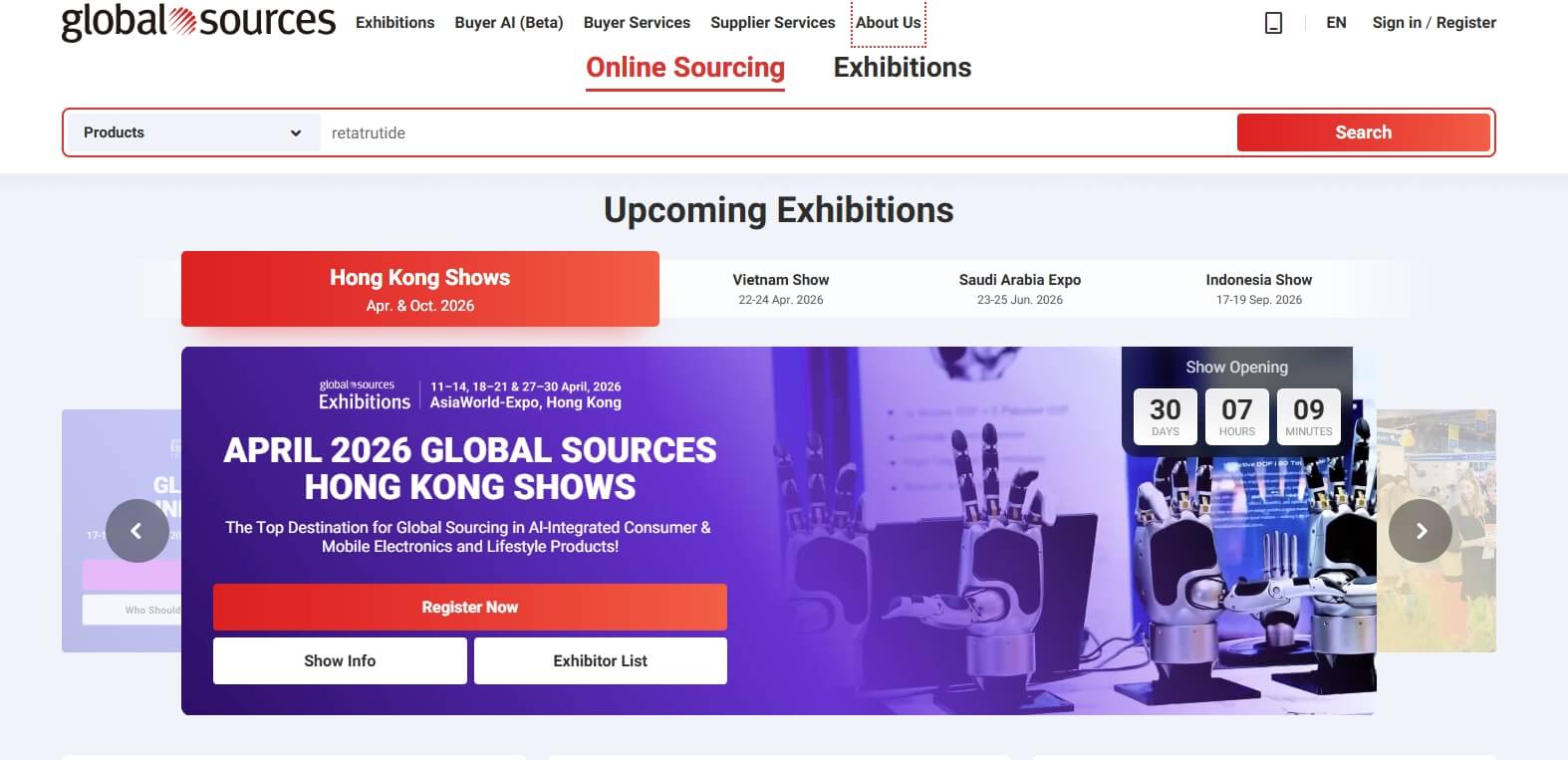
As a leading B2B sourcing platform with over 50 years of experience, Global Sources is at the forefront of integrating AI technology into physical trade shows. Our Hong Kong shows demonstrate how AI is transforming both the products on display and the event experience itself.
Here's how Global Sources is bringing AI to life on the show floor.
Dedicated AI Pavilion Showcasing Cutting-Edge Innovation
In October 2025, Global Sources launched its inaugural "AI Pavilion" at the Hong Kong shows, featuring over 1,200 booths across seven major application scenarios . This dedicated space spotlights AI smart terminals, AI wearables, AI glasses, AI toys, AI pet products, AI personal health care and other AI innovations.
The pavilion provides global B2B buyers with a comprehensive destination to explore the latest breakthroughs in AI hardware ecosystems – from smart rings integrating DeepSeek and ChatGPT for proactive health alerts to AI translation earbuds enabling seamless cross-border communication.
AI-Enabled Products Across Every Category
Across all phases of the Hong Kong shows, AI technology now permeates virtually every product category. Phase II alone brings together over 2,000 exhibitors showcasing approximately 150,000 innovative products where AI serves as the core differentiator.
Exhibitors like Creek Wearable demonstrate AI's potential by embedding large language models directly into hardware, enabling real-time behavior analysis and proactive service recommendations. Companies like ZWEAR debut AI smart glasses with integrated simultaneous translation and meeting recording capabilities – solutions that directly address the needs of international business travelers and sourcing professionals.
AI-Powered O2O Sourcing Experience
Global Sources leverages its 30-year GSOL database and advanced AI technologies to enhance the online-to-offline sourcing experience . Tools like "Show Genie" and AI-powered matchmaking help buyers navigate thousands of exhibitors efficiently, connecting them with suppliers that best match their sourcing requirements.
This hybrid approach – combining physical exhibition experiences with AI-driven digital tools – creates a seamless ecosystem where global buyers can preview products online, schedule meaningful meetings in advance and maximize their on-site time at AsiaWorld-Expo .
Interactive Experiences and Industry Recognition
Beyond static displays, our shows feature AI robot demonstration areas where visitors can experience human-robot interaction up close, including advanced robotics demonstrating sophisticated motion planning and real-time control.
The Global Sources Summit and AI & Robotics Summit (AIRS) bring together industry experts to explore topics like consumer AI gadget trends, robotics-as-a-service, and AI commercialization paths. Our Innovation Awards now include a dedicated "AI Innovation Award" and partnership with the European Product Design Award (EPDA)™, recognizing exhibitors pushing the boundaries of AI technology and design.
10 Advantages of Using AI in Events
Artificial intelligence offers transformative benefits across the entire event lifecycle, empowering organizers to work smarter, deliver richer experiences, and unlock insights previously hidden in data. Below are the key advantages of integrating AI into events:
1. Enhanced Efficiency and Productivity
AI automates time-consuming manual tasks that traditionally drain event teams' energy – from sourcing venues and comparing vendors to scheduling meetings and managing logistics. Tools like Cvent Vendor Marketplace and smart scheduling assistants handle the heavy lifting, allowing planners to accomplish in minutes what once took hours or days.
2. Hyper-Personalized Attendee Experiences
By analyzing attendee data – including past behavior, preferences and registration details – AI delivers tailored recommendations for sessions, networking opportunities and exhibitors. This personalization extends to marketing communications, with AI crafting customized invites and content that resonate with each recipient's specific interests.
3. Data-Driven Decision Making
AI excels at processing vast amounts of data to identify trends, patterns and insights that humans might miss. During events, real-time analytics enable organizers to make on-the-fly adjustments; post-event, AI generates comprehensive reports and sentiment analysis that inform continuous improvement and future strategy.
4. 24/7 Attendee Support and Engagement
AI-powered chatbots provide instant, round-the-clock assistance to attendees, answering questions about schedules, directions and logistics without straining on-site staff. This constant availability enhances the attendee experience while reducing the administrative burden on event teams.
5. Increased Accessibility and Global Reach
AI-powered translation and live captioning tools break down language barriers, making events accessible to international audiences. Attendees can participate in their preferred language, while transcription services ensure content is available to those with hearing impairments, fostering true inclusivity.
6. Accelerated Content Creation
Generative AI tools like ChatGPT help event professionals overcome creative blocks by drafting emails, social media posts, presentations and marketing materials in seconds. This accelerates the production cycle while allowing humans to refine and add the creative touch that AI cannot replicate.
7. Improved Networking Outcomes
AI matchmaking algorithms analyze attendee profiles and interests to facilitate meaningful connections. By suggesting relevant peers, exhibitors and sessions, AI transforms networking from a daunting task into a curated, valuable experience that maximizes ROI for attendees.
8. Streamlined On-Site Operations
Facial recognition technology enables seamless check-in, reducing wait times and improving security. AI-powered task management systems assign responsibilities to staff based on schedules and skills, ensuring nothing falls through the cracks during event execution.
9. Enhanced Creativity Through Collaboration
Rather than stifling human creativity, AI amplifies it. By handling research, data summarization and initial drafts, AI gives event professionals more time and mental space to focus on innovative concepts, emotional connections and the nuanced human elements that define exceptional events.
10. Actionable Post-Event Intelligence
AI transforms feedback collection and analysis, automatically generating surveys and summarizing responses to uncover key themes. Sentiment analysis reveals how attendees truly felt, while data-driven recommendations provide a clear roadmap for improving future events.
The Future of AI in Events: Key Trends and Predictions
As AI technology continues to evolve at breakneck speed, its integration into the events industry will deepen significantly over the coming years. Rather than replacing in-person connections, AI will increasingly handle the logistical and data-driven heavy lifting, allowing event professionals to focus on creativity, hospitality and human interaction.
Here are the key trends shaping the future of events:
1. Advanced Personalization through Predictive Analytics
Future AI systems will move beyond basic recommendations to deliver hyper-personalized experiences powered by predictive analytics. By analyzing attendee data from past events, registration patterns and real-time behavior, AI will anticipate individual needs before attendees even express them – suggesting ideal networking contacts, predicting relevant sessions and even customizing on-site elements like catering based on preferences. This will transform events from one-size-fits-all gatherings into uniquely tailored journeys for every participant.
2. Immersive Experiences with AI-Powered VR and AR
Industry experts predict that AI will supercharge virtual and augmented reality environments, creating immersive experiences that blur the line between physical and digital attendance. AI-driven VR/AR will enable remote attendees to navigate virtual exhibit halls, interact with 3D product demonstrations and engage with speakers in lifelike settings. These technologies will enhance hybrid formats by offering global audiences deeper engagement without replacing the irreplaceable value of in-person connections.
3. Smarter Governance and Ethical AI Integration
As AI becomes more prevalent, regulatory frameworks and ethical guidelines will mature alongside the technology. With initiatives like the EU's Artificial Intelligence Act and proposed AI disclosure legislation in the US, event professionals will need to prioritize transparency around AI usage, data privacy and bias prevention. Organizations that embrace AI responsibly – clearly communicating data usage, safeguarding sensitive information and maintaining human oversight – will build trust and gain competitive advantage.
Conclusion
The integration of AI into the events industry represents not a replacement of human expertise, but its most powerful amplification yet. As this guide has shown, AI technologies are already delivering tangible benefits across every phase of event management – from smarter planning and personalized attendee engagement to deeper post-event insights. With 50 percent of meeting planners adopting AI, the question is no longer whether to embrace these tools, but how quickly and effectively organizations can leverage them.
Global Sources exemplifies this evolution, demonstrating through its Hong Kong shows how AI can simultaneously enhance the products on display and the experience of attending. The future of events belongs to those who recognize AI not as a threat, but as the most valuable assistant – one that handles the repetitive so humans can focus on the remarkable.

