Download App
Better Online and Trade Show Sourcing Experiences.Scan the QR code to download.
Learn More
Hot Topics
by Carlo Padilla (Content Writer)
Automotive lighting may not evolve as frequently as other in-car technologies, but the automotive lighting of today is nevertheless quite different from even just a few years ago. In 2020, the automotive lighting industry was driven by newer technologies that further enhance safety on the road, such as LEDs being continually innovated for use in automotive applications. This year, similar trends will come in as newer technology augmenting LEDs is introduced by major carmakers Audi and Mercedez-Benz.
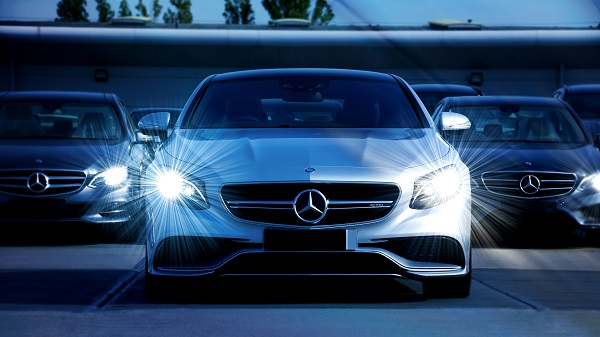 Photo by Mike from Pexels
Innovating taillights from mere signaling devices to lights that can communicate, Audi unveiled digital OLED rear lights with millions of light segments that make them behave like an LED display. The carmaker is the first to manufacture cars with digitized taillights, with the first such model being the updated Audi Q5. The car’s taillights will have 18 small OLED segments containing 1.3 million pixels. As highlighted by car review website Driving.ca, the OLED technology used by Audi in the Q5 can emit segmented lights onto a panel surface with minimal gaps and varying brightness levels between the segments, enabling the display of special animations. To take advantage of this feature, the developers created preset animations that can be triggered by various actions, such as the driver approaching the car or walking away from it after locking. Drivers can personalize these animations as well to give their cars a more customized look.
Moreover, the company is also poised to be the first to develop Digital Matrix LED (DML) headlights, comprising 1.3 million micromirrors that can project images onto a forward surface, essentially giving it the function of a movie theater projector, and is controlled by an in-car MMI touchscreen display. Audi Newsroom’s report on the announcement says the state-of-the-art headlights are offered as an optional extra for the 2021 e-tron and e-tron Sportback models and will have five different pre-installed animations that can be activated when the vehicle is parked.
Ambient lighting fixtures that coordinate with the vehicle’s driver assistance system are boasted by the Mercedes S-Class 2021 luxury sedans. Aside from giving the vehicle’s interior a futuristic look by lining the cabin with transparently coated fiber-optic lighting, these LEDs also serve an important safety function. For instance, the lights can emit a bright red color that would span across the cabin to alert the driver if a possible collision is detected by the vehicle’s blind spot monitor. Adding to the vehicle’s luxury features, the lights also change color according to temperature adjustments the driver makes.
Energy efficiency, greater illumination intensity, longer service life and high flexibility to being modified are some of the benefits offered by LEDs that are encouraging manufacturers to push the technology to its limits and introduce new ways to integrate it into their flagship vehicles. As far as the foreseeable future goes, we’re still looking at LEDs to take the lead in automotive lighting.
This article was first published on Global Sources Hardware, Auto & Machinery. Visit GlobalSources.com to download the whole magazine or subscribe.
More Sourcing News
Read Also

关注 “环球资源外贸” 官方微信,获取实时外贸资讯
iOS & Android
iOS & Android(Mainland China)
Copyright © 2026 Publishers Representatives Limited. All rights reserved.




