

China's economic growth is closely related to the evolution of its exports. In the early days of reform and opening up, China adopted an export-oriented economic strategy, took advantage of its labor cost advantages, vigorously developed its manufacturing industry, and exported a large number of low-cost goods, which provided a strong impetus for China's economic growth. With the continuous development of the economy, China has begun to gradually transform from the "world's factory" to a high-tech and service-oriented economy. During this process, the export structure has also undergone significant changes, from low-end manufactured products in the early stages to high-tech and high value-added products. Today, China not only maintains a leading position in traditional manufacturing, but also shows strong growth momentum in exports in high-tech fields such as electronics, new energy, and information technology. This export evolution process not only promotes the sustained growth of China's economy, but also promotes the optimization and upgrading of China's economic structure.
Table of Contents
The Foundation of China's Export-Led Growth
Diversification and Upgradation of Exports
Navigating Global Trade Dynamics
The Future of China's Export Evolution
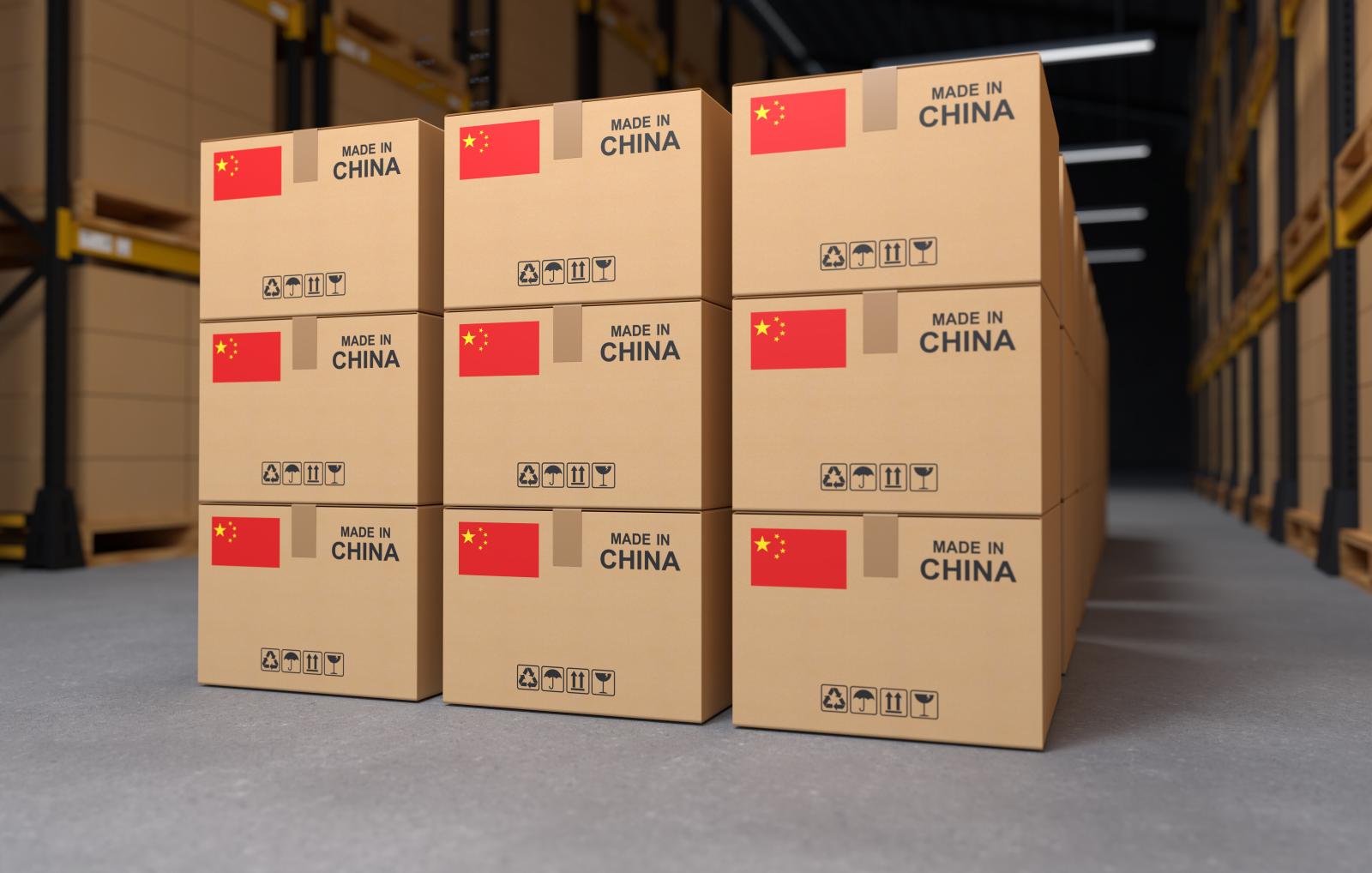
China export details
Main export products
Electronic products and appliances: including smartphones, computers, TVs, etc. China is the world's largest producer and exporter of electronic products.
Mechanical equipment and high-tech products: such as industrial robots, high-speed trains, medical equipment, etc.
Textiles and apparel: China is the world’s largest exporter of textiles and apparel, exporting to all parts of the world.
Toys and sporting goods: China is known as the “Toy Factory of the World”.
Furniture: including office furniture, home furniture, etc.
Automobiles and auto parts: Although Chinese auto brands have a smaller influence globally, the business of exporting auto parts is huge.
Chemical products and plastics: including fertilizers, plastic products, etc.
Steel: China is one of the world's largest steel producers and exporters.
Advantages of exporting products
Cost advantage: China has a large labor market and relatively low production costs is one of the main reasons why its products are competitive in the international market.
Complete supply chain and manufacturing infrastructure: Over the years, China has established a complete supply chain system and manufacturing infrastructure that can efficiently produce a variety of products.
Improvement of technology and innovation capabilities: Especially in the fields of electronic products and high-tech, China is gradually transforming from the "world's factory" into an innovation center.
Government support: The Chinese government supports export business through tax incentives, financial subsidies and other measures.
China export data and rankings
According to data from international institutions such as the World Trade Organization (WTO) and the World Bank, China has remained the world's largest exporter of goods for many consecutive years. In terms of trade in services, China is also one of the world's major service exporters, especially in the fields of tourism, transportation and other business services. China's annual exports have exceeded trillions of dollars, accounting for an important share of the global export market. According to a World Trade Organization (WTO) report, China's import and export scale reached US$5.94 trillion in 2023, US$0.75 trillion ahead of the second-placed United States, maintaining its status as the largest country in global goods trade for seven consecutive years. In the ranking of global goods exporters, China has been at the top or at the forefront for many years.
The Foundation of China's Export-Led Growth
The foundation of China’s export-led growth
Overview of China’s economic reforms in the late 20th century and laying the foundation for export-led growth
In the late 20th century, China implemented a series of far-reaching economic reforms, which laid a solid foundation for its subsequent export-led growth. In 1978, China began its reform and opening up policy, gradually relaxing restrictions on foreign trade and investment, introducing foreign investment, and promoting diversified economic development. During this period, the Chinese government took a number of measures to improve the domestic economic environment, including reforming state-owned enterprises, establishing a modern enterprise system, relaxing market access, optimizing tax policies, etc. These reforms have greatly improved China's production efficiency and international competitiveness.
The role of Special Economic Zones (SEZs) in cultivating an export-oriented economy
The establishment of special economic zones (SEZs) is an important measure in China's economic reform and plays a key role in promoting export-oriented economic development. These areas provide a series of preferential policies, including tax exemptions, land use concessions, simplified administrative procedures, etc., to attract foreign-funded enterprises to invest and build factories, especially in labor-intensive manufacturing industries. The earliest special zones, such as Shenzhen, Zhuhai, and Xiamen, quickly became important windows for China's foreign trade by virtue of their geographical location and policy advantages. They made great contributions to China's economic growth by exporting a large number of labor-intensive products.
Early-stage strategies for integrating into global markets
China's early strategies for integrating into the global market focused on expanding exports and attracting foreign investment. In addition to establishing special economic zones, China has also implemented a series of opening-up policies, such as signing bilateral trade agreements, lowering tariff barriers, and simplifying export procedures, to enhance the competitiveness of its goods in the international market. At the same time, China also actively participates in international economic cooperation and regional economic organizations. Joining the World Trade Organization (WTO) is a milestone event, marking China's formal integration into the global economic system and providing a broader platform for Chinese products to enter the international market. These early strategies not only promoted China's export growth but also laid a solid foundation for its rapid economic development.
Diversification and Upgradation of Exports
Analysis of the transition from labor-intensive to technology-driven exports
The transformation of China's export structure, from labor-intensive products to technology-driven products, marks an important stage in its economic development and industrial upgrading. Behind this transformation is China's improved status in the global supply chain and its continued investment and development in high-tech industries. As domestic labor costs gradually rise, the competitive advantage of relying on low-cost labor is no longer as significant as in the past, prompting China to accelerate the adjustment of industrial structure and technological innovation, and develop more complex and higher-value manufacturing and service industries.
The role of government policy in promoting R&D and innovation
Government policies have played a key role in driving China's shift from labor-intensive exports to technology-driven exports. By formulating a series of policies aimed at encouraging research and development (R&D), technological innovation and intellectual property protection, the Chinese government has effectively promoted scientific and technological progress and industrial upgrading. These policies include providing financial subsidies, tax incentives, innovation financial support, etc., creating a favorable environment for the R&D activities of enterprises and research institutions. In addition, the government has also increased its support for high-tech industrial parks and technological innovation platforms, attracting high-end talents and technology enterprises at home and abroad, further accelerating the pace of technological innovation and industrial upgrading.
Case analysis of key industries in China’s export upgrade: electronics and pharmaceutical industries
The electronics and pharmaceutical industries are two key industries in China's export upgrading process, and their development fully reflects the diversification and upgrading of China's export structure.
Electronics Industry: China's electronics industry has experienced a transformation from simple assembly and processing to having independent intellectual property rights and core technologies, becoming the main production and export base of global electronic products. Exports of high-tech products such as smartphones, computers, and high-end chips have grown rapidly, boosting China's competitiveness in the global electronics market.
Pharmaceutical Industry: With continued investment in pharmaceutical research and development and enhancement of innovation capabilities, China's pharmaceutical industry has also occupied an increasingly important position in the global market. From raw materials to finished drugs, to biopharmaceuticals and vaccines, Chinese pharmaceutical companies are improving product quality and competitiveness and exploring international markets through technological innovation and international cooperation.
The development of these two industries not only demonstrates the trend of China's exports changing from "quantitative expansion" to "qualitative improvement", but also reflects the changes in China's status in the global economy, that is, the importance of transforming from the world's factory to a global innovation center. step.
Navigating Global Trade Dynamics
China’s participation in inspections of global trade organizations, such as the World Trade Organization (WTO)
Since China joined the World Trade Organization (WTO) in 2001, its attitudes and strategies in participating in global trade have undergone significant changes. Joining the WTO not only provides a broader international market for China's goods and services, but also requires China to further open its market and abide by international trade rules. In this process, China has improved its competitiveness in the global trading system by reducing tariffs, simplifying import and export procedures, and improving intellectual property protection. At the same time, China also actively participates in the WTO's multilateral trade negotiations and strives to play a greater role in the formulation of international trade rules.
Manage trade relationship strategies with key partners and competitors, including the United States and the European Union
China’s strategy for managing trade relations with its major trading partners and competitors, especially the United States and the European Union, is critical. Facing the complex and ever-changing international trade environment, China has adopted flexible and diverse strategies to maintain and develop these key trade relationships. This includes high-level dialogue and negotiations through bilateral and multilateral channels to resolve trade disputes and promote mutually beneficial cooperation. At the same time, China is also committed to deepening economic ties with major trading partners by signing free trade agreements (FTAs) and participating in regional economic integration projects, such as the Asia-Pacific Economic Cooperation (APEC) and the Regional Comprehensive Economic Partnership (RCEP).
The impact of trade wars and tariffs on China’s export strategy
In recent years, trade wars and tariff measures have had a significant impact on China's export strategy. Especially during the Sino-US trade war, high tariffs and trade restrictions not only put pressure on China's exports, but also forced China to adjust its export strategies and market diversification plans. Faced with these challenges, China has accelerated the development of the domestic market and upgraded consumption, promoting domestic demand to become a new driving force for economic growth. At the same time, China is also actively looking for new export markets and reducing its reliance on a single market by strengthening economic cooperation with Southeast Asia, Africa, Latin America and other regions. In addition, China has also increased investment in technological innovation and industrial upgrading to enhance the competitiveness of export products in response to changes in the international trade environment.
Challenges and Adaptations
Internal challenges: labor costs, environmental issues and sustainable development needs
In the process of rapid economic development, China faces multiple internal challenges. As the economy grows and the population ages, labor costs rise year by year, which puts pressure on the export model, which is dominated by labor-intensive industries. At the same time, the rapid industrialization process has also brought severe environmental problems, such as air pollution, water shortages, and land degradation. These problems not only affect people's health and quality of life, but also have a negative impact on China's international image and export industry. Influence. In addition, the global demand for sustainable development is increasing, and China needs to find a more environmentally friendly and sustainable development path while maintaining economic growth.
External challenges: changes in global demand, trade policy and geopolitical tensions
In terms of the external environment, changes in global market demand, uncertainty in international trade policies, and geopolitical tensions have all posed challenges to China's export economy. Global economic fluctuations and changes in consumption patterns directly affect the international demand for Chinese products. At the same time, the rise of trade protectionism and changes in the multilateral trading system have made the international trade environment more complex. Geopolitical tensions, such as the Sino-US trade war, have also brought uncertainty to China's foreign trade.
Adaptation and innovation in response to challenges: The Belt and Road Initiative and the Digital Silk Road
Faced with these challenges, China has adopted a series of adaptation measures and innovative strategies. The Belt and Road Initiative (BRI) is one of the important initiatives. By promoting infrastructure construction and economic cooperation, it aims to strengthen trade links between China and countries along the route, open up new export markets, and also promote China's industrial and technological exports. As an important part of the Belt and Road Initiative, the Digital Silk Road has strengthened the information connection between China and the world and improved trade efficiency and service quality through the development of cross-border e-commerce, digital economy and communication technology.
In addition, China is actively promoting industrial upgrading and technological innovation, improving the added value and competitiveness of export products through the development of high-tech industries and green economy, while responding to global demands for environmental protection and sustainable development. Through these internal and external adjustments and innovations, China is working hard to overcome development challenges and seek a more balanced and sustainable economic growth path.
The Future of China's Export Evolution
Potential Impact of Emerging Technologies on China’s Export Patterns
With the rapid development of emerging technologies such as artificial intelligence (AI) and blockchain, they have had a profound impact on China's export model. The application of artificial intelligence technology can improve the automation and intelligence level of the manufacturing industry, optimize production processes, reduce costs, and improve product quality and production efficiency. The application of blockchain technology in supply chain management can improve transparency and tracking capabilities, reduce transaction costs and time, and enhance trust in exported goods. The integrated use of these technologies can not only promote the development of China's export products in the direction of high technology and high added value, but also help China improve its competitiveness in global trade.
China’s role in shaping global trade norms and practices
As an important participant in global trade, China plays an increasingly important role in shaping future global trade norms and practices. By actively participating in the multilateral trading system, promoting the signing of free trade agreements, and playing a greater role in international trade organizations, China is working hard to promote a fairer and more open international trade environment. At the same time, China is also promoting infrastructure construction and economic integration through multilateral cooperation platforms such as the Belt and Road Initiative, and promoting global trade and investment liberalization.
Forecast on the evolution of China’s exports in the face of global economic changes and post-epidemic recovery
In the face of global economic uncertainty and the post-epidemic recovery process, China's export evolution will continue to adapt to changes in the global market. On the one hand, China will continue to promote the upgrading of its industrial structure, increase investment in high-tech industries, and improve the technical content and added value of export products. On the other hand, China will also strengthen its connection with the global market and expand new channels for international trade through digital transformation and the development of cross-border e-commerce. In addition, as the global economy gradually recovers, China will use its advantages in the supply chain and manufacturing industry to strengthen cooperation with international partners and respond to the challenges and opportunities of the global economy. Overall, China's export evolution will move towards more diversified, high-quality and sustainable development, contributing to the recovery and growth of global trade.
FAQS
1. What are China’s main export products?
China's export products are very diverse, including electronic products (such as mobile phones, computers, etc.), machinery and equipment, clothing and textiles, furniture, toys, plastic products, automobiles and their parts, steel products, chemical products, and pharmaceuticals.
2. What is China’s largest export market?
China's largest export market is the United States, followed by the European Union, Japan, ASEAN countries and South Korea.
3. How does China respond to trade wars and tariff barriers?
China responds to trade wars and tariff barriers in a variety of ways, including negotiating with trading partners to seek ways to resolve disputes; promoting industrial upgrading and technological innovation to improve the competitiveness of export products; and strengthening economic cooperation with other countries and regions. Diversify export markets and reduce reliance on a single market.
Conclusion
China's export strategy is likely to continue along the path of technological innovation and industrial upgrading, while strengthening considerations of environmental protection and sustainable development. As the global economy continues to change and emerging markets rise, China is likely to seek more diversified export markets and trading partners to reduce reliance on a single market. In addition, the development of the digital economy, the rise of cross-border e-commerce and the deepening of international cooperation will provide new opportunities for China's export strategy. In the global economic landscape, China's economic policies and export strategies will continue to have a profound impact on the development of the world economy and the international trading system. As China plays an increasingly important role in the global economy, the future direction of its export strategy and global economic impact will be the focus of common concern of the international community.
Also Read:

