




Table of Contents
Strategic Pre - Event Planning Framework
Supply Chain - Aligned Exhibition Logistics Design
Advanced Supplier Qualification Protocols
Total Cost Management in Exhibition Participation
Post - Event Value Realization Strategies
Global Procurement Intelligence Solutions
In the dynamic landscape of global procurement, trade shows have emerged as crucial platforms for supply chain optimization. They offer unparalleled opportunities for procurement leaders to connect with suppliers, explore new products and services, and drive strategic initiatives. This comprehensive guide will delve into the various aspects of strategic trade show management, providing a roadmap for achieving exhibition excellence and maximizing supply chain benefits.
Strategic Pre - Event Planning Framework
Aligning Exhibition Objectives with Organizational Procurement Goals
The first step in strategic trade show management is to align the exhibition objectives with the broader organizational procurement goals. This involves developing cross - functional key performance indicators (KPIs) that bridge trade show participation with enterprise - wide supply chain improvements.
Vendor Portfolio Diversification: A well - diversified vendor portfolio is essential for reducing supply chain risk. By establishing a minimum of 30% alternative supplier coverage across critical SKU categories, procurement leaders can ensure continuity of supply. For example, in the automotive industry, a manufacturer that relies on a single supplier for a key component is vulnerable to disruptions such as natural disasters or labor strikes. Diversifying the vendor portfolio can mitigate these risks.
Operational Efficiency Gains: Targeting an 18 - 22% reduction in order - to - delivery cycle times through process reengineering can significantly improve the overall efficiency of the supply chain. This can be achieved by streamlining internal processes, collaborating more closely with suppliers, and leveraging technology. For instance, implementing an electronic data interchange (EDI) system can automate the order - processing cycle, reducing errors and delays.
Cost Avoidance Mechanisms: Implementing tiered pricing structures with pre - qualified vendors can help in cost avoidance. By negotiating volume - based discounts and favorable payment terms, procurement teams can reduce the overall cost of procurement. Gartner's Supply Chain Risk Management Study reported that global automotive manufacturers achieved a 42% supply chain risk reduction through strategic exhibition participation in 2024. This highlights the importance of aligning trade show objectives with supply chain goals.
Exhibition Selection Matrix for Procurement Success
Evaluating global trade events using a weighted criteria matrix is crucial for selecting the most relevant and beneficial trade shows.
Supplier Concentration Index (35%): This parameter measures the density of suppliers in a particular trade show. A higher supplier concentration index indicates a greater opportunity to meet a large number of potential suppliers. Third - party exhibitor verification can be used to validate this data.
Transportation Infrastructure Score (28%): The quality of transportation infrastructure around the trade show venue is important for the smooth movement of goods and personnel. Port authority capacity reports can provide valuable insights into the transportation capabilities of the area.
Minimum Order Flexibility (20%): Pre - event request for information (RFI) analysis can help in determining the minimum order flexibility offered by suppliers at the trade show. This is important for procurement teams that may have varying order requirements.
Compliance Certification Status (12%): Global certification registries can be used to verify the compliance certification status of suppliers. This ensures that the suppliers meet the necessary quality, environmental, and ethical standards.
Payment Term Benchmarking (5%): Historical contract analysis can be used to benchmark the payment terms offered by suppliers at the trade show. This can help in negotiating favorable payment terms and improving cash flow.
Supply Chain Risk Mitigation Timeline
A well - defined supply chain risk mitigation timeline is essential for a successful trade show.
120 - 90 Days Pre - Event:
- Secure Bonded Storage Facilities: Securing bonded storage facilities within a 40 - mile radius of the venue can ensure the safe storage of exhibition materials. This is especially important for high - value or perishable items.
- Conduct Carrier Capacity Audits: Conducting carrier capacity audits for peak logistics periods can help in identifying potential capacity constraints and making appropriate arrangements.
60 - 30 Days Pre - Event:
- Finalize Incoterms 2025 Agreements: Finalizing Incoterms 2025 agreements with logistics partners can clarify the responsibilities of both parties regarding the transportation and delivery of goods.
- Implement IoT - Enabled Shipment Tracking Systems: Implementing IoT - enabled shipment tracking systems can provide real - time visibility into the movement of goods, reducing the risk of delays and losses.
Supply Chain - Aligned Exhibition Logistics Design
Lean Methodology in Booth Configuration
Implementing lean methodology in booth configuration can maximize operational efficiency.
Streamline Material Flow: Reducing non - essential display items by 40% can simplify the material flow within the booth. This makes it easier for staff to access and manage the materials, improving productivity.
Standardized Workstations: Creating modular demonstration units can standardize the workstations within the booth. This allows for easy setup and reconfiguration, reducing setup time and costs.
Preventive Maintenance Schedules: Implementing hourly equipment checks can prevent equipment breakdowns during the trade show. This ensures that the booth operates smoothly and that the exhibition materials are presented in the best possible condition.
Visual Management Systems: Deploying digital workflow dashboards can provide real - time information about the booth operations. This helps in making informed decisions and quickly addressing any issues that may arise.
Continuous Improvement Culture: Training staff in Kaizen methodologies can foster a culture of continuous improvement. Staff can identify and implement small - scale improvements on an ongoing basis, leading to long - term efficiency gains. A global electronics manufacturer reduced booth setup costs by 58% through component standardization in 2024 exhibitions, demonstrating the effectiveness of lean methodology in booth configuration.
Sustainable Procurement in Exhibition Operations
Implementing circular economy principles in exhibition operations can have significant environmental and financial benefits.
Source 95% Recyclable Construction Materials: Sourcing recyclable construction materials for the booth can reduce the environmental impact of the exhibition. These materials can be reused or recycled after the trade show, minimizing waste.
Utilize Carbon - Neutral Transportation Partners: Using carbon - neutral transportation partners can help in reducing the carbon footprint of the exhibition. These partners offset the carbon emissions associated with transportation through various initiatives such as reforestation projects.
Implement Digital Collateral Distribution Systems: Implementing digital collateral distribution systems can eliminate the need for printed materials, reducing paper waste. Deloitte's 2024 Sustainability Report indicated a 28 - 37% reduction in total exhibition ownership costs over 5 - year cycles through sustainable procurement practices.
Advanced Supplier Qualification Protocols
Four - Stage Vendor Assessment Process
A four - stage vendor assessment process can help in identifying the most suitable suppliers.
Initial Vetting: Verifying ISO 20400:2024 certifications via blockchain can ensure the authenticity and integrity of the supplier's environmental management systems. Blockchain technology provides a secure and transparent way to store and verify certification data.
Capacity Analysis: Reviewing real - time production analytics can provide insights into the supplier's production capacity and capabilities. This helps in determining whether the supplier can meet the procurement team's volume and delivery requirements.
Risk Profiling: Assessing ESG (environmental, social, and governance) compliance through AI - driven platforms can identify potential risks associated with the supplier. These platforms can analyze large amounts of data and provide a comprehensive risk profile.
Value Proposition: Calculating total landed cost projections can help in evaluating the overall value offered by the supplier. This includes not only the purchase price but also transportation costs, customs duties, and other associated costs.
Dynamic Negotiation Framework
Establishing a dynamic negotiation framework can lead to more favorable supplier agreements.
Volume Discount Simulation Software: Using volume discount simulation software can help in negotiating volume - based discounts. The software can analyze different scenarios and suggest the optimal discount structure.
Lead Time Optimization Models: Lead time optimization models can be used to negotiate shorter lead times. These models take into account factors such as production capacity, transportation time, and inventory levels.
Quality Assurance Verification Stations: Quality assurance verification stations can be set up to ensure that the supplier's products meet the required quality standards. ERP systems with augmented reality product visualization can enhance the negotiation process by providing a more detailed and realistic view of the products.
Total Cost Management in Exhibition Participation
Exhibition Cost Structure Analysis
Understanding the exhibition cost structure is essential for effective cost management.
Vendor Acquisition (45%): The cost of vendor acquisition includes space rental and meetings. Negotiating favorable space rental rates and optimizing the number of meetings can help in reducing this cost component.
Logistics Management (27%): Logistics management costs include material handling and storage. Implementing efficient logistics processes and using cost - effective storage solutions can help in controlling these costs.
Operational Expenses (18%): Operational expenses include staffing and technology. Staffing costs can be managed by optimizing the number of staff required and ensuring their productivity. Technology costs can be reduced by using cost - effective software and hardware solutions.
Risk Mitigation (10%): Risk mitigation costs include currency hedging and tariffs. Implementing appropriate risk mitigation strategies can help in reducing these costs.
Real - Time Performance Monitoring
Tracking critical metrics through integrated dashboards can provide real - time insights into the performance of the exhibition.
Cost Avoidance per Qualified Lead (CAQL): This metric measures the amount of cost avoided for each qualified lead generated at the trade show. A higher CAQL indicates a more cost - effective exhibition.
Supplier Lead Time Variability Index: This index measures the variability in the lead times of suppliers. A lower index indicates more consistent lead times, which can improve supply chain efficiency.
Exhibited Product Turnover Rate: This rate measures how quickly the exhibited products are sold or distributed. A higher turnover rate indicates a more successful exhibition.
Post - Event Value Realization Strategies
Three - Phase Supplier Integration Model
A three - phase supplier integration model can ensure the successful integration of new suppliers into the supply chain.
Phase 1: Comprehensive Due Diligence (7 - 10 business days): This phase involves conducting a detailed review of the supplier's financial, operational, and legal aspects. This helps in identifying any potential risks or issues before entering into a long - term relationship.
Phase 2: Pilot Program Execution (18 - 25 business days): In this phase, a pilot program is implemented to test the supplier's performance in a real - world scenario. This allows the procurement team to evaluate the supplier's capabilities and make any necessary adjustments.
Phase 3: Full - Scale Integration (55 - 75 business days): Once the pilot program is successful, the supplier is fully integrated into the supply chain. This involves establishing long - term contracts, integrating systems, and collaborating on continuous improvement initiatives.
Supply Chain Value Measurement Formula
The supply chain value measurement formula can be used to calculate the return on investment (ROI) of the exhibition.
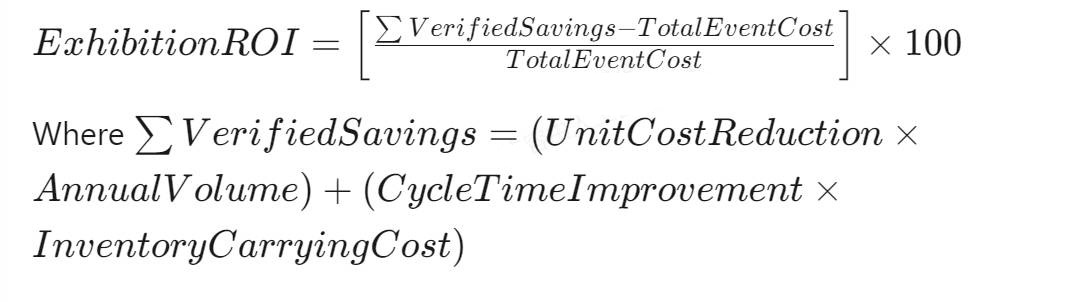
This formula takes into account both the cost savings and the operational improvements achieved as a result of the exhibition.
Global Procurement Intelligence Solutions
Leveraging Advanced Tools for Exhibition Outcomes
Enhancing exhibition outcomes through advanced tools can provide a competitive edge in the global procurement market.
Predictive Risk Analytics: Real - time supplier financial health monitoring using predictive risk analytics can help in identifying potential supply chain disruptions before they occur. This allows procurement teams to take proactive measures to mitigate these risks.
Virtual Factory Audits: 360 - degree digital facility inspections through virtual factory audits can provide a detailed view of the supplier's manufacturing facilities. This is especially useful when it is not possible to conduct on - site audits due to geographical or logistical constraints.
Smart Contract Platforms: Automated compliance documentation using smart contract platforms can streamline the procurement process. These platforms can ensure that all parties comply with the terms and conditions of the contract, reducing the risk of disputes. A 2024 Procurement Benchmark Study reported that 94% faster supplier onboarding cycles were achieved through digital integration, highlighting the effectiveness of these advanced tools.
Conclusion
Strategic trade show management is a complex but rewarding process for procurement leaders. By following the roadmap outlined in this guide, procurement professionals can optimize their supply chains, reduce costs, and achieve exhibition excellence. From pre - event planning to post - event value realization, every step plays a crucial role in maximizing the benefits of trade show participation. By leveraging advanced tools and data - driven decision - making, procurement teams can stay ahead in the competitive global market.

