




In today's fast-paced world of electronics and technology, the demand for compact, flexible, and reliable cable solutions continues to grow. Two popular options that have emerged to meet these needs are Flexible Flat Cables (FFC) and Flexible Printed Circuits (FPC). While these two types of cables may seem similar at first glance, they have distinct characteristics and applications that set them apart. In this comprehensive guide, we'll explore the differences between FFC and FPC cables, their advantages and disadvantages, and help you determine which option is best suited for your specific requirements.
Understanding FFC Cables
Flexible Flat Cables (FFC) are thin, flat cables composed of multiple parallel conductors sandwiched between two layers of insulating material. These cables are designed to be highly flexible and can be bent or folded without damaging the internal conductors. FFCs are widely used in various electronic devices, including laptops, smartphones, and automotive applications.
Key Features of FFC Cables
- Flat and ribbon-like structure
- Uniform conductor spacing
- Available in various pitches (distance between conductors)
- Typically made with copper conductors
- Insulated with materials like polyester or polyimide
Advantages of FFC Cables
- Space-saving design
- Excellent flexibility
- Easy to install and replace
- Cost-effective for high-volume production
- Good EMI/RFI shielding capabilities
Disadvantages of FFC Cables
- Limited customization options
- Susceptible to damage from repeated bending
- May require special connectors
- Not suitable for high-power applications
Understanding FPC Cables
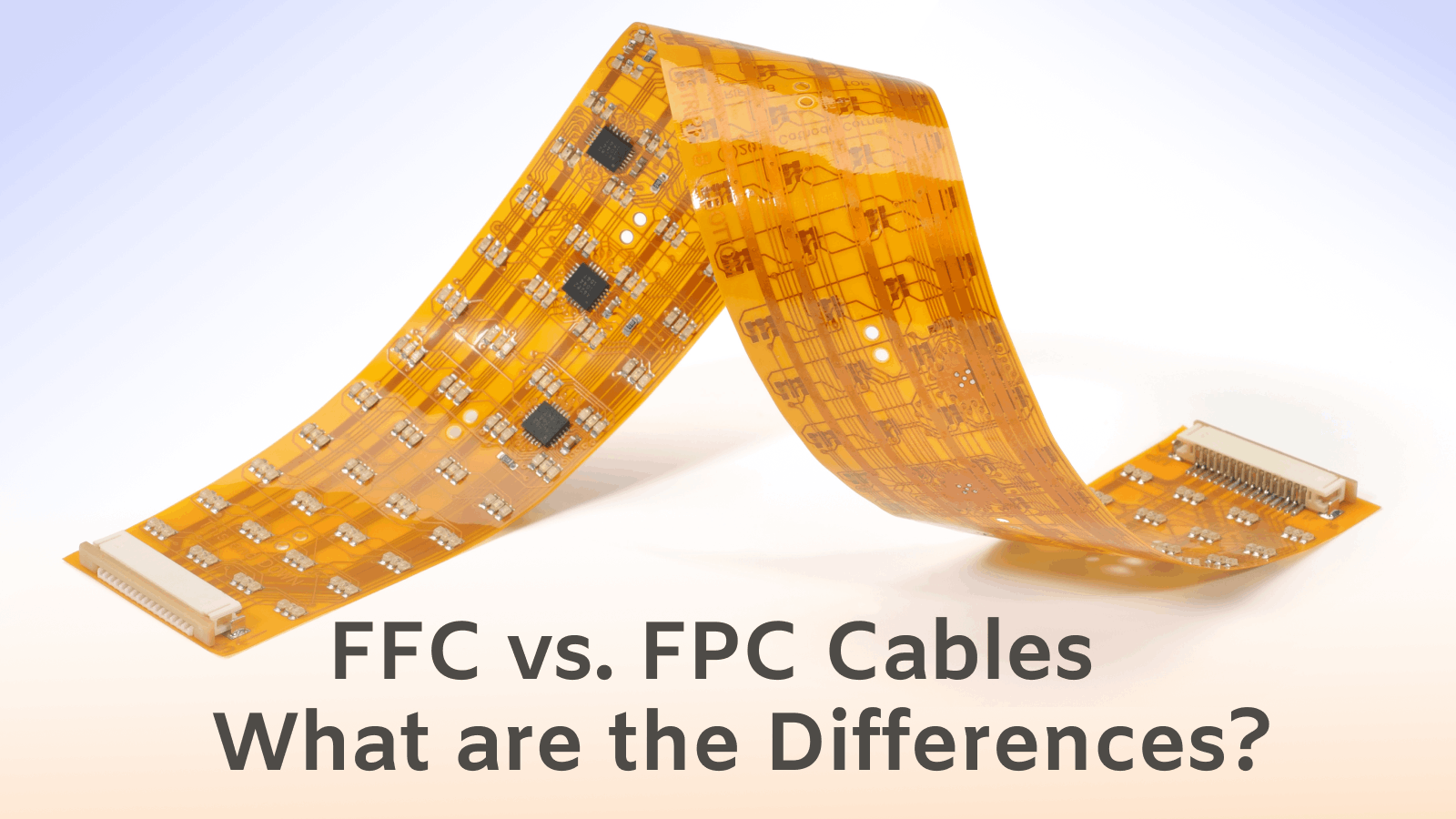
Flexible Printed Circuits (FPC), also known as Flexible Printed Circuit Boards (FPCB), are thin, lightweight, and flexible electronic circuits printed on a flexible substrate. FPCs consist of conductive patterns etched or printed onto a flexible dielectric material, such as polyimide or polyester. These circuits can be designed in various shapes and configurations to fit specific application requirements.
Key Features of FPC Cables
- Custom-designed circuit layouts
- Multiple layers possible (single-layer, double-layer, or multi-layer)
- Can incorporate both rigid and flexible sections
- Ability to integrate components directly onto the circuit
- Highly customizable trace widths and spacing
Advantages of FPC Cables
- Extremely thin and lightweight
- Highly customizable designs
- Can replace multiple rigid PCBs and cables
- Excellent durability and reliability
- Suitable for high-density applications
Disadvantages of FPC Cables
- Higher initial costs for design and tooling
- Longer lead times for custom designs
- May require specialized manufacturing processes
- Limited current-carrying capacity compared to traditional PCBs
Comparing FFC and FPC Cables
Now that we have a basic understanding of both FFC and FPC cables, let's dive deeper into their differences and compare them across various aspects:
1. Design Flexibility:
FFC Cables: FFCs have a standardized design with parallel conductors and uniform spacing. While they come in different widths and pitches, the overall structure remains consistent.
FPC Cables: FPCs offer much greater design flexibility. They can be customized to include various trace patterns, component mounting areas, and even rigid sections. This flexibility allows for more complex and application-specific designs.
2. Manufacturing Process:
FFC Cables: FFCs are typically manufactured using a lamination process, where conductive strips are sandwiched between insulating layers. This process is relatively simple and cost-effective for high-volume production.
FPC Cables: FPCs are manufactured using a more complex process similar to traditional PCB manufacturing. This involves etching or printing conductive patterns onto a flexible substrate, which allows for more intricate designs but can be more time-consuming and expensive.
3. Customization Options
FFC Cables: FFCs offer limited customization options, mainly in terms of cable width, length, and pitch. The basic structure remains the same across different applications.
FPC Cables: FPCs provide extensive customization possibilities. Designers can create unique circuit layouts, incorporate different layers, and even integrate components directly onto the flexible circuit.
4. Cost Considerations
FFC Cables: Generally more cost-effective for high-volume production due to their standardized design and simpler manufacturing process.
FPC Cables: Initial costs can be higher due to design and tooling expenses. However, FPCs can be more cost-effective in the long run for complex applications by replacing multiple rigid PCBs and cables.
5. Durability and Reliability
FFC Cables: While flexible, FFCs may be more susceptible to damage from repeated bending or folding, especially in high-stress areas.
FPC Cables: FPCs are designed to withstand repeated flexing and can be engineered for specific stress points, making them more durable in dynamic applications.
6. Signal Integrity
FFC Cables: Offer good signal integrity for many applications, but may be more susceptible to crosstalk and interference in high-frequency scenarios.
FPC Cables: Can be designed with specific impedance control and shielding techniques, making them suitable for high-frequency and sensitive signal applications.
7. Space Efficiency
FFC Cables: Provide excellent space efficiency due to their flat profile and ability to be routed in tight spaces.
FPC Cables: Offer even greater space efficiency by combining multiple functions (interconnects, circuits, and components) into a single flexible package.
8. Integration with Other Components
FFC Cables: Typically require separate connectors or termination points to interface with other components or PCBs.
FPC Cables: Can be designed to directly integrate with other components or PCBs, reducing the need for additional connectors and simplifying assembly.
Choosing Between FFC and FPC Cables
When deciding between FFC and FPC cables for your application, consider the following factors:
1. Application Complexity
If your application requires a simple, standardized connection between components, FFC cables may be sufficient. For more complex designs or when space is at a premium, FPC cables offer greater flexibility and integration options.
2. Production Volume
For high-volume production of relatively simple designs, FFC cables can be more cost-effective. For lower volumes or highly customized applications, FPC cables may provide better value despite higher initial costs.
3. Space Constraints
Both FFC and FPC cables offer space-saving benefits, but FPC cables can provide even greater space efficiency by integrating multiple functions into a single flexible circuit.
4. Durability Requirements
If your application involves frequent flexing or movement, FPC cables may offer better long-term reliability due to their ability to be engineered for specific stress points.
5. Signal Integrity
For high-frequency or sensitive signal applications, FPC cables can be designed with specific impedance control and shielding techniques, making them a better choice in these scenarios.
6. Design Flexibility
If you need a highly customized solution that combines interconnects, circuits, and components, FPC cables offer greater design flexibility and integration options.
7. Time-to-Market
FFC cables, being more standardized, may offer faster time-to-market for simpleapplications. Custom FPC designs may require longer lead times but can provide more optimized solutions for complex projects.
8. Budget Considerations
Consider both initial and long-term costs when choosing between FFC and FPC cables. While FFC cables may have lower upfront costs, FPC cables can potentially reduce overall system costs in complex applications.
Industry Applications
Both FFC and FPC cables find applications across various industries. Here are some common use cases for each:
FFC Cable Applications
- Consumer Electronics: Laptops, tablets, and smartphones
- Automotive: Infotainment systems, dashboard displays, and sensor connections
- Industrial Equipment: Control panels and human-machine interfaces
- Medical Devices: Portable diagnostic equipment and patient monitors
- Printers and Copiers: Internal connections for print heads and scanners
FPC Cable Applications
- Aerospace and Defense: Satellite systems, radar equipment, and avionics
- Wearable Technology: Smartwatches, fitness trackers, and augmented reality devices
- Medical Implants: Pacemakers, cochlear implants, and neurostimulators
- Telecommunications: Antennas, base stations, and network equipment
- Automotive: Advanced driver assistance systems (ADAS) and electric vehicle battery management
Sourcing FFC and FPC Cables
When it comes to sourcing high-quality FFC and FPC cables for your projects, it's essential to work with reputable suppliers who can meet your specific requirements. Global Sources, a leading B2B supplier platform, offers a wide range of FFC and FPC cable options from verified manufacturers. By utilizing Global Sources, you can:
- Access a diverse selection of FFC and FPC cables from multiple suppliers
- Compare prices, specifications, and minimum order quantities
- Verify supplier credentials and manufacturing capabilities
- Request customized solutions tailored to your specific needs
- Benefit from Global Sources' quality assurance processes and buyer protection
When sourcing FFC or FPC cables through Global Sources, consider the following tips:
- Clearly define your requirements, including cable type, length, pitch, and any special features or certifications needed.
- Request samples from multiple suppliers to evaluate quality and performance.
- Inquire about the supplier's manufacturing processes, quality control measures, and certifications.
- Discuss lead times and production capacity to ensure the supplier can meet your volume and delivery requirements.
- Consider the supplier's experience in your specific industry or application.
Future Trends in FFC and FPC Technology
As technology continues to evolve, so do the capabilities and applications of FFC and FPC cables. Here are some emerging trends to watch:
1. Increased Integration
FPC cables are likely to see further integration of active and passive components, creating more complex and multifunctional flexible circuits.
2. Advanced Materials
Development of new substrate and conductor materials may lead to improved performance, durability, and flexibility for both FFC and FPC cables.
3. Higher Data Rates
As data transmission speeds continue to increase, both FFC and FPC cables will need to evolve to support higher bandwidth requirements.
4. Miniaturization
Ongoing efforts to reduce the size and weight of electronic devices will drive the development of even thinner and more flexible cable solutions.
5. Sustainability
Growing environmental concerns may lead to the development of more eco-friendly materials and manufacturing processes for both FFC and FPC cables.
6. IoT and Wearable Devices
The proliferation of Internet of Things (IoT) devices and wearable technology will create new opportunities and challenges for flexible cable solutions.
7. 5G and Beyond
The rollout of 5G networks and future telecommunications technologies will require advanced flexible interconnect solutions to support high-frequency applications.
Best Practices for Implementing FFC and FPC Cables
To ensure optimal performance and reliability when using FFC or FPC cables in your designs, consider the following best practices:
1. Proper Handling and Installation
- Follow manufacturer guidelines for handling, bending, and installation.
- Use appropriate tools and techniques when connecting or disconnecting cables.
- Avoid excessive force or sharp bends that could damage the cables.
2. Environmental Considerations
- Choose cables with appropriate temperature ratings for your application.
- Consider using protective coatings or enclosures in harsh environments.
- Implement strain relief measures to prevent stress on cable terminations.
3. EMI/RFI Shielding
- Use shielded versions of FFC or FPC cables in EMI-sensitive applications.
- Implement proper grounding techniques to minimize interference.
- Consider the overall system design to minimize potential sources of EMI/RFI.
4. Signal Integrity
- Use appropriate cable lengths and routing to minimize signal degradation.
- Consider impedance matching and controlled impedance designs for high-speed applications.
- Implement proper termination techniques to reduce signal reflections.
5. Maintenance and Replacement
- Design systems with easy access to FFC or FPC cables for maintenance or replacement.
- Implement proper documentation and labeling for cable connections.
- Consider using modular designs to simplify cable replacement or upgrades.
Conclusion
FFC and FPC cables play crucial roles in modern electronics, offering flexible and space-efficient solutions for a wide range of applications. While FFC cables excel in standardized, high-volume productions, FPC cables provide unparalleled design flexibility and integration capabilities for more complex applications.
Understanding the differences between these two cable types is essential for engineers, designers, and procurement professionals to make informed decisions when selecting the most appropriate solution for their projects. By considering factors such as application complexity, production volume, space constraints, and signal integrity requirements, you can choose the optimal cable solution that balances performance, cost, and reliability.
As technology continues to advance, both FFC and FPC cables will evolve to meet the growing demands of emerging applications in areas such as IoT, wearable devices, and high-speed communications. Staying informed about the latest developments in flexible cable technology and working with reputable suppliers like those found on Global Sources will ensure that you have access to cutting-edge solutions for your interconnect needs.
Whether you opt for the simplicity and cost-effectiveness of FFC cables or the advanced capabilities of FPC cables, implementing best practices in design, installation, and maintenance will help maximize the performance and longevity of your flexible cable solutions. By carefully considering your specific requirements and leveraging the strengths of each cable type, you can create innovative and reliable electronic designs that meet the challenges of today's fast-paced technological landscape.
FAQs
What is the full form of FFC FPC?
The full form of FFC is Flexible Flat Cable, and FPC stands for Flexible Printed Circuit. Both are types of flexible connectors used in various electronic applications, but they differ in structure and usage.
An FFC (Flexible Flat Cable) is a flat, flexible cable with multiple conductors arranged in a parallel configuration. These cables are typically used to connect two electronic components, such as a display and a circuit board, in a compact and flexible manner. FFCs are known for their simplicity, cost-effectiveness, and ability to save space in compact devices.
On the other hand, an FPC (Flexible Printed Circuit) is a type of circuit board that is thin, flexible, and lightweight. It consists of a flexible insulating layer with conductive traces printed on it. FPCs are more versatile than FFCs as they can include complex circuit designs, multiple layers, and components like resistors or capacitors.
In summary, FFC refers specifically to a cable used for connections, while FPC refers to a flexible circuit board that can include more advanced circuitry. Both play crucial roles in modern electronics, especially in devices like smartphones, laptops, and medical equipment, where compact and lightweight designs are essential.
What are FFC cables used for?
FFC (Flexible Flat Cables) are used in a wide range of electronic applications where compactness, flexibility, and reliability are required. These cables are designed to connect two electronic components in a space-efficient manner, making them ideal for modern devices where internal space is limited.
One of the primary uses of FFC cables is in consumer electronics, such as smartphones, laptops, tablets, and televisions. For example, they are commonly used to connect a display panel to a circuit board or a keyboard to a motherboard. Their flat and flexible design allows them to be routed through tight spaces without compromising performance.
In automotive applications, FFC cables are used in infotainment systems, dashboard displays, and control panels. Their ability to withstand vibrations and flexing makes them suitable for use in vehicles.
In medical devices, FFC cables are used in compact diagnostic and monitoring equipment where lightweight and reliable connections are critical.
Additionally, FFC cables are widely used in industrial equipment, printers, and home appliances, where space-saving and flexible connections are essential.
The main advantages of FFC cables are their ability to save space, reduce weight, and provide reliable electrical connections. They are also cost-effective and easy to manufacture, making them a popular choice in various industries. However, they are best suited for low-power and low-frequency applications, as their flat design may not be ideal for high-speed data transmission.
What does FPC mean cable?
An FPC (Flexible Printed Circuit) cable refers to a type of flexible circuit board that is used as a cable to connect electronic components. Unlike traditional rigid circuit boards, FPC cables are made from flexible materials like polyimide or polyester, which allow them to bend, twist, and fold without breaking.
FPC cables are essentially thin, lightweight circuits with conductive traces printed on a flexible substrate. These traces can carry electrical signals and power between different components in a device. FPC cables are often used in applications where space is limited, and the design requires flexibility.
One of the key advantages of FPC cables is their ability to integrate complex circuit designs into a single, flexible layer. This makes them ideal for compact devices like smartphones, tablets, and wearable technology. For example, FPC cables are commonly used to connect touchscreens, cameras, and other components in mobile devices.
FPC cables are also used in automotive systems, medical devices, and industrial equipment, where their flexibility and lightweight design are crucial. In addition to their flexibility, FPC cables are known for their durability and ability to withstand harsh environments, including extreme temperatures and vibrations.
In summary, an FPC cable is a type of flexible circuit that combines the functionality of a circuit board with the flexibility of a cable. Its versatility, lightweight design, and ability to save space make it a popular choice in modern electronics.
What is the purpose of FFC?
The primary purpose of an FFC (Flexible Flat Cable) is to provide a compact, flexible, and reliable connection between electronic components. FFCs are designed to save space and improve the efficiency of internal connections in devices where traditional round cables or bulky connectors would be impractical.
One of the main purposes of FFC cables is to enable space-saving connections in compact devices like smartphones, laptops, and tablets. Their flat and flexible design allows them to be routed through tight spaces, making them ideal for modern electronics.
Another purpose of FFC cables is to provide a cost-effective solution for connecting components. They are relatively inexpensive to manufacture and install, making them a popular choice in consumer electronics, automotive systems, and industrial equipment.
FFC cables are also used to improve the reliability of connections. Their simple design reduces the risk of connection failure caused by loose or damaged wires. Additionally, their flexibility allows them to withstand bending and vibrations, making them suitable for use in devices that experience frequent movement or mechanical stress.
In summary, the purpose of FFC cables is to provide a reliable, flexible, and space-efficient solution for connecting electronic components. Their versatility and cost-effectiveness make them an essential component in modern electronics.

