Download App
Better Online and Trade Show Sourcing Experiences.Scan the QR code to download.
Learn More
Hot Topics
by Vianie Li & Cecile de Veyra
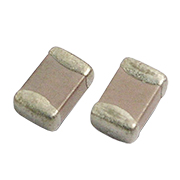
Thanks to their multiple layers of dielectrics in an ultrasmall package, MLCCs offer more capacity for energy storage crucial to keeping the flow of current stable in circuits. With upgrades in electronic devices in recent years, driven by 5G communication, and with the automotive industry’s electrification trend, demand for more robust but smaller MLCCs has been on the rise.
In smartphones, there are about 1,000 such components, while in a car, as many as 10,000 are used – and triple that number in luxury vehicles with a greater number of onboard electronics. In 2020, the global multilayer ceramic capacitor market reached $8.8 billion, according to Expert Market Research, and will expand further at 5 percent CAGR from 2022 to 2027.
In the coming years, MLCCs will continue to shrink in size while gaining increased ability to handle high voltages and operate on a wide frequency range for enhanced overall reliability. They have a low ESR, an inherent characteristic associated with their ceramic material. This means fewer power losses and heating issues, which can otherwise affect MLCC performance and life span.
Units with a 3 to 4kV rating will be popular in the next one or two years, according to suppliers interviewed by Global Sources Electronic Components.
In the Chinese mainland, miniaturization efforts have yielded 008004 variants. Eyang, one of the major MLCC manufacturers there, introduced such components, mainly for wearable and mobile devices, in late 2021. Currently turning them out in small batches, the company is expected to achieve mass scale in 2022 or 2023.
As for units in 01005 packages, they can be sourced from some large Chinese suppliers that can produce them in large batches. From the majority, however, the typical sizes available are 0201, 0402, 0603, 0805, 1206 and 1210, with components in the first two sizes making up the bulk of shipments.
Chinese MLCC manufacturers mainly use ceramic materials from providers in Japan, South Korea and Taiwan, and the other inputs from domestic companies.
Rising demand for MLCCs resulted in a supply shortage and jacked up material costs in 2021, which pushed up product prices by 10 to as much as 20 percent worldwide. This upward price trend is expected to continue through June 2022.
More Sourcing News
Read Also

关注 “环球资源外贸” 官方微信,获取实时外贸资讯
iOS & Android
iOS & Android(Mainland China)
Copyright © 2026 Publishers Representatives Limited. All rights reserved.




